Apparel Search · Starting a Clothing Line
The Fashion Business Plan
What a clothing brand's business plan must contain — the sections lenders and partners expect, and the fashion-specific detail generic templates never ask about.
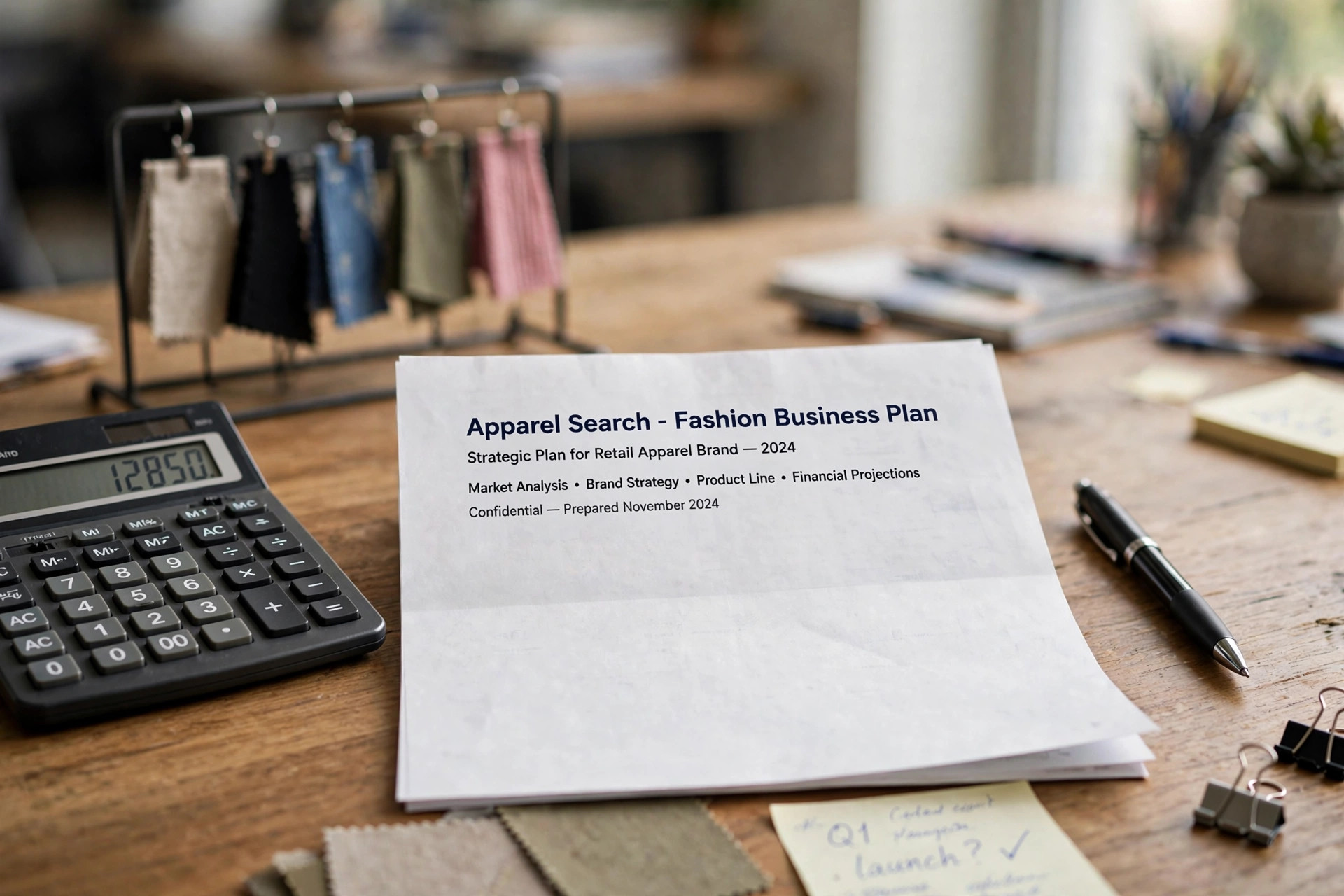
A business plan is the second step on the starting a clothing line path — the document that turns “I want to launch a label” into a set of decisions someone else can examine. Founders skip it because it feels like homework. Then they meet the people who ask for it: a bank considering a loan, a partner putting in money, a factory deciding whether the new label is serious, and the founder themselves, six months in, trying to remember what the plan actually was.
What a Fashion Business Plan Is
A business plan is a written description of what the brand will sell, to whom, against which competition, made how, sold where, and with what money — plus the numbers that show the idea can pay for itself. For a clothing business it must also answer fashion-specific questions a generic plan template never asks: seasonality, size ranges, inventory depth and the sampling and production calendar.
The Sections a Clothing Brand Plan Needs
Executive summary
One page: the brand, the customer, the product, the ask. Written last, read first. Anyone who reads only this page should understand exactly what the label is and why it deserves to exist.
The customer and the niche
Who buys, what they wear now, and what they cannot find. Describe a real person — age range, budget, shopping habits, the gap in their wardrobe your line fills. This section drives every later choice, from price points to photography style.
The product and the first collection
What the line contains at launch: categories, style count, fabrics, size range, and how it grows over the first year. Connect it to the range-planning discipline in planning your first collection — a plan that promises forty styles in season one reads as inexperience.
Competitive landscape
Name the real alternatives your customer can buy today, at what prices, and state plainly why yours wins a place among them. Lenders and partners distrust plans that claim no competition; every garment competes with everything else in the closet.
Production and operations
Your production model (see business models compared), where garments will be made, minimum order quantities, lead times, quality control and how stock will be stored and shipped. This is where fashion plans most often go vague — and where readers with industry experience look first.
Sales and marketing
Channels — wholesale, direct-to-consumer or both — pricing architecture, and how customers will hear about the brand. Tie every marketing claim to a cost: trade shows, photography and content all belong in the budget, not just the narrative.
The financial plan
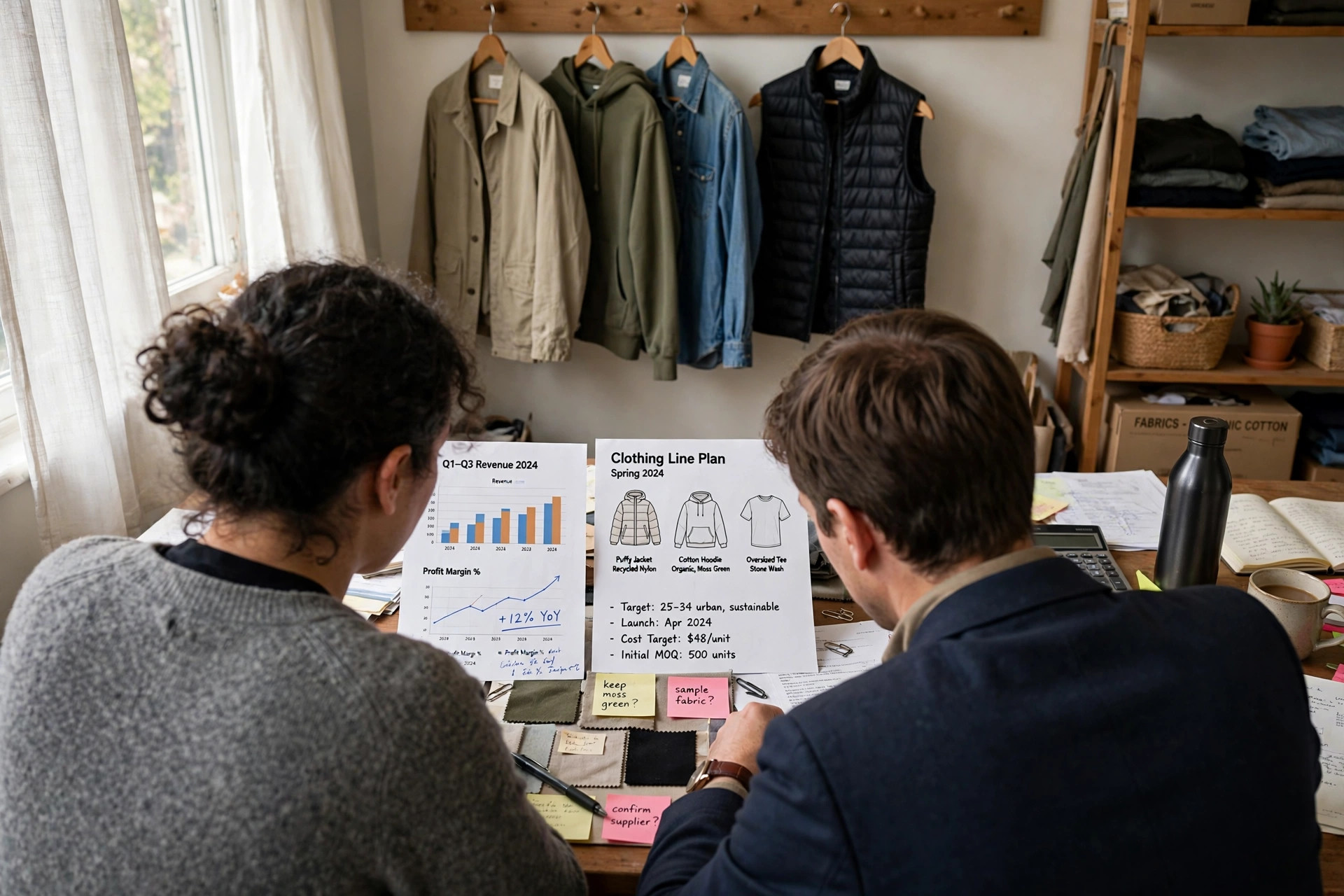
Startup costs, per-style unit economics, a cash-flow forecast by month, and the break-even point. Fashion cash flow is brutal in a specific way: money goes out for production months before it returns from sales, and the plan must show the gap honestly and how it is funded.
What Lenders and Partners Actually Look For
Experienced readers skim the prose and study three things. First, unit economics: does each garment make money at its intended price after every cost, using the method in the Garment Costing Guide? Second, the funding request matched against the startup cost categories — a request that forgets samples, freight or photography signals a founder who has not yet priced the real journey. Third, realism about time: a plan that shows profit in month two of a seasonal production business has not understood the calendar.
They also look for the legal groundwork to be at least acknowledged: business formation, a trademark search on the brand name, and labeling compliance. The Fashion Law & IP Guide covers what needs doing; the plan only needs to show you know it exists and have budgeted for it.
Plan Mistakes That Undermine Credibility
- Market-size claims copied from industry headlines instead of a defined, reachable niche.
- Prices chosen by gut feel, with no cost sheet behind them.
- No inventory plan — how many units per style, size and color, and what happens to what does not sell.
- A single perfect scenario with no allowance for a late delivery, a failed style or a slow season.
Keep Building the Business
Common Questions
How long should a fashion business plan be?
Long enough to answer the reader's questions and no longer. For most first clothing lines, ten to twenty pages plus financial appendices covers the ground; a one-person print-on-demand launch can be far shorter. Depth in the financial and production sections matters far more than total page count.
Do I need a business plan if I am not borrowing money?
Yes, but you write it for yourself. Self-funded founders use the plan as a decision record and a budget discipline: it forces the niche, the model, the collection size and the cash-flow gap to be confronted on paper, where mistakes are cheap, instead of in production, where they are not.
What financial forecasts does a clothing business plan need?
At minimum: a startup cost budget, per-style unit economics, a monthly cash-flow forecast for the first year or two that respects the production calendar, and a break-even estimate. In fashion the timing of cash matters as much as the totals, because production is paid for months before sales arrive.
Should my business plan include my prices?
Yes — the pricing architecture, not necessarily every tag. Show the intended retail and wholesale price bands for your categories and demonstrate, with cost sheets, that the margin works at those prices. Prices invented without costing are the fastest way to lose an experienced reader.
Back to the Starting a Clothing Line Guide
A plan is a living document — revisit it after every season, when real sales replace forecasts. The full Starting a Clothing Line guide walks the whole path — business plan, business models, manufacturers, collection planning, costs, selling channels and launch.