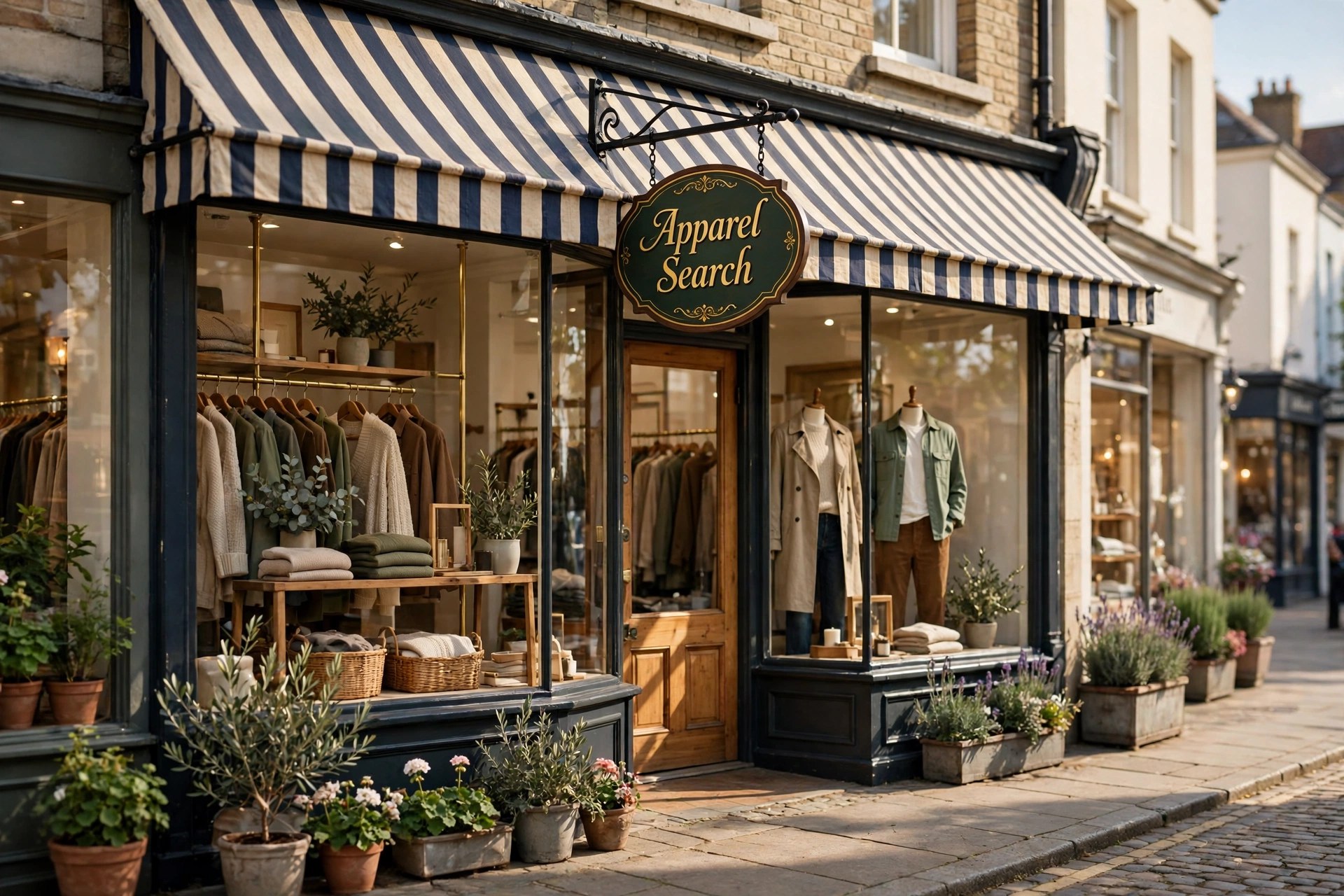
There are two ways into the clothing business, and they are different businesses. One is to make the clothes: design a line, have it produced, and sell it on. That path is covered step by step in how to start a clothing line. The other — this guide's subject — is to open a store: lease a premises, buy other makers' clothing at wholesale, and sell it, day after day, to the people who walk past your window. A store is not a design project. It is a lease, an inventory, a staff rota and a cash register, and it rewards a different set of skills.
This guide walks the whole opening sequence in order, with the deep Apparel Search treatment linked at each stage. It is written for the United States and kept deliberately practical: where a rule genuinely depends on where you live — permits, taxes, lease law — it says so, because the honest answer there is “check your local requirements,” not a confident generality.
Search Apparel Search
The Roadmap
The Nine Steps, at a Glance
Concept & Niche
Decide who the store serves and what it sells them — the decision every later one depends on.
The Short Answer
Opening a clothing store is a sequence, not an event: define the store, prove the money on paper, make it legal, secure the location, fit and stock it, hire, market, and open. Most failed openings skip one of the unglamorous middle steps — the lease terms, the permits, or the cash reserve — rather than failing at the visible parts like decor and buying.
Step 01 / The Idea
Define the Concept and the Customer
Everything downstream gets easier when the first decision is sharp. Name the customer precisely — not “women who like fashion” but “professional women in this town who need washable work clothes,” or “parents buying durable kids' clothing,” or “men who hate malls.” Then decide the format that serves them: a multi-brand independent, a specialty store (denim, occasionwear, plus-size, outdoor), an off-price or outlet concept, or a small curated boutique — a model different enough to have its own guide, how to open a clothing boutique. Walk the existing stores in your trade area as a customer, including the ones in the Apparel Search clothing stores directory, and write down what none of them does well. That gap is your concept.
Step 02 / The Money
Write the Business Plan and Face the Budget
A store plan is the brand plan's practical cousin: the customer and the concept, the local competition, twelve months of expected sales and costs, and a startup budget that itemizes where the opening money goes. The fashion business plan guide covers the document itself in full — sections, financials, what lenders read first. Two store-specific disciplines matter here. First, budget the store's money in its own buckets — lease deposits and build-out, opening inventory, fixtures and systems, licenses and insurance, and a reserve — because they behave differently from a clothing line's costs, which are dominated by development and production (the contrast is laid out in clothing line startup costs & funding). Second, keep a genuine reserve: the common advice is to open with several months of operating costs still in the bank, because a new store's first season rarely matches its plan.
Step 03 / The Groundwork
Legal Setup, Permits and Accounts
The unglamorous layer, in the usual order: choose a business structure (sole proprietorship, LLC or corporation — a decision with tax and liability consequences worth an hour of professional advice), register the business and get a federal employer identification number, apply for your state's seller's permit or resale certificate (this is what lets you buy inventory at wholesale and collect sales tax lawfully), obtain the local business license, and clear the premises paperwork — certificate of occupancy and a sign permit are the usual pair. Protect the store's name early with a trademark search, following the same logic as for a brand name in the fashion law & intellectual property guide. Open a separate business bank account and a bookkeeping routine from day one. Every item on this list is set by a specific state, county or city — your local small-business office publishes the actual list, and it overrides anything a website says, including this one.
Step 04 / The Premises
Choose the Location and Negotiate the Lease
For most clothing stores the location decision is the budget decision: rent follows foot traffic, and the wrong lease outlasts every other mistake. Judge a site on who actually walks past it at your selling hours, what neighboring stores draw your customer, visibility and signage rights, parking or transit, and the true delivered cost — deposit, first and last months, build-out obligations, and the escalation written into the later years. Read the lease for the terms that bite retailers specifically: the permitted-use clause (can you sell what you plan to sell?), exclusivity (can the landlord lease next door to a direct competitor?), renewal options, assignment rights if you ever sell the business, and who pays for what repairs. A local commercial real-estate attorney reviewing a lease before signature is one of the cheapest forms of insurance in this whole guide — leases are negotiable documents, and first-time tenants are the people they are most often negotiated against.
Step 05 / The Build-Out
Design the Floor, Fit It Out, Install the Systems
With keys in hand, the store becomes physical: layout first, then fixtures, then systems. Layout is a selling tool, not decoration — the clothing store layout guide covers customer flow, the decompression zone at the door and where fitting rooms earn their space, and the visual merchandising guide covers the displays that turn the layout into sales. Fixtures — rails, shelving, tables, hangers, mannequins, mirrors, lighting — are a major capital bucket; the store fixtures directory is a starting point for suppliers, and second-hand fixtures from closed stores are a legitimate way to cut this cost sharply. Then the systems: a point-of-sale that doubles as your inventory system (the two must be the same data, or neither is trustworthy), payment processing, security tags and cameras, and the unglamorous supplies behind the counter — bags, tissue, tags, hangers — of the kind listed among point of sale supplies. Test the whole chain — scan, pay, receipt, return — before a single customer does.
Step 06 / The Stock
Buy the Opening Inventory
Opening inventory is usually the largest single check in the project, and the one with the longest shadow: buy too much of the wrong thing and the store opens already stuck. Buy to the concept, not to your personal taste — unless you are the customer, which a boutique owner often is (see the boutique guide). The professional method is a planned open-to-buy: a budget by category and month, set before any order is written, so that no single exciting line can eat the season. The retail buying process and the broader retail buying & merchandise planning guide teach the buying itself — terms, seasons, size runs, vendor selection — and Apparel Search's wholesale clothing directory is where many of the suppliers are found. On pricing, the traditional apparel starting point is keystone markup — roughly double the wholesale cost — adjusted for your market and the brands you carry. And hold money back: a store that spends its entire inventory budget on opening day cannot chase the surprise bestseller in week three, which is when it most needs to.
Step 07 / The People
Hire and Train the First Team
Most small stores open with the owner on the floor and a small part-time team; the hiring mistakes are made by skipping the paperwork and the training, not by hiring the wrong personalities. Set up payroll properly from the first shift — employer tax obligations, wage-and-hour rules and scheduling law vary by state and are an accountant's or payroll service's territory, not a guess. Write down how the store runs — opening and closing routines, the return policy as the staff should apply it, what to do when the owner is absent — before opening, because the first busy Saturday is the wrong time to invent it. Train on the POS and the stockroom as much as on selling: a team that can find, ring and reorder a garment keeps the floor honest.
Step 08 / The Audience
Market the Store Before It Opens
A store's first audience is local and physical: the people who walk past papered windows are already curious, so give them a date and a reason. Claim the store's local listings and map profiles, start the social accounts with the build-out story (empty rails becoming a store is genuinely good content), tell the local press and neighborhood media what is opening and why it is different, and plan an opening event with a reason to attend beyond a ribbon. Get the store into the directories customers actually browse — including this one, through Add Your Company and the clothing stores directory. Marketing a store is a weekly habit, not a launch event: the stores that survive build a list — emails and regulars — from the first day, because a customer you can reach is worth more than a passer-by you cannot.
Step 09 / The Opening
Launch — and Work the First Season
Open soft if you can: a few quiet days with real customers find the broken fitting-room lock and the mispriced rail before the official opening does. Once open, the job changes from building a store to reading one. Watch sell-through by category, not just total sales; learn the discipline of inventory turnover — money sitting in slow stock is rent you pay twice; mark down decisively rather than hopefully; and keep the written plan beside the real numbers, because the gap between them is next season's buying education. The whole opening sequence, compressed into a dated working program, is the clothing store startup checklist — the companion page to this roadmap. And remember that a store is one channel among several: some owners later add their own label, others sell online alongside the shop — the channels are compared in wholesale vs DTC selling.
What It Costs: The Honest Version
There is no standard price tag for opening a clothing store, and any single figure quoted without a city, a size and a format attached is a guess. Planning guides commonly cite total startup budgets anywhere from the low tens of thousands of dollars — a very small shop, modest fittings, a shallow opening buy — to several hundred thousand for a larger store on an expensive lease with deep inventory. Where a given store lands is set mostly by three buckets:
The premises. Deposits, first months, and the build-out — usually the least flexible money in the project.
The inventory. The opening buy plus the open-to-buy reserve that lets you reorder winners in season.
The fit-out and systems. Fixtures, lighting, POS and inventory systems, signage — the bucket where second-hand and phased buying can save the most.
Underneath all three sits the reserve: several months of rent and payroll kept back for a first season that will not go exactly to plan. Get real local quotes for your actual buckets before committing — the ranges above are for orientation, not a budget.
Working the Plan
Two Companion Guides
Go Deeper: The Boutique Model and the 90-Day Checklist
 How to Open a Clothing BoutiqueThe small, curated version of this roadmap: the owner-buyer model, trunk shows, events and community marketing.
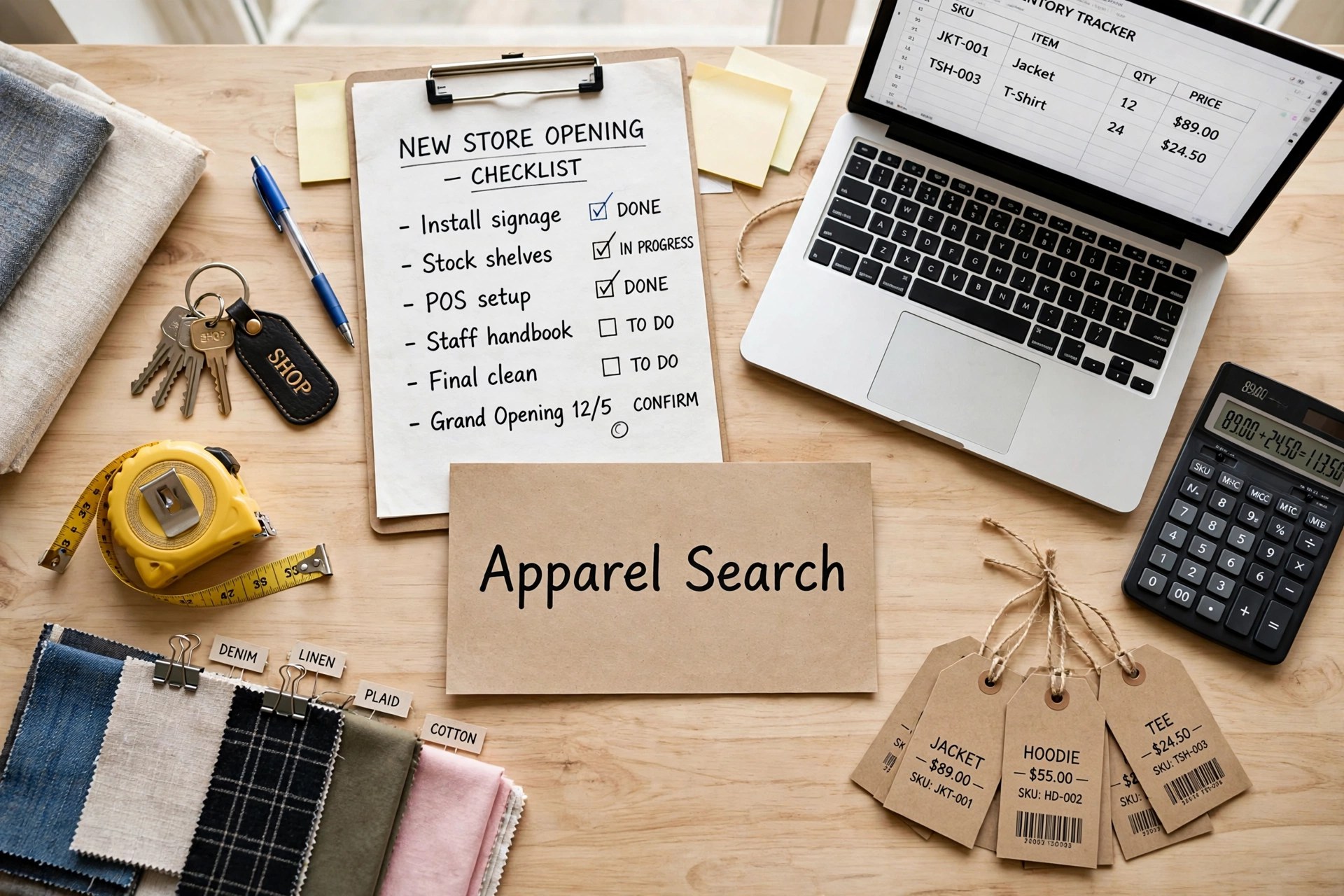 Clothing Store Startup ChecklistThis roadmap as a dated 90-day working program — four phases, concrete tasks, in the order to do them.
The money questions do not end on opening day. The brands that stock your racks manage their own cash gap with tools worth knowing from the buyer's side of the desk: they sell their invoices to factors (see our apparel factoring guide), and sometimes fund a production run with purchase order financing. Understanding how your suppliers get paid explains a great deal about payment terms, order approvals and why some orders get declined.
Questions
Common Questions
How much money do you need to open a clothing store?
There is no single figure, because rent and inventory depth dominate the budget and both vary enormously by market. Planning guides commonly cite total startup budgets from the low tens of thousands of dollars for a very small, simply fitted shop to several hundred thousand for a larger store in a prime location. Work your own number from the actual buckets — lease deposits and build-out, opening inventory, fixtures and point-of-sale, licenses and insurance, and a cash reserve for the first season — rather than trusting any one published figure.
Do you need a license to open a clothing store?
Yes, several layers of permission are normal: registering the business itself, a federal tax ID, a state seller's permit (which is also what lets you buy inventory wholesale without paying sales tax on it), a local business license, and usually a certificate of occupancy and a sign permit for the premises. The exact list is set by your state, county and city, so confirm it with your local small-business office — this guide describes the usual categories, not your jurisdiction's rules.
How long does it take to open a clothing store?
From deciding to opening day, three to six months is a common planning span, and longer is not unusual. The schedule is rarely set by the enjoyable parts: lease negotiation, permits and the build-out decide the pace, and inventory must be ordered against the season it will sell in. The companion checklist on this site lays the work out as a 90-day program once a location is in play.
Should a new store carry many brands, or one niche?
For a first store, a clear niche is usually the safer arithmetic: a defined customer makes the buying, the marketing and the window display all easier, and a smaller, well-judged opening range leaves cash in reserve for reordering what actually sells. Broad, general ranges belong to stores with the floor space, staff and buying budget to support them.