Retail Buying & Merchandise Planning · The Market
The Retail Buying Process
From the first range review to the signed order: how buyers work market weeks, showrooms and line reviews, and negotiate the terms that decide the season's margin.
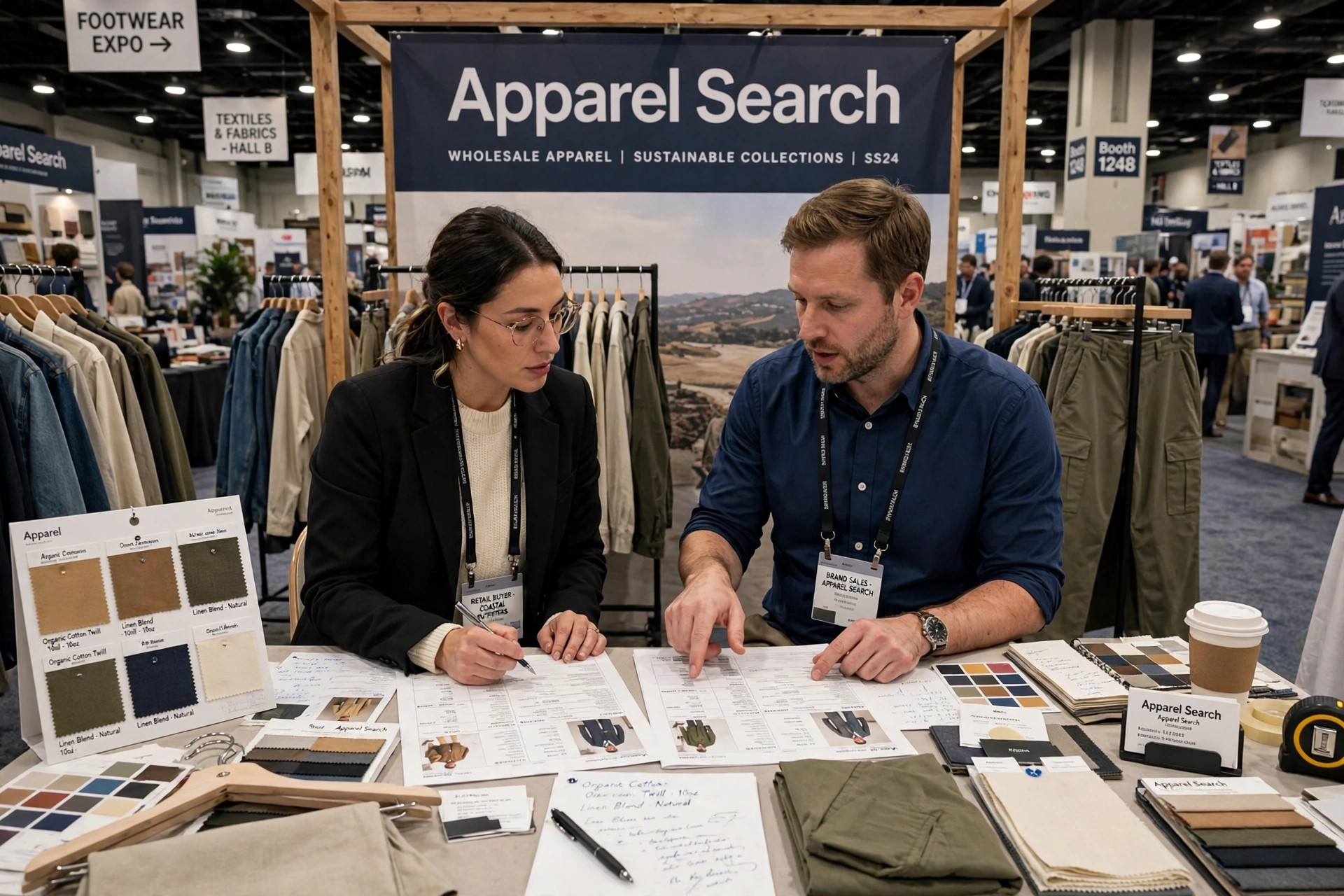
Planning decides what a range should look like; the buying process is where it becomes real — appointments, samples, line sheets and signatures. This stage of the Retail Buying & Merchandise Planning Guide walks through the season's buying calendar in the order a working buyer lives it, from the internal reviews that set the brief to the order confirmations that commit the open-to-buy. Apparel Search's fashion trade show directory and its trade shows by category listings map the events where much of this work happens.
Review the season just traded
Buying starts with evidence: last season's sell-through by category, price point and vendor, the markdown post-mortem, and the size and color lessons. The review sets the brief for the new range — which vendors earned more business, which categories shrink or grow, which mistakes are not to be reordered in a new color.
Build the range plan
The assortment plan converts the financial plan into counted options per category and price tier. Buyers arrive at appointments knowing exactly how many options they are hunting for and what each must do; the plan is the difference between buying and shopping.
Work the market
Market weeks, trade shows and showroom appointments compress the season's viewing into days. Buyers walk collections with the range plan in hand, trying garments, checking fabrics and construction against the intended price point, photographing candidates and annotating line sheets — the brand documents listing every style, color, size range, wholesale price, minimum and delivery window.
Hold the line review
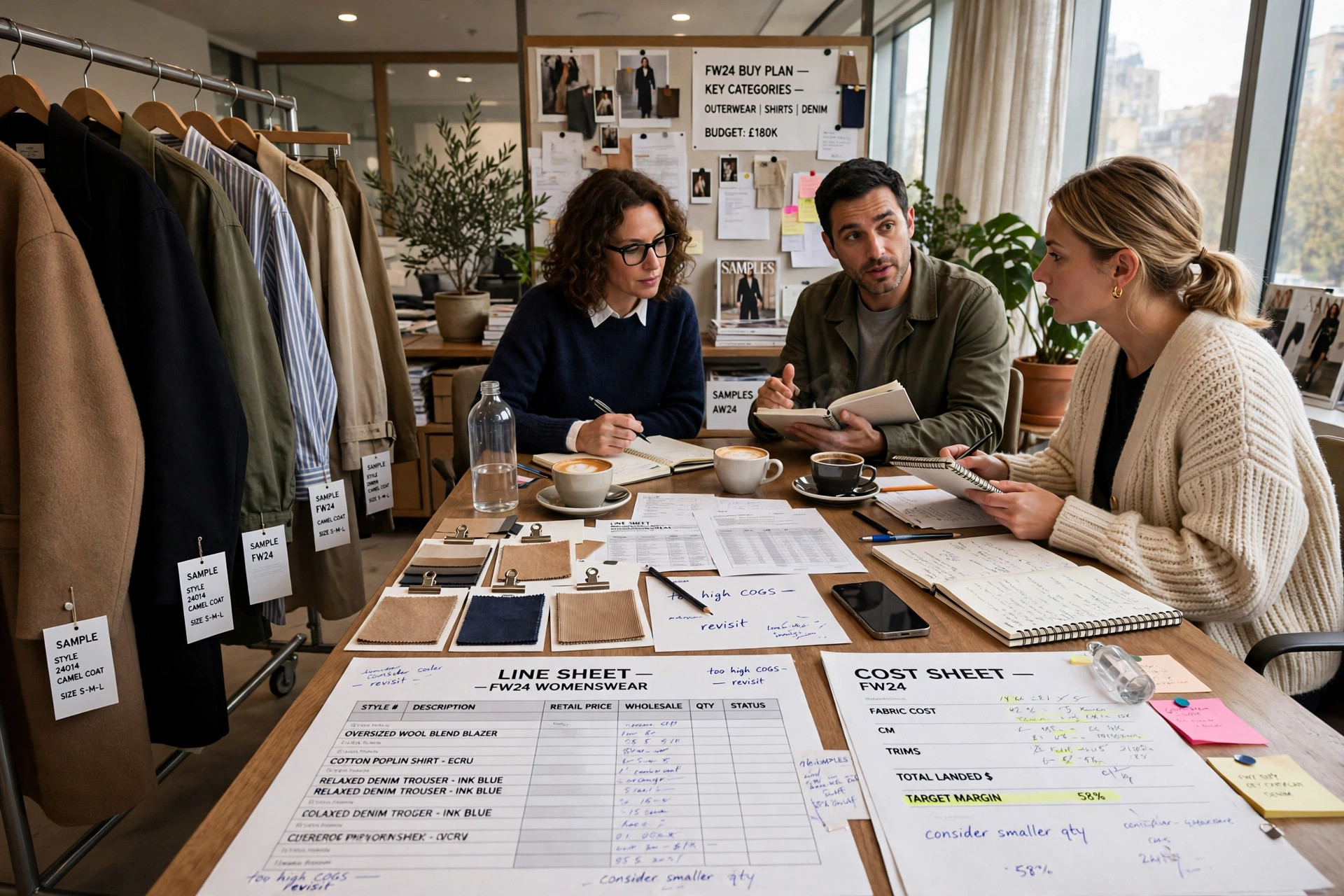
Back at head office, candidates are reviewed as a range, not as individual favorites: rails are built, duplication is cut, price architecture is checked, quantities are set against size curves, and the whole is tested against the open-to-buy. More hopeful styles die at the line review than anywhere else — by design.
Negotiate and write the orders
With the range settled, terms are agreed and orders are written and confirmed: styles, quantities by size and color, cost prices, delivery windows and the conditions covered below. The confirmed order is a commitment of budget — the open-to-buy falls with every signature.
Track production and delivery
The process does not end at the signature. Buyers and their assistants chase approvals, samples and shipment dates, because a perfect range delivered three weeks late is a markdown plan waiting to happen. Late or short deliveries are renegotiated, swapped or cancelled against the order terms.
Negotiation: The Whole Package
Outsiders imagine buying negotiation as a fight over the cost price. Cost matters — it sets the margin structure the Garment Costing Guide explains from the maker's side — but professional buyers negotiate a package:
Delivery windows with teeth: a defined ship window, and agreed consequences — cancellation rights or discounts — if it is missed, because late seasonal goods lose value by the week. Payment terms: the gap between delivery and payment is financing, and both sides price it. Minimums and exclusivity: quantities per style and color, and whether the line is protected from nearby competitors or other channels. Markdown support and returns: contributions when agreed goods underperform, and provisions for defective stock. And reorder terms: whether winners can be chased in season, at what lead time — the clause that decides whether a bestseller is a triumph or a sell-out story.
Brands, Own Label, or Both
The process above runs in two dialects. Brand buying selects from finished lines: shorter lead times, the brand's design and marketing already built in, and negotiation centered on terms. Own-label buying develops product to the retailer's own brief with manufacturers: longer lead times, samples and approvals to manage, exclusive product and a stronger margin — with the development risk carried in-house. Most mid-sized and large retailers run both, category by category, and the buyer's calendar holds showroom appointments and factory development trips in the same month.
Continue Through the Guide
Common Questions
What is market week in fashion buying?
Market week is the period when brands and showrooms present a new season's lines to retail buyers, who view the collections, compare them against their range plans and write orders. Markets cluster in the fashion capitals and regional hubs and run to a calendar tied to the season being bought — buyers are typically viewing autumn ranges in late winter, and spring ranges in early autumn.
What is a line sheet?
A line sheet is the brand's selling document for a collection: each style pictured or sketched with its style number, available colors and sizes, wholesale price, minimum order quantities and delivery dates. Buyers annotate line sheets during appointments and use them to build and check orders against the range plan.
What do buyers negotiate besides price?
Delivery windows (and penalties or cancellation rights for late shipment), payment terms, minimum order quantities, exclusivity by territory or channel, markdown support if the goods underperform, return or exchange provisions for defective stock, and cooperative advertising or fixture contributions. The headline cost price is only one term in a package that decides the real margin.
What is the difference between buying brands and developing own label?
Brand buying selects finished ranges from labels, with shorter lead times and the brand's own design and marketing behind them. Own-label (private label) buying develops product with designers and manufacturers to the retailer's own specification — longer lead times and more development risk, but exclusive product and usually a better margin structure. Many retailers run both, category by category.
Back to the Guide
This page is one of six in the Retail Buying & Merchandise Planning Guide — return to the hub for the full buying cycle, from the six-month plan to the final markdown.