Retail Buying & Merchandise Planning · Trading
Sell-Through & In-Season Management
Where the season is actually won: reading weekly sell-through properly, chasing winners with discipline, moving stock to where it sells, and exiting losers while exits are still cheap.

Plans and orders decide what a store starts the season with. In-season management decides what it ends with. This page of the Retail Buying & Merchandise Planning Guide covers the weekly trading discipline built around sell-through — the share of a style's received units that have sold. The formula itself, and what counts as a good rate by category, are covered on the sell-through rate page and the measure sell-through and reorder how-to; this guide is about the decisions the number drives.
Reading Sell-Through Properly
A style that received 500 units and has sold 340 by the end of week six stands at 68% sell-through (340 ÷ 500). Whether that is good depends on the season's shape: with six weeks of a twelve-week season gone, it is comfortably ahead of the pace needed to clear; in week eleven, it would be a problem. Sell-through is always read against time elapsed, and always below the headline level — by size, by color and by store — before it is acted on.
The Weekly Trading Rhythm
Read the week
Sales and sell-through by department, category and style, against plan and against last year. The first question is never “what sold?” but “what sold differently from plan — and do we know why?” Weather, promotions, deliveries and display all leave fingerprints on the numbers.
Protect the winners
Styles selling ahead of their clearing pace, with sizes still intact, are reorder and reallocation candidates. Check the vendor's lead time against the weeks remaining before spending — the open-to-buy balance is the funding, and it is finite by design.
Move stock to the demand
A style dying in one store and flying in another is not two problems; it is one transfer. Reallocating units to where the rate is proven costs freight, but it rescues full-price sales that a markdown in the slow store would have discounted for everyone.
Interrogate the losers
Before reducing anything, check the fixable causes: priced against the wrong neighbor, buried in the wrong position (the Visual Merchandising Guide covers the display half of this), broken in the key sizes, or simply delivered too late to have had a fair window. A style that failed for a fixable reason deserves the fix before the price cut.
Exit on evidence
What remains — styles with a fair window, intact sizes and a rate far below clearing pace — goes into the markdown plan early, while the reduced price still has season left to work in. Hope is not a trading strategy; the calendar is.
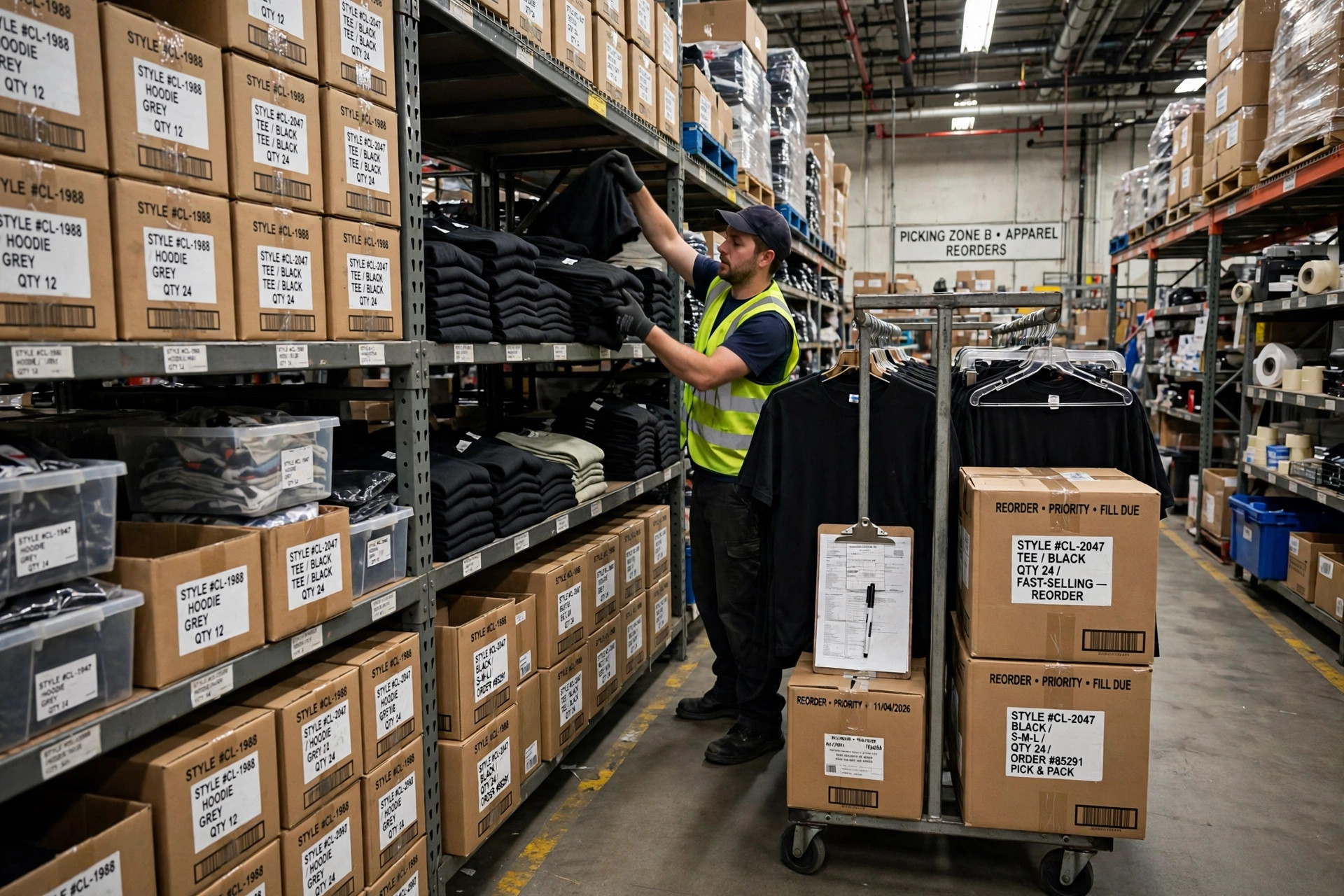
Chasing: The Discipline of the Reorder
Reordering feels like pure upside — the market has voted, the style is proven — and it is exactly there that seasons get hurt. The professional checks are unglamorous: Is the rate based on enough units and weeks to be real, or is it two good weekends? Is the size curve of what remains distorting the signal (a style can look hot because only its best sizes shipped)? Can the vendor deliver the same quality and fabric, or a cheaper substitute that returns as complaints? And will the reorder land with at least half the season's selling power left? A chase that arrives as the season turns is not a reorder; it is next season's clearance, bought early and at full price.
Signals That Fool Buyers
- Rate without volume — 90% sell-through of a 20-unit test is a hint, not a verdict.
- Dollar sell-through after reductions — discounts inflate the money picture while the unit and margin picture weakens; read units.
- One-store heroes — a style flying in a single location may be a local effect, not a range decision.
- The broken-run illusion — overall sell-through hiding mediums gone and extremes untouched, which changes what a reorder should even contain.
Underneath all of it sits the plan: weekly results feed the WSSI, the WSSI recalculates open-to-buy, and open-to-buy decides which of this week's good ideas the business can afford. That loop — read, fund, act, re-read — is in-season management, and it is why the financial plan was worth building carefully in the first place.
Continue Through the Guide
Common Questions
What is sell-through, in one sentence?
Sell-through is the percentage of the units received of a style that have been sold by a given date — units sold divided by units received. The full formula and benchmarks are covered on Apparel Search's sell-through rate page; in-season management is what buyers do with the number every week.
When should a buyer reorder a style?
When three things line up: the style is selling through well ahead of the rate needed to clear by season's end, its size and color availability is still intact enough that the sales signal is real, and the vendor can deliver while enough selling weeks remain to sell the reorder through. A reorder that lands in the last two weeks of a season usually becomes markdown stock.
What is stock reallocation?
Moving units of a style from stores where it is selling slowly to stores where it is selling fast, instead of leaving it to be marked down in the slow stores. It costs freight and handling, so it is used where the rate difference is clear and the units can still sell at full price in their new home.
When is a style an exit candidate?
When its sell-through after a fair selling window — enough weeks, in the right sizes, at the right price position — is far below the rate needed to clear by season's end, and the causes have been checked: price, display position, size availability, late delivery. If the product itself is the problem, an earlier planned markdown almost always recovers more than waiting for end-of-season clearance.
Back to the Guide
This page is one of six in the Retail Buying & Merchandise Planning Guide — return to the hub for the full buying cycle, from the six-month plan to the final markdown.