Apparel Search · Retail Business Guide
Retail Buying & Merchandise Planning
How fashion buying actually works — the season plan, the open-to-buy budget, building the assortment, working the market, trading in season, and clearing with a plan instead of a panic.

Every garment on a store rail is there because somebody made a series of connected decisions months earlier: how much the department should sell, how much stock it should carry, which styles deserved a share of the money, how deep to buy each size, and what to do when reality disagreed with the plan. That decision chain is retail buying and merchandise planning, and it is the commercial engine of every fashion retailer — chain, department store, boutique or online shop.
Apparel Search already covers the arithmetic of this trade on its retail math pages — the formulas for markup, markdown, sell-through, turnover and the rest. This guide is the layer above the formulas: the process that turns a sales target into a stocked store. It follows the buyer's year in the order the work actually happens, from the six-month financial plan down to the last planned markdown of the season.
Buying, Defined
Retail buying is the discipline of converting a sales plan into merchandise: choosing the assortment, committing the money in the right proportions, and then managing the stock — reordering, moving and reducing it — so the season ends with the planned profit and as little leftover inventory as possible. Merchandise planning is its financial twin: the budgets, stock levels and timing that keep the buying honest.
The Six Guides in This Cluster
Each guide takes one stage of the buying cycle in depth. Together they answer the questions retail students, assistant buyers, boutique owners and career changers ask most often.
 Merchandise Financial PlanningThe six-month plan that starts everything: planned sales, markdowns and stock by month, and how WSSI keeps the plan honest week by week.
 Open-to-Buy ExplainedThe buyer's budget discipline — how much money is still available to spend, worked out step by step with a real example.
 Assortment PlanningBreadth versus depth, option plans, price architecture and size curves — turning a money plan into an actual range of styles.
 The Retail Buying ProcessMarket weeks, showroom appointments, line reviews and vendor negotiation — how orders actually get placed.
 Sell-Through & In-Season ManagementReading weekly performance, chasing winners, reallocating stock between stores and making exit decisions while there is still season left.
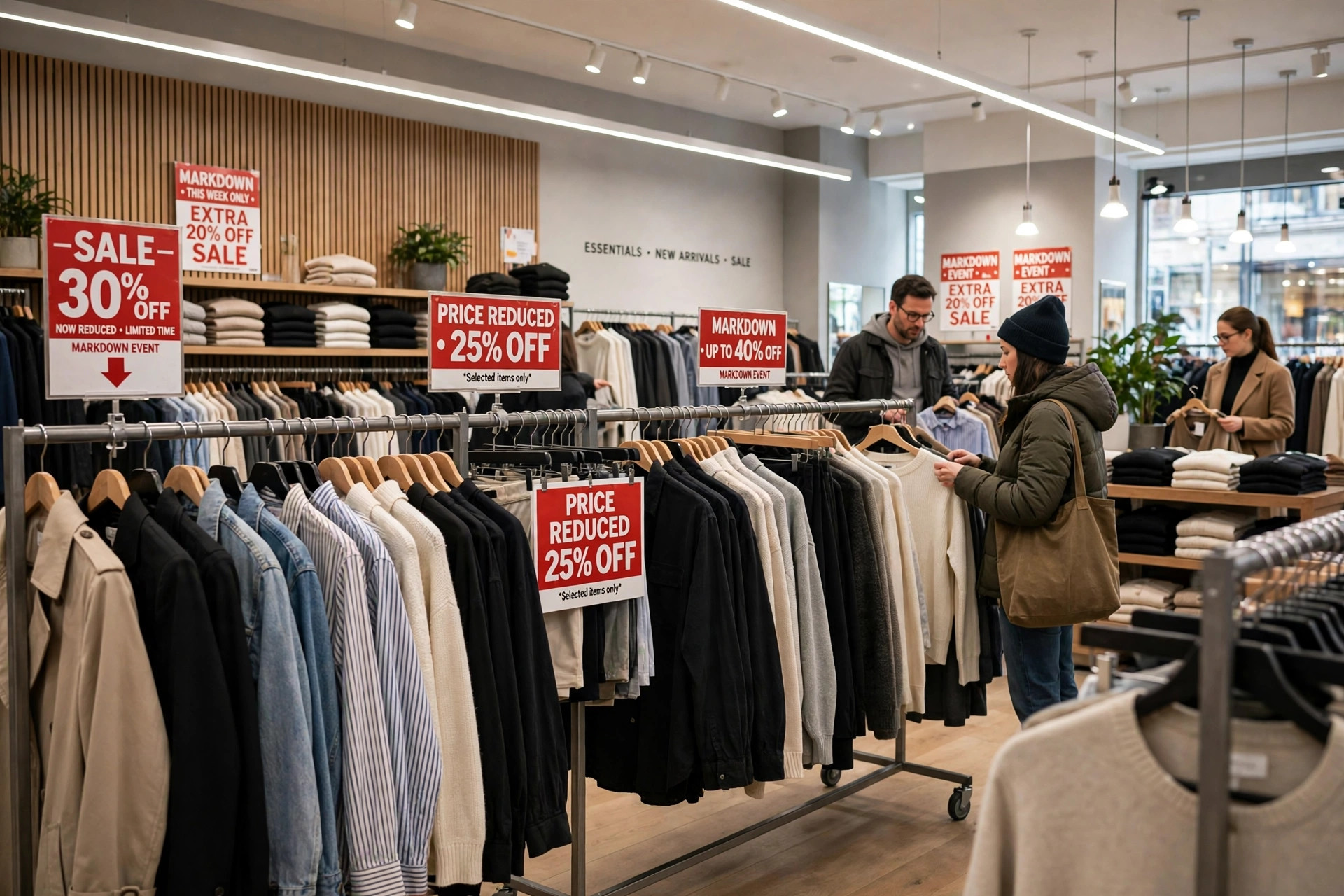 Markdown StrategyCadence, timing and depth: clearing stock as a planned strategy that protects margin, not an end-of-season surrender.
The Buying Cycle, Season by Season
However different retailers look from the outside, their buying teams run the same underlying cycle. The stages overlap — while one season sells, the next is being bought and the one after is being planned — but the logic never changes:
Plan the season in money
Before a single style is chosen, the department agrees its six-month financial plan: sales, markdowns and stock levels by month, built from last year's results and this year's ambitions.
Build the assortment
The money plan becomes a range plan — how many options, at which price points, in what size and color depth. That translation is assortment planning, and it is where fashion judgment meets the budget.
Commit the orders
Buyers work the market — trade shows, showrooms, line reviews — and place orders inside their open-to-buy, holding some budget back for in-season opportunities. The buying process guide follows this stage appointment by appointment.
Trade the season
Once stock lands, the job flips from choosing to reacting: weekly sell-through decides what gets reordered, moved or reduced. In-season management is where most profit is actually won or lost.
Exit on plan
Stock that will not sell at full price is cleared through a markdown strategy — early enough, deep enough, and in the right order — so the season ends clean and the next plan starts from real numbers.

Who Does This Work?
The titles vary — buyer, senior buyer, merchandiser, planner, allocator — but the team structure is consistent: buyers own the product choices, planners own the numbers and stock flow, and assistants keep the orders, samples and data moving. Apparel Search's career pages describe the roles themselves, including womenswear buyer jobs and menswear buyer jobs, and the job description library covers the buying family from assistant buyer to buying director. This guide is the knowledge those roles apply every week.
Where This Guide Fits on Apparel Search
Buying sits between making clothes and presenting them. Upstream, the Garment Costing Guide explains the prices buyers negotiate from; downstream, the Visual Merchandising Guide covers how the bought range is presented in store. The formulas behind every page here live in the retail math section, and working tools — including the open-to-buy planner — are in the tools library.
Related Guides
Common Questions
What does a retail fashion buyer actually do?
A fashion buyer decides what a store will sell, in what quantities, at what prices and at what times. The work runs in a cycle: plan the season's sales and stock in money terms, build an assortment of styles, colors and sizes inside that plan, place orders with brands and suppliers, then manage the stock in season — reordering winners, moving stock between stores and marking down slow sellers before they become clearance.
What is the difference between a buyer and a merchandiser?
In fashion retail the buyer owns the product decisions — what to buy, from whom, at what price — while the merchandiser (sometimes called a planner or allocator) owns the numbers and the flow: the financial plan, the open-to-buy budget, size curves and store allocations. Titles vary by company and country; in some businesses the roles merge, and in others 'merchandising' means the planning function entirely. This guide covers both sides, because in practice they are one connected discipline.
How far ahead do fashion buyers work?
Typically six to nine months ahead of the selling season for branded and imported ranges, and longer for own-label product development. A buyer planning autumn/winter is usually writing orders in late winter and spring, while simultaneously trading the current season and clearing the previous one — three seasons are in play at almost any moment.
Do I need retail math to be a buyer?
Yes — buying is a numbers discipline wearing a fashion coat. Buyers live inside planned sales, stock levels, open-to-buy, sell-through, turnover and margin. The fashion judgment decides which styles deserve the money; the math decides how much money there is and whether the season is working. Apparel Search's retail math pages cover the formulas; this guide covers how the formulas are used as a process.
Start With the Plan
If you read only one guide in this cluster, make it Merchandise Financial Planning. Every other decision in buying — the budget, the range, the reorder, the markdown — is downstream of the six-month plan.