Womenswear Buyer Jobs
Buying careers in womenswear — trend judgment and range discipline in fashion's biggest department
Womenswear buying is fashion buying at its largest scale. Women's departments carry the widest product range in the industry — dresses, tailoring, knitwear, denim, occasionwear, lingerie, accessories and more — turn over trends faster than any other market, and account for the biggest share of most retailers' clothing sales. A womenswear buyer selects and develops those ranges: reading trend direction, judging which styles will sell at which prices, and balancing the commercial core against the fashion pieces that keep a department current.
This page is the career guide to buying womenswear: how the job is structured, who employs women's buyers, and what it takes to get there. It carries the womenswear buyer job-search resources, including the women's wear buyer job description, for this category.
Find Current Womenswear Buyer Job Listings
Apparel Search researches careers rather than posting openings, so the live listings sit with the job boards. These searches track current Womenswear Buyer job listings:
What a Womenswear Buyer Does
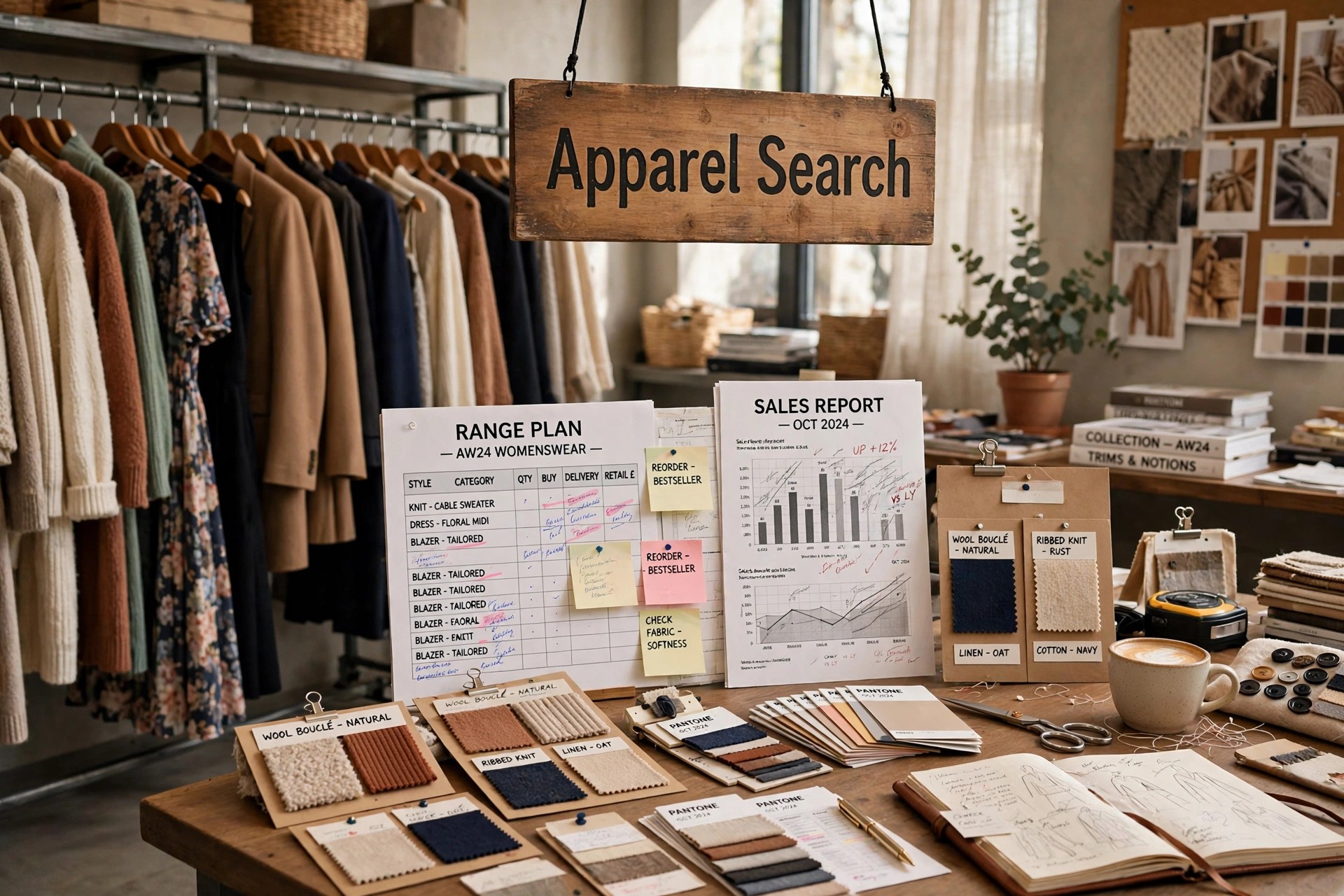
The buyer builds each season's range from trading evidence and trend research: last season's sell-through by style, category and price point, competitor ranges, fashion direction from shows, fabric fairs and the street. Range construction is the craft — good, better and best price tiers; core styles that trade all season; fashion-forward pieces in controlled depth; and category balance across dresses, separates, knitwear and the rest. Womenswear buyers may buy brands, develop own-label ranges with designers, or mix both, negotiating prices, margins and delivery with suppliers and brand partners through a calendar of range reviews, trade shows and showroom appointments.
Trading is relentless in womenswear: with several seasons and drops a year, buyers monitor performance weekly, chase winners, cancel or mark down losers, and feed what they learn straight into the next range. The pace is the category's challenge and its appeal — judgment is tested in public, quickly.
The craft described here is taught step by step in the Retail Buying & Merchandise Planning Guide — from the six-month plan and open-to-buy through assortment planning to in-season trading — and its guide to the retail buying process follows the market weeks, line reviews and negotiations this role runs on.
Who Employs Womenswear Buyers
Department stores, fashion chains, online retailers, catalog and home-shopping businesses, boutiques groups and wholesale distributors all employ womenswear buyers. Departments are usually split by product area — dresses, tailoring, casualwear, lingerie — each with buyer, assistant buyer and merchandising support, under buying management that sets department strategy. Own-label-heavy retailers pair buyers closely with design studios; brand-buying businesses make the buyer a portfolio manager of labels.
Skills and Routes Into Womenswear Buying
Assistant buyer roles are the main door, reached from retail, merchandising or buying-office administration. Employers look for commercial trend judgment — an instinct for what women will actually buy, at what price, this season — underpinned by numeracy and negotiation. Product knowledge by category (dress construction, knitwear weights, denim fits) and a point of view about the department's customer are what separate candidates at interview. Womenswear buying rewards people who can hold both ends of the range: the spreadsheet and the rail.
Price Architecture: The Skeleton of a Women's Range
Every womenswear range hangs on a price skeleton: opening price points that bring customers in, a commercial middle where most units sell, and premium pieces that set the department's fashion credentials. The buyer's craft is keeping that skeleton healthy — enough opening-price volume to drive footfall, enough middle to make the money, enough top end to be believed as a fashion department — across categories that pull in different directions. Dresses may carry the premium story while knitwear carries opening prices; occasionwear spikes the top end seasonally while denim holds the middle all year. When a womenswear buyer explains a range, listen for the architecture: candidates who can describe where a department makes its money, not only what it buys, are speaking the language buying directors hire in.
Common Questions
How is womenswear buying different from other buying?
Scale and speed. Women's departments carry the broadest product range in fashion and move with trends faster than menswear or childrenswear, with more seasons and drops — so range construction, price architecture and weekly trading judgment are tested constantly.
What do womenswear buyers need to be good at?
Commercial trend judgment, range planning across categories and price tiers, negotiation with brands and suppliers, and numerical trading analysis. Category product knowledge — how dresses, knitwear or denim are made and priced — underpins the judgment employers hire.
How do I become a womenswear buyer?
Enter as an assistant buyer, usually from retail, merchandising or a buying office, and build category knowledge and trading experience. Buying departments hire by product area, so depth in a category such as dresses or knitwear is a real career asset.
More to Explore
- Womenswear Jobs
- Fashion Careers by Category
- Fashion Careers by State
- Fashion Careers
- Fashion Jobs
- Employment Agencies
- Clothing Industry Jobs
- Fashion Job Search
- View Fashion Jobs
- retail math
- Women's Fashion
- Women's Clothing Stores
- Women's Clothing Guide
- Women's Fashion Brand Guide
- Women's Apparel
- Women's Fashion Designer Jobs
- Womenswear Sales Jobs
- Womenswear Fashion Merchandiser Jobs
- Search Job Categories
- Job Search Engines
- Fashion Career Internships
- Message to Employees About Fashion Career
- Message to Employers About Employees