Womenswear Sales Jobs
Sales careers in womenswear — showroom selling, agency work and the largest retail sales sector in fashion
Womenswear sales is the largest selling field in fashion, on both sides of the counter. Wholesale salespeople — brand representatives, showroom staff and independent sales agents — sell women's lines to the buyers of department stores, chains and boutiques. Retail salespeople staff the women's departments and stores where those lines reach customers, in numbers larger than any other fashion sector employs. Both branches reward product fluency: knowing the season's shapes, fabrics and price points well enough to advise a professional buyer or a customer with equal confidence.
This page explains both branches of womenswear selling, the employers behind them, and how sales careers in the women's market are built. It carries the womenswear sales job-search resources, including the women's wear sales job description, for this category.
Find Current Womenswear Sales Job Listings
Apparel Search researches careers rather than posting openings, so the live listings sit with the job boards. These searches track current Womenswear Sales job listings:
Wholesale and Showroom Sales in Womenswear
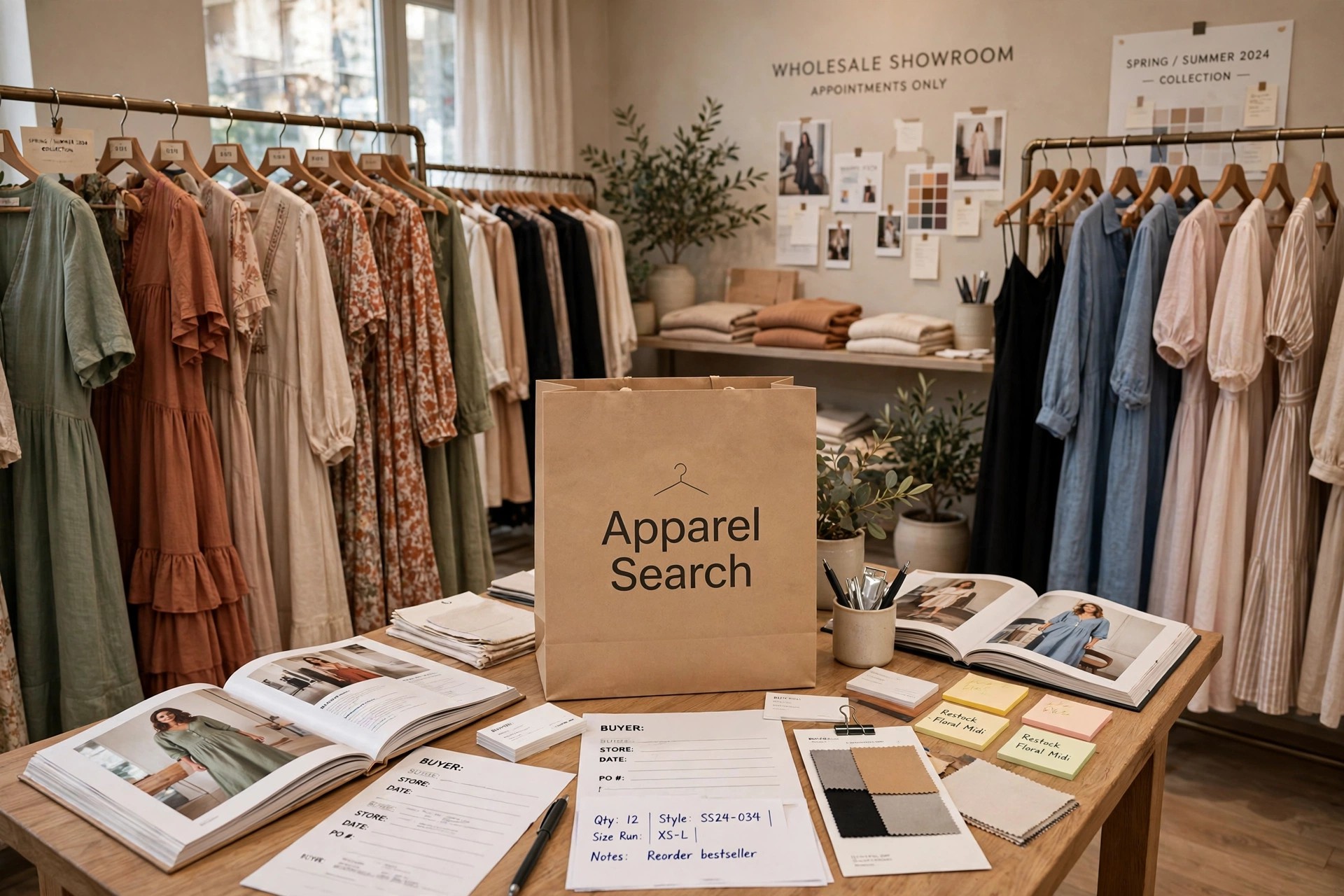
Wholesale selling seasons are intense: representatives present collections to buyers in showrooms and at trade fairs, work through ranges style by style, negotiate orders and delivery dates, and then manage accounts through the season — reorders on winners, problem-solving on deliveries, and feedback to design and merchandising about what stores are asking for. Sales agents, who represent several non-competing lines to boutiques in a territory, are a distinctive feature of womenswear, giving experienced salespeople a route to running their own agency business. National account roles handle the big chains and department groups, where the volumes justify dedicated staff.
The womenswear selling calendar never really stops — main seasons, pre-collections, drops and replenishment — so the job suits people who enjoy pace, travel and relationships maintained under commercial pressure.
Retail Sales Careers in Womenswear
Women's retail employs sales associates, senior sales and styling staff, personal shoppers, department managers and store managers across every format from luxury boutiques to value chains and online-fulfilled stores. The craft is service and product knowledge: building outfits, advising on fit and occasion, managing fitting rooms and client relationships, and hitting trading targets through the season's peaks — new-season launches, occasionwear periods, sales events. Retail is also womenswear's biggest training ground: buyers, merchandisers and wholesale representatives across the industry began by selling women's clothing in a store, because that is where customer judgment is learned.
Getting Into Womenswear Sales
Retail entry needs no formal qualifications — service instinct and genuine interest in the product are the interview tests — while wholesale roles ask for a selling track record, ideally in fashion. Whichever branch you target, learn the market's language: the season's key categories, the employer's price architecture and competitors, and how ranges are bought and delivered. Candidates who can talk about sell-through and customers, not only about loving fashion, are the ones womenswear sales managers hire.
The Methods of Selling in the Women's Market
Selling is the profession-wide term for the activities involved in moving merchandise — women's clothing, shoes, handbags and accessories — to a buyer, and it is the final stage of marketing, working alongside pricing, promotion, place and product. The women's fashion market uses many methods of selling: direct sales, channel sales, retail sales, business-to-business selling and direct-to-consumer selling among them. Within those methods, salespeople concentrate on skills such as sales negotiation, upselling, cross-selling, relationship management, persuasive selling and soft selling. A women's clothing salesperson, in the end, sells to a women's clothing buyer — in a store that buyer is the customer, and in wholesale it is the retail buyer whose orders the methods above are used to win.
Selling to the Buyer: How Wholesale Womenswear Really Works
Wholesale womenswear selling is a conversation between professionals about a third person's taste: the customer neither of you will meet. The representative's job in that conversation is translation — turning a collection into a store's language of price points, size ratios, delivery months and margin — while carrying the store's reality back to the brand: what its customers asked for, what they returned, what the shop across town is doing. The methods are the classic ones: direct selling, channel and agency selling, negotiation, cross-selling across categories, and the soft selling that keeps a boutique relationship alive through a weak season. Salespeople who master that translation are rarely out of work in womenswear, because every brand and every store needs the conversation to happen well, every season, without exception.
Common Questions
What types of womenswear sales jobs exist?
Wholesale roles — brand and showroom representatives, independent sales agents representing several lines, and national account staff — and retail roles from sales associate and personal shopper to department and store management.
What is a womenswear sales agent?
An independent salesperson who represents several non-competing women's brands to boutiques and stores in a territory, earning commission on orders. Agency work is a well-established route for experienced womenswear salespeople to run their own business.
How do I start a womenswear sales career?
Retail sales is the open door and the industry's training ground; wholesale and showroom roles usually follow proven selling experience. Product knowledge — categories, fabrics, fits and price points — and a commercial way of talking about them matter in both branches.
More to Explore
- Womenswear Jobs
- Fashion Careers by Category
- Fashion Careers by State
- Fashion Careers
- Fashion Jobs
- Employment Agencies
- Clothing Industry Jobs
- Fashion Job Search
- View Fashion Jobs
- women's clothing buyer
- Fashion Career Internships
- Women's Fashion Designer Jobs
- Womenswear Fashion Merchandiser Jobs
- Search Job Categories
- Job Search Engines
- Message to Employees About Fashion Career
- Message to Employers About Employees
- Women's Clothing
- Women's Fashion Brands
- Women's Apparel
- fashion business