Womenswear Fashion Merchandiser Jobs
Merchandising careers in womenswear — quantities, size and store plans behind the fastest ranges in fashion
A womenswear merchandiser plans the money and the stock behind women's ranges — the broadest, fastest-trading assortments in fashion. Working with the buyer, the merchandiser sets budgets and quantities by category, decides how stock is spread across sizes and stores, and then trades the season: chasing styles that are flying, protecting availability on winners, and clearing losers before they become end-of-season markdown. In womenswear the trading cycle is measured in weeks, so merchandising judgment shows up in results faster here than anywhere else in the industry.
This guide explains womenswear merchandising jobs and grades, their employers, and the analytical route into the role. It carries the womenswear merchandiser job-search resources and the role's job description for this category.
Find Current Womenswear Fashion Merchandiser Job Listings
Apparel Search researches careers rather than posting openings, so the live listings sit with the job boards. These searches track current Womenswear Fashion Merchandiser job listings:
What Womenswear Merchandisers Do
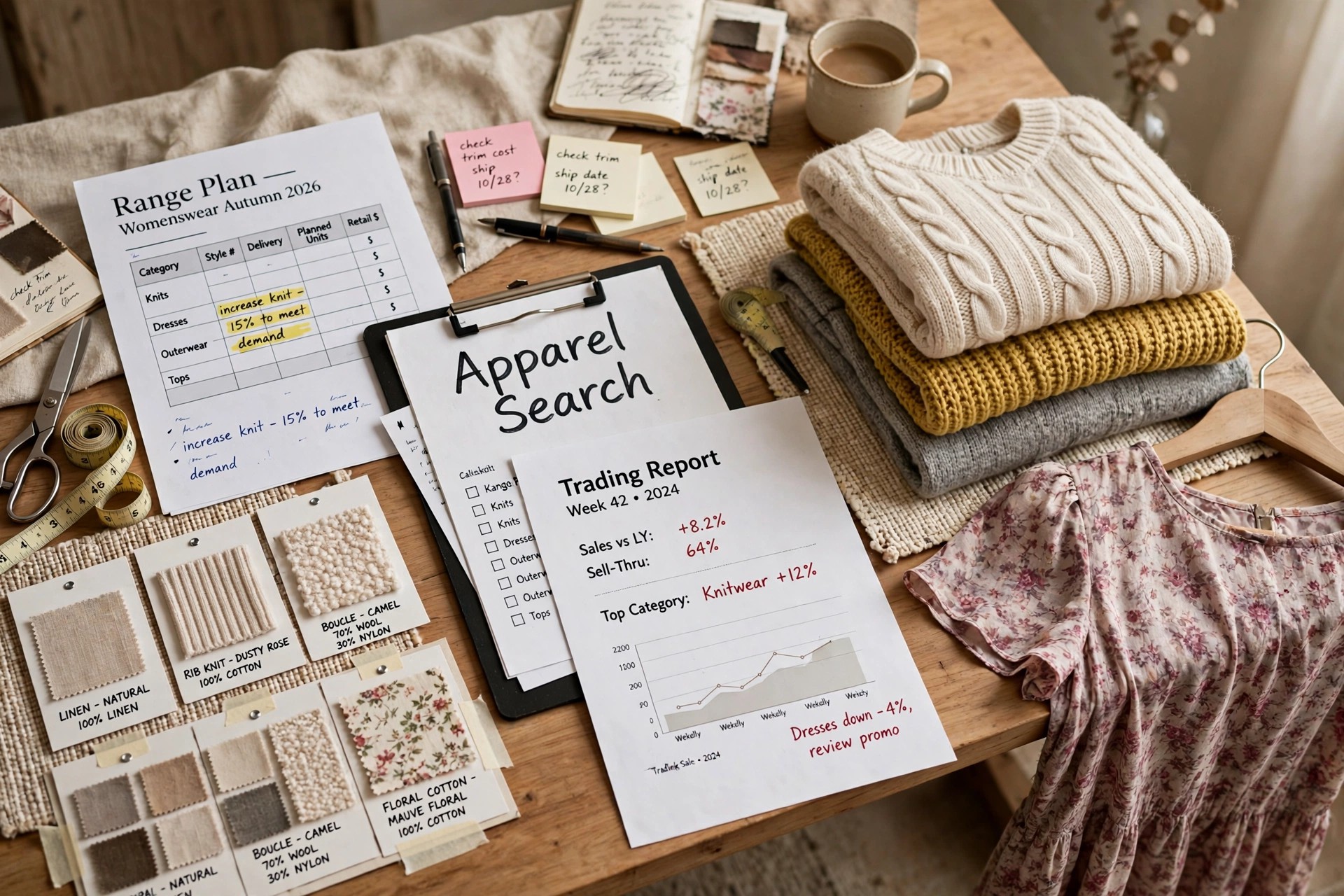
Before the season, merchandisers build the financial plan: sales, margin and stock targets by department and category, open-to-buy for the buyer to spend, and range plans that translate the buyer's assortment into quantities per size and store group. Womenswear size planning weighs fashion fit variation — a dress range and a denim range sell through sizes differently — and store grading matters because a flagship and a small-town store need different depths of the same fashion styles. During the season the work is trading analysis: weekly sell-through, rate-of-sale by store, replenishment and transfer decisions, promotional and markdown planning, and the constant re-forecasting that womenswear's pace demands.
Brand and supplier merchandisers do the mirror-image job, planning production quantities and allocating stock across the retail accounts that stock the brand, with order-book and delivery management added.
Who Employs Womenswear Merchandisers
Every womenswear retailer of scale — chains, department stores, online businesses, catalog brands — employs merchandising teams, and womenswear brands and wholesalers employ merchandisers on the supply side. The ladder runs allocator and merchandising assistant, assistant merchandiser, merchandiser, senior merchandiser and into planning and merchandising management. Because womenswear is the biggest department, it is also where the most merchandising jobs, and the fastest promotion through them, tend to be.
Skills and Entry Routes
Merchandising recruits analysts: strong spreadsheet and data skills, comfort with trading figures, and the confidence to make quantity decisions on evidence. Fashion knowledge — womenswear categories, size behavior, the seasonal calendar — is learned in role and from retail experience, and candidates from stores who understand what actually sells bring an edge. Entry is through allocator and merchandising assistant posts; the womenswear merchandiser job description linked here shows how employers frame the fully-fledged role.
Merchandising Beyond the Retail Floor
Merchandising is not only a retail activity. At its simplest it is any practice that contributes to selling products to the target customer: in stores that means stocking and displaying products so they attract buyers, in wholesale it means merchandisers arranging showrooms and trade-show booths and organizing collections so buyers can shop them, and in marketing it extends to licensed merchandising, where a brand or image from one product is used to sell another. Womenswear merchandisers work across all of those levels — retail, wholesale and brand — which is why the role's skills travel so well between employers.
Replenishment and Reaction: Trading Women's Ranges In-Season
Womenswear merchandising earns its keep after the range lands. The in-season craft has two gears. Replenishment is the steady gear: keeping proven styles and sizes available while demand lasts, moving stock between stores as local patterns emerge, and protecting the availability that full-price sales depend on. Reaction is the fast gear: reading early sell-through on new fashion styles, deciding which deserve more depth while there is still time to get it, and which should be marked down early to release money into the winners. Both gears run on the same weekly evidence, and both are judged at season's end by two numbers — how much sold at full price, and how little was left. Candidates who can explain that trade-off concretely, rather than describing merchandising as 'analyzing data', give interviewers what they are listening for.
Common Questions
What does a womenswear merchandiser do?
Plans budgets, quantities, size depth and store distribution for women's ranges with the buyer, then trades the season — replenishment, transfers, promotions and markdowns — using weekly sell-through analysis. Supplier-side merchandisers plan production and allocations for retail accounts.
Why is womenswear merchandising fast-paced?
Women's ranges are broad and trend-driven with frequent drops, so trading decisions come weekly and their effects show within the season. Re-forecasting and reacting to sell-through is the center of the job, more than in slower categories like menswear.
How do I get into womenswear merchandising?
Start in an allocator or merchandising assistant role, build data and spreadsheet fluency, and learn womenswear's categories, size behavior and calendar. Retail experience in women's departments is valued evidence of trading instinct.
More to Explore
- Womenswear Jobs
- Fashion Careers by Category
- Fashion Careers by State
- Fashion Careers
- Fashion Jobs
- Employment Agencies
- View Fashion Jobs
- fashion merchandising
- Women's Fashion Designer Jobs
- Womenswear Sales Jobs
- Womenswear Buyer Jobs
- fashion merchandising services
- Search Job Categories
- Job Search Engines
- Fashion Career Internships
- Message to Employees About Fashion Career
- Message to Employers About Employees
- Clothing Industry Jobs
- Fashion Job Search