Fashion Careers by Job Category
Career guides organized by market category — pick your corner of the fashion industry and explore its jobs
Fashion careers are easiest to explore one category at a time. The industry organizes itself by market — childrenswear, menswear, womenswear, footwear, intimate apparel, outerwear, sportswear — and by function, and each category has its own employers, its own calendar and its own version of jobs like buying, designing, merchandising and selling. A buyer in childrenswear and a buyer in menswear share a job title and very little else about their working week.
This hub collects the category career guides: five role guides each for childrenswear, menswear and womenswear, plus single-category guides for footwear, lingerie and intimate apparel, merchandising, modeling, outerwear, sportswear and warehousing. Start with the category that matches the clothing you know best, then read the role guide inside it that matches the work you want to do.
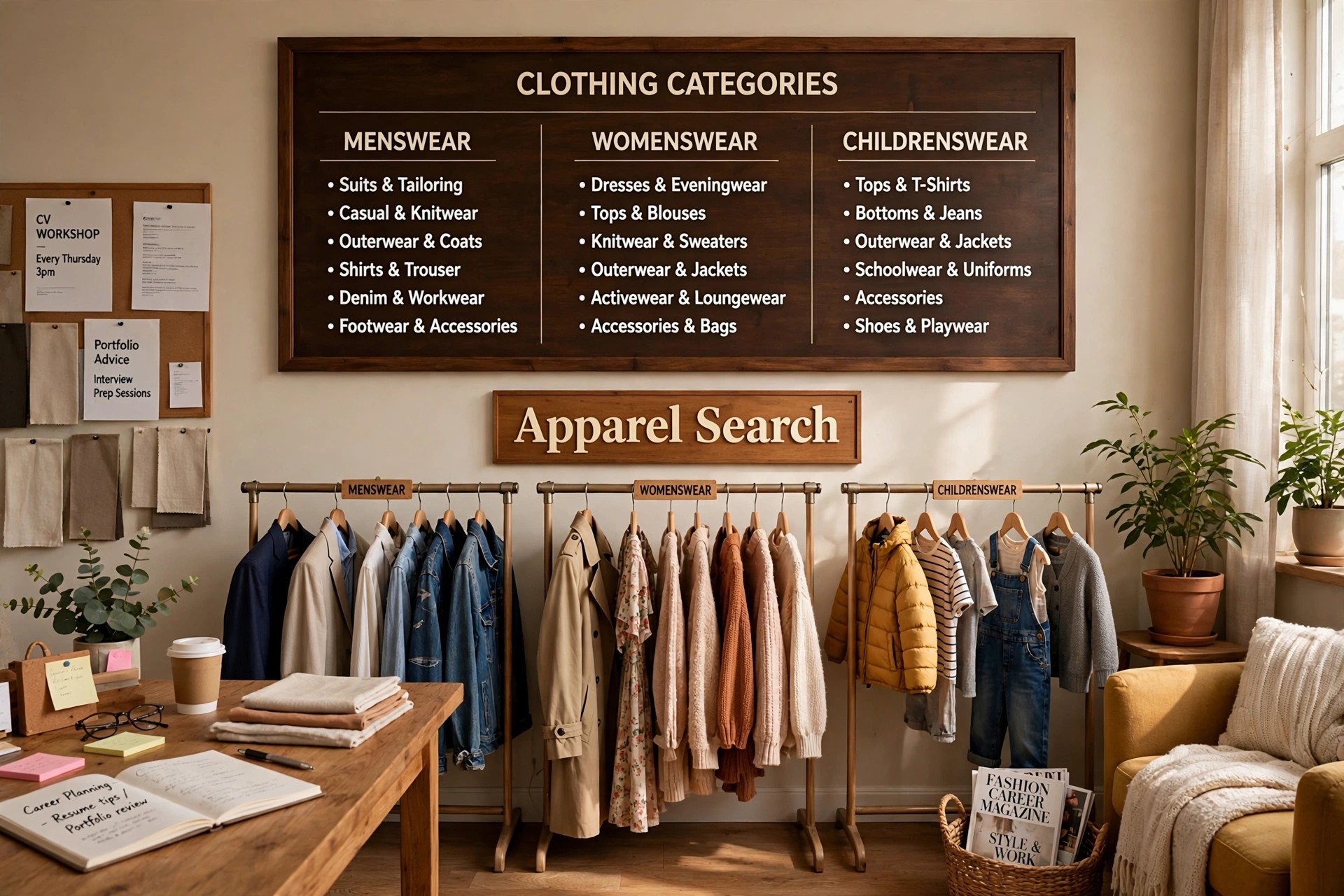
How the Category Guides Are Organized
The three big apparel markets each get a five-page set: a general career search guide for the whole market, and dedicated guides for buyer jobs, designer jobs, merchandising jobs and sales jobs in that market. That structure mirrors how employers hire — vacancies are advertised inside a market first and a function second, so searching by category keeps you reading the right advertisements. The smaller categories get one focused guide each: footwear careers treat shoes as their own industry (which, in employment terms, they are), the intimate apparel guide covers lingerie careers with the discretion that market requires, and the merchandising, modeling, outerwear, sportswear and warehousing guides each open up a function or product world of its own.
Every category guide carries the job-search resources gathered for that category, including links to the matching job descriptions, so from any category you can move from an overview of the market to the detailed description of a specific role — for example from menswear buying to the menswear buyer job description — without starting your search over.
Choosing a Category to Build a Career In
Choose by product knowledge and temperament, not only by glamour. Childrenswear suits people who enjoy family retail, sizing systems and value-driven ranges. Menswear rewards knowledge of tailoring, fit consistency and slower, more classic range cycles. Womenswear is the largest and fastest-moving market, with the widest variety of employers. Footwear is a technical trade of lasts, fitting and construction. Outerwear and sportswear lean toward performance fabrics and functional design, merchandising toward analysis, modeling toward portfolio and agency work, and warehousing toward the logistics that every other category depends on. Skills transfer between categories — a good buyer is a good buyer — but each move means learning a new market's sizes, seasons and customers, and employers interview for that market knowledge specifically.
One Title, Many Jobs: Reading Category Listings Carefully
The category structure exists because job titles alone mislead. A 'designer' listing in the footwear category means lasts, patterns and construction; in womenswear it may mean dresses and prints; in childrenswear it means age-graded ranges and safety-aware construction. A 'merchandiser' in the merchandising category guide is a planner of stock and money, while a 'merchandiser' attached to a brand's category page may be managing order books and showrooms. Whenever a title interests you, open the category guide first and the job description second, and read the two together: the category tells you the market the job lives in, and the description tells you the work. That habit — category, then role — will save you from more wrong applications than any other in fashion job hunting.
Common Questions
Why browse fashion careers by category instead of by job title?
Because employers hire inside a market first. The same title — buyer, designer, merchandiser, salesperson — means different products, calendars, customers and skills in childrenswear, menswear, womenswear or footwear, and vacancies are written in the language of their category.
Which categories have the most detailed guides here?
Childrenswear, menswear and womenswear each have five guides: a market-wide career search page plus buyer, designer, merchandising and sales guides. Footwear, lingerie, merchandising, modeling, outerwear, sportswear and warehousing each have a dedicated category guide.
Can I move between categories once my career has started?
Yes — core skills transfer, and mid-career moves between markets are common. Expect to rebuild market-specific knowledge each time: sizing systems, seasonal calendars, price structures and the customer profile of the new category.
Photos

More to Explore
- Fashion Careers
- View Fashion Jobs
- Fashion Industry Careers
- https://www.apparelsearch.com/cutting_contractors.htm
- Footwear Careers
- Intimate Apparel Careers
- Outerwear Careers
- Fashion Merchandising Careers
- Fashion Modeling Careers
- Sportswear Careers
- Womenswear Careers
- Menswear Careers
- Childrenswear Careers
- Warehousing Jobs
- Fashion Industry Job Category DESCRIPTIONS
- Fashion Industry Employment
- Employment Agencies
- Job Search Engines
- Fashion Career Internships
- Clothing Industry Jobs
- Message to Employees About Fashion Career
- Message to Employers About Employees
- Fashion Career by State (in USA)
- garmento