Lingerie and Intimate Apparel Careers
Careers in intimate apparel — design, buying, fitting and merchandising for lingerie, underwear and sleepwear
Intimate apparel — lingerie, underwear, sleepwear and loungewear — is one of fashion's most technical markets. Fit is engineered rather than approximate: bra sizing runs across band and cup combinations, fabrics are chosen for stretch, support and next-to-skin comfort, and a successful garment disappears under clothing while doing structural work. Careers in this market include intimate apparel designers and technical designers, buyers and merchandisers for lingerie departments and brands, trained bra fitters in retail, and sales and production specialists who understand stretch fabrics and sized construction.
This guide explains the intimate apparel job families, the employers who hire for them, and the routes into the market, and it carries the career-search resources for lingerie and intimate apparel, including the relevant job descriptions. The market rewards discretion, technical knowledge and genuine fitting expertise — qualities this page treats as the center of the career, because in this category they are.
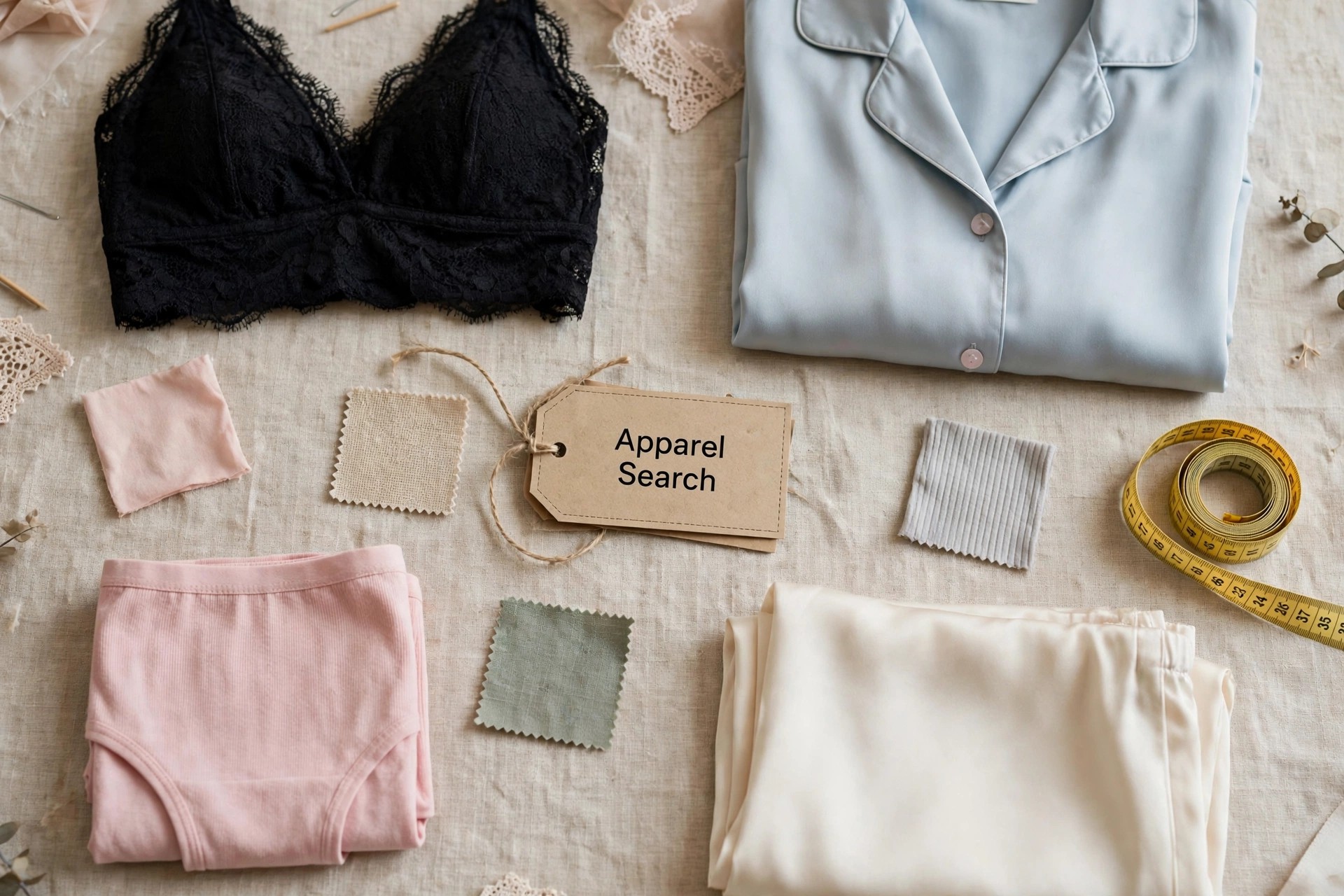
Find Current Lingerie and Intimate Apparel Job Listings
Apparel Search researches careers rather than posting openings, so the live listings sit with the job boards. These searches track current Lingerie and Intimate Apparel job listings:
Job Families in Intimate Apparel
Design in intimates splits between creative design — seasonal lingerie, sleepwear and loungewear ranges — and technical design, where fit, support engineering, wire and cup construction, elastic and lace specification, and grading across band and cup sizes are the daily work. Pattern and sample specialists in this market are highly skilled: small pattern errors that clothing would forgive become unwearable in a bra. Buying and merchandising roles plan assortments by size depth as much as by style, because a lingerie range lives or dies on size availability, and replenishment basics — everyday bras, briefs and sleepwear staples — trade all year beneath the seasonal fashion ranges.
Retail fitting is the market's signature customer-facing career: trained fitters measure and advise customers in private fitting rooms, and good fitters build loyal clienteles. Wholesale sales representatives sell intimate lines to department stores and specialist lingerie shops, and production and quality roles work with the specialist factories and stretch-fabric suppliers the market depends on.
Who Employs Intimate Apparel Specialists
Lingerie brands and manufacturers, department stores with intimate apparel departments, specialist lingerie retailers, catalog and online intimates sellers, and supermarket and chain underwear ranges all employ staff in this market. Technical design, pattern and fitting expertise concentrates in brands and specialist retailers, while buying and merchandising roles sit in both brands and retail head offices.
Building a Career in Intimates
Entry routes mirror the wider industry — assistant designer, assistant buyer, merchandising assistant, retail associate — with one addition: bra fitting training, offered by specialist retailers and brands, is a credential this market respects and a route into senior retail and even buying roles, because fitters learn size demand from the customer outward. Designers crossing into intimates should expect to rebuild their technical base: stretch fabrics, support construction and cup grading are learned inside the market, usually in assistant technical roles. Present your interest professionally and technically — employers in this category hire for construction knowledge, discretion and customer care, and interview for exactly those qualities.
Size Depth and the Economics of Intimates
A lingerie range multiplies in a way clothing ranges do not. One bra style in four colors, across band sizes and cup sizes, is not one product but dozens of stock-keeping units, each of which a customer may need on the day she shops. That arithmetic shapes every career in the market: buyers plan breadth against the risk of shallow size stock, merchandisers manage replenishment so core sizes never gap, designers engineer styles that grade cleanly across the size range, and fitters turn size knowledge into the service that keeps customers loyal to a store. Candidates who understand this multiplication — who can talk about a range in sizes as confidently as in styles — speak the intimate apparel market's native language from their first interview.
Common Questions
What jobs are there in lingerie and intimate apparel?
Intimate apparel design and technical design, pattern and sample making for sized and stretch garments, buying and merchandising for lingerie ranges, wholesale sales, production and quality roles, and retail careers including trained bra fitting and lingerie department management.
Is bra fitting a real career step or just a shop-floor task?
A real one. Trained fitters are specialists whose size and fit knowledge feeds retail buying and range planning, and senior fitting, training and department roles grow out of it. Specialist retailers treat fitting expertise as a core professional skill.
How do I get into intimate apparel design?
Usually through an assistant designer or assistant technical designer role inside a lingerie brand or supplier. Expect to learn stretch fabric behavior, support construction and band-and-cup grading on the job; a portfolio showing technical understanding of fit carries more weight here than pure fashion illustration.