Women's Fashion Designer Jobs
Design careers in womenswear — the industry's largest design field, from dresses to tailoring to knitwear
Womenswear is the largest design field in fashion, and its designer jobs cover more product territory than any other category: dresses and occasionwear, tailoring, knitwear, separates, denim, lingerie-adjacent loungewear, maternity, petite and plus-size ranges, bridal, and the seasonal collections that set the industry's pace. A women's fashion designer shapes silhouette, color, print and fabric into ranges that retailers can sell — and does it on a calendar of multiple seasons and drops a year, at speeds that vary from luxury ateliers to high-volume own-label studios.
This guide explains what womenswear designers do, the employers who hire them at every level of the market, and how design careers in the women's market are built. It carries the womenswear design career resources, including the women's fashion designer job description, for this category.
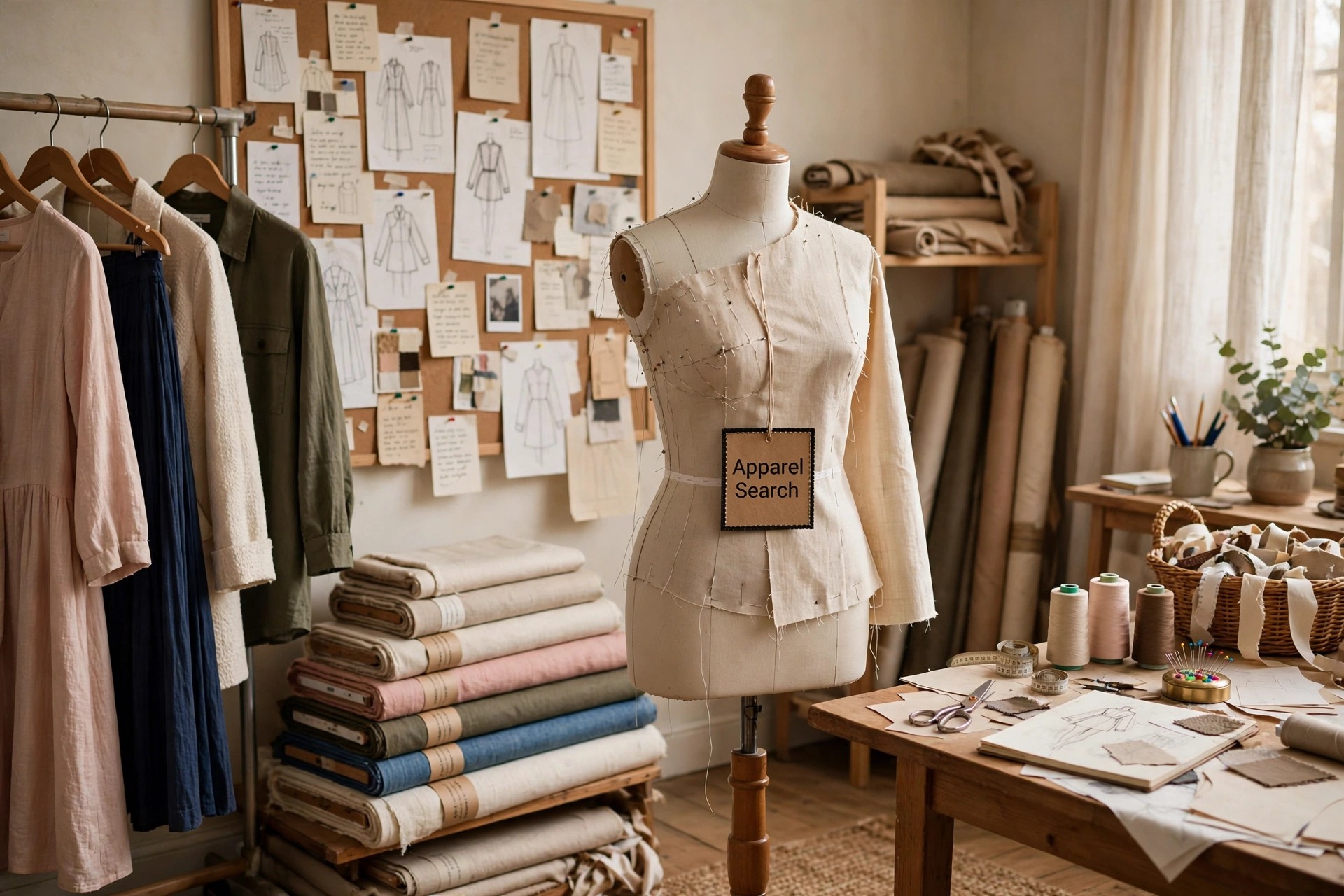
Find Current Women's Fashion Designer Job Listings
Apparel Search researches careers rather than posting openings, so the live listings sit with the job boards. These searches track current Women's Fashion Designer job listings:
The Work of a Womenswear Designer
The designer's season begins with research — trend direction, fabric fairs, vintage and street references, and the trading evidence from the buying and merchandising team — and turns it into range plans, sketches and fabric and color selections. From there the work is development: fittings on models and stands, pattern and sample-room collaboration, print and embellishment artwork, technical packs, and cost work to bring each style in at its price point. Womenswear's breadth means designers specialize: a dress designer thinks in occasion, drape and decoration; a tailoring designer in structure and cloth; a knitwear designer in yarn and stitch; a print designer in surface. Senior designers and heads of design own the coherence of the whole range, balancing statement pieces against the commercial styles that pay for them.
Speed is the market's defining pressure: more seasons, more drops, faster reaction to trading. Designers who thrive combine genuine creative direction with the discipline to develop large style counts to deadline without losing the handwriting of the brand.
Who Employs Women's Fashion Designers
Womenswear brands at every price level, department stores and chains with own-label design studios, online fashion businesses, catalog brands, bridal and occasionwear specialists, and suppliers designing for retailer labels all employ womenswear designers. The ladder runs assistant designer, designer, senior designer, design manager and head of design, with technical designers and print and graphic designers as parallel specialist tracks. Freelance womenswear design is a substantial market, especially for print, knitwear and specific product categories.
Building a Womenswear Design Career
A portfolio for womenswear is judged on range thinking as much as drawing: complete, balanced collections with fabric and color stories, technical awareness, and a clear customer. Internships and assistant designer roles in womenswear studios are the standard entry, and category specialization usually follows — the market hires 'a dress designer' or 'a knitwear designer' at senior levels more often than a generalist. Keep development work in your portfolio: fittings, toiles, technical drawings and finished garments show employers you can take a style from sketch to production, which is where most junior designers are actually tested.
For a complete walkthrough of assembling that portfolio — what to include, how to sequence projects, and the mistakes reviewers penalize — see the Apparel Search guide to Building a Fashion Design Portfolio.
From Sketch to Sample: Where Junior Designers Prove Themselves
Employers of junior womenswear designers watch one stage of the process above all: development. Anyone can present an exciting sketch; the designer a studio relies on is the one whose styles survive fittings, pattern cutting and costing with their idea intact — who can adjust a sleeve, re-spec a fabric or simplify a detail to hit a price without losing the garment's point. That is why portfolios that show process — toiles, fitting photographs, technical drawings, before-and-after development — outperform portfolios of finished illustrations alone. Internships and assistant roles are where this proof is gathered, and the juniors who volunteer for the unglamorous development work, rather than only for range-planning days, are the ones senior designers recommend when a designer post opens.
Common Questions
What product areas can a womenswear designer specialize in?
Dresses and occasionwear, tailoring, knitwear, separates, denim, prints and graphics, bridal, maternity, petite and plus-size ranges and more. Senior hiring is usually by specialization, so most designers build depth in one or two product areas.
Who employs women's fashion designers?
Womenswear brands at all price levels, retailers' own-label studios, online fashion businesses, bridal and occasionwear specialists, and suppliers designing for store labels. Freelance design is also a large part of this market.
What do employers look for in a junior womenswear designer?
Range thinking — balanced collections with fabric, color and price awareness — plus technical competence: fittings, technical drawings and evidence of taking garments through development. Internship and assistant experience in a womenswear studio is the normal foundation.
More to Explore
- Womenswear Jobs
- Fashion Careers by Category
- Fashion Careers by State
- Fashion Careers
- Fashion Jobs
- Employment Agencies
- Fashion Designer
- fashion designers by name in our directory.
- fashion designer definition
- Womenswear Sales Jobs
- Womenswear Fashion Merchandiser Jobs
- Womenswear Buyer Jobs
- Clothing Industry Jobs
- Fashion Job Search
- View Fashion Jobs