Men's Clothing Buyer Jobs
Buying careers in menswear — tailoring, shirting and casual ranges planned on fit and fabric
A men's clothing buyer builds the assortments a store sells to men: suits and tailoring, shirts, knitwear, trousers, denim, casualwear, outerwear and the underwear and accessories that complete the department. Menswear buying runs on fit, fabric and consistency more than on rapid trend turnover — customers return for the brand whose cut they trust — so the buyer's skill is judging quality, construction and price value inside ranges that evolve steadily rather than reinvent themselves each season.
This page is the career guide to menswear buying: the shape of the job, the employers who hire men's buyers, and the experience that leads there. It carries the menswear buyer job-search resources, including the men's wear buyer job description, so you can see the role as employers define it.
Find Current Men's Clothing Buyer Job Listings
Apparel Search researches careers rather than posting openings, so the live listings sit with the job boards. These searches track current Men's Clothing Buyer job listings:
What a Menswear Buyer Does
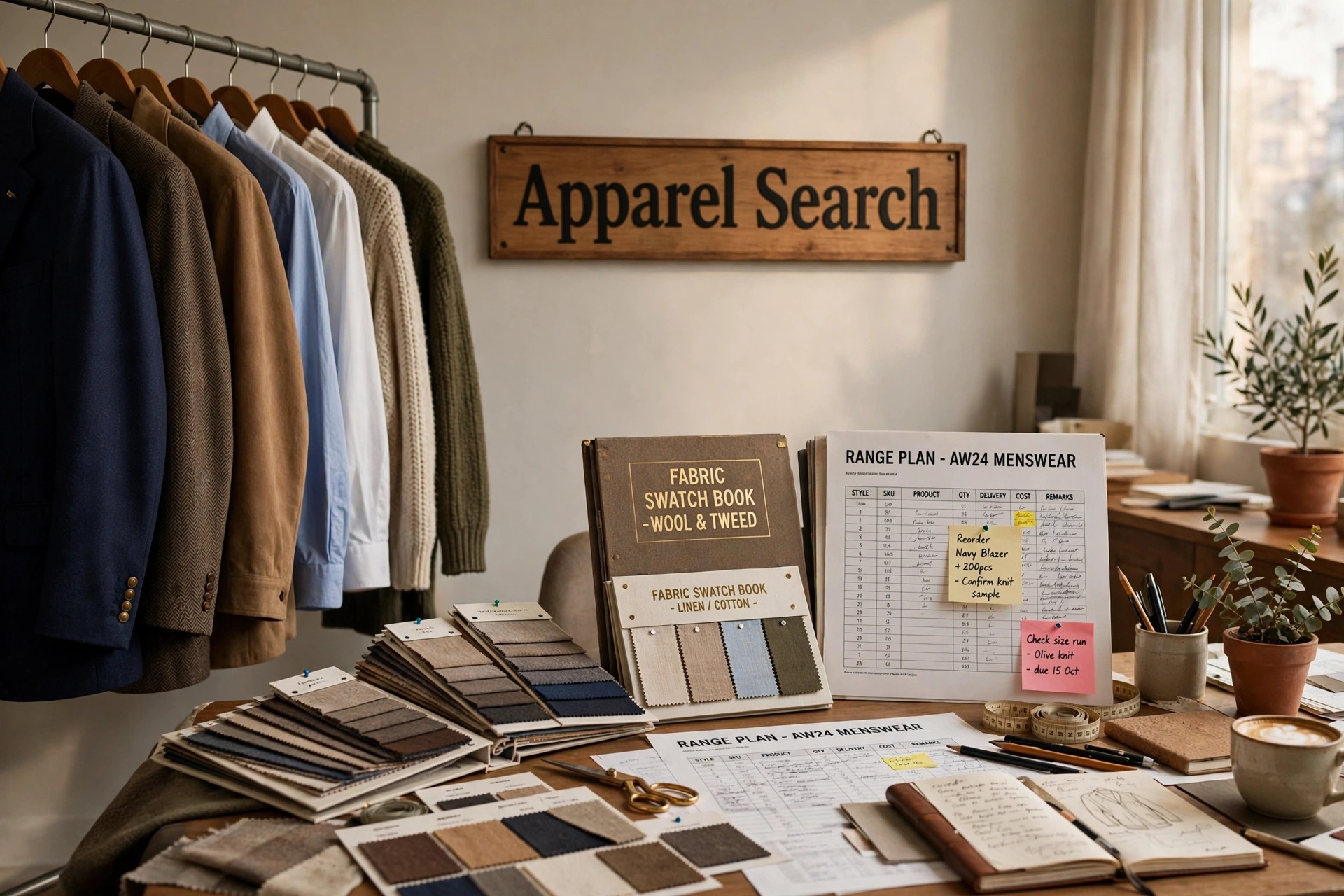
The menswear buyer reviews trading by category — tailoring volumes, shirt sales by collar size and sleeve length, knitwear by weight and fiber — then builds the next season's range with designers and merchandisers: core programs that carry over, seasonal fashion pieces, and price tiers from entry to premium. Supplier work is central: negotiating with shirtmakers, tailoring factories, denim and knitwear suppliers and brands, often across long relationships where reliability and consistent fit blocks are the real product. Fit sessions and fabric selection take more of a menswear buyer's week than trend research does, because a changed shoulder line or a cheaper cloth shows up immediately in returns and repeat sales.
Menswear departments also run on events and needs — wedding and occasion tailoring, seasonal outerwear, gift periods — and the buyer plans depth and marketing support around them. In branded environments the buyer manages a portfolio of labels; in own-label retail the buyer works directly with product teams on the retailer's own ranges.
Who Employs Men's Clothing Buyers
Department stores, menswear chains and specialists, tailoring and shirt retailers, online menswear sellers, catalog businesses, and wholesale distributors employ men's buyers. Larger employers divide the department by category — a tailoring buyer, a casualwear buyer — while smaller menswear businesses expect one buyer to cover the whole floor. Assistant buyer and buyer grades structure the ladder, with buying management above.
Skills and Routes Into Menswear Buying
Menswear buyers typically come up through assistant buying or merchandising, frequently with menswear retail experience behind them. Employers test product knowledge hard: cloth weights and weaves, tailoring construction, shirt sizing, fit blocks and the difference between a fused and a canvassed jacket are interview material, not trivia. Numeracy matters as in all buying — budgets, margin and sell-through analysis — but in menswear the decisive edge is a reputation for dependable judgment: ranges that fit, fabrics that perform, and suppliers who deliver what was promised.
Core Programs and Fashion Risk in a Men's Range
A menswear range is a portfolio of certainties and bets. The certainties are the core programs — the white and blue shirts, the core chino, the navy blazer, the underwear multipacks — that sell every month and anchor the department's turnover; the buyer's job there is depth, consistency and never breaking a fit or a fabric that customers rely on. The bets are the seasonal fashion pieces that keep the department looking current and give the marketing team something to talk about; the buyer's job there is controlled depth and a clear exit. Weak menswear buying confuses the two, putting fashion depth on core lines or starving them to fund novelty. Strong menswear buying can state, line by line, which logic it is applying — and that clarity is what buying directors listen for when they interview.
Common Questions
How does menswear buying differ from womenswear buying?
Menswear ranges change more gradually and sell on fit, fabric quality and consistency, so the buyer's work centers on construction, sizing systems (collar, chest, leg length) and long supplier relationships rather than rapid trend turnover. Category depth — tailoring, shirting, casualwear — replaces breadth of trends.
What product knowledge does a men's buyer need?
Tailoring construction, shirt and trouser sizing, cloth weights, weaves and fiber performance, knitwear gauges and denim weights — plus the price architecture of menswear brands. Employers interview for this knowledge directly because it cannot be picked up from sales figures alone.
Where do menswear buyers work?
For department stores, menswear chains and tailoring specialists, online and catalog menswear sellers and wholesale distributors. Large departments split buying by category; smaller menswear businesses use a single buyer across the floor.
More to Explore
- Menswear Jobs
- Fashion Careers by Category
- Fashion Careers by State
- Fashion Careers
- Fashion Jobs
- Employment Agencies
- View Fashion Jobs
- Fashion Job Search
- retail math
- men's clothing
- men's fashion brands
- men's apparel
- Search Job Categories
- Job Search Engines
- Fashion Career Internships
- Message to Employees About Fashion Career
- Message to Employers About Employees
- Men's fashion sales people