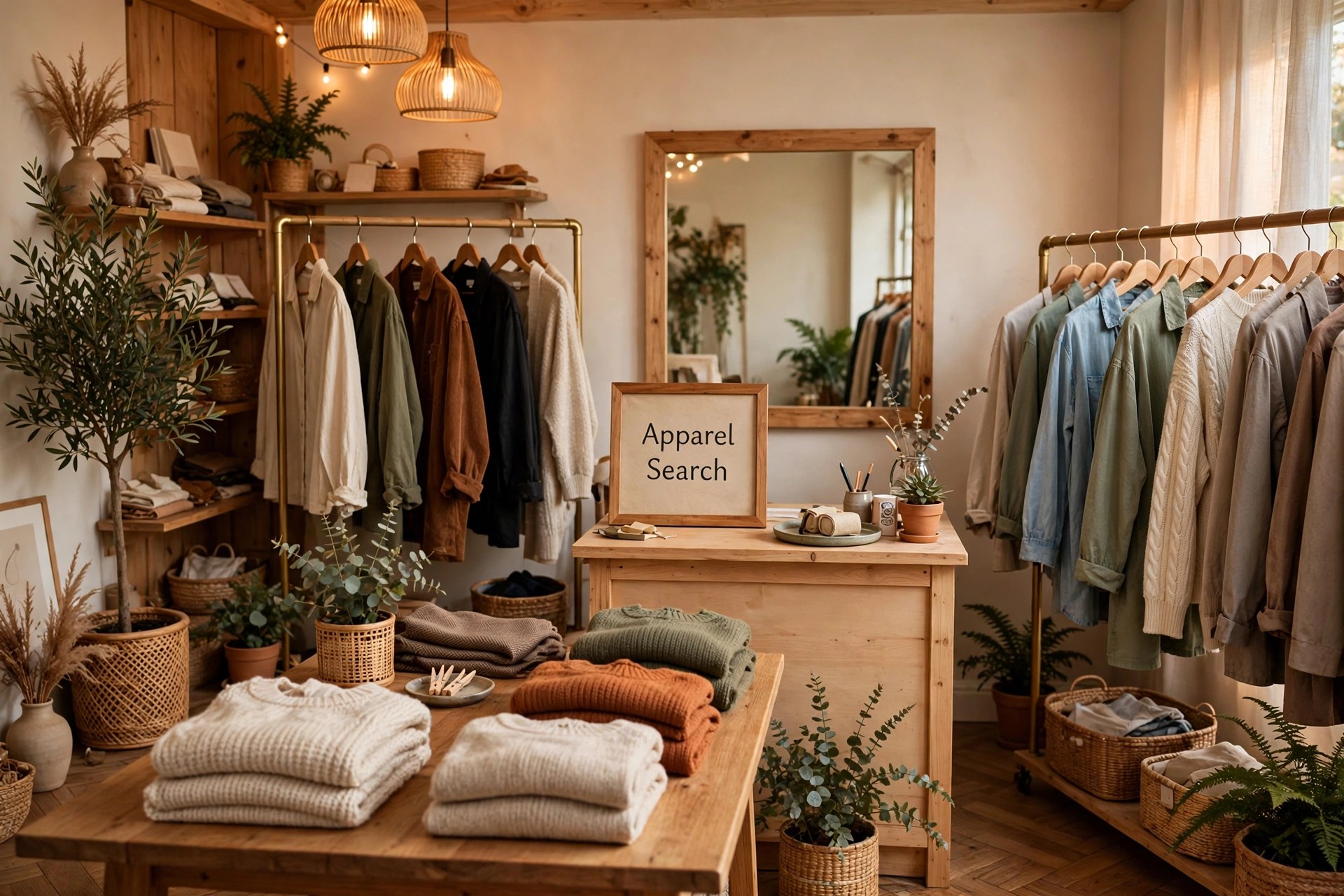
A boutique is not simply a small clothing store. It is a different retail model: a narrow range, chosen piece by piece, sold in a room that feels like a person rather than a company. The full opening process — plan, permits, lease, fit-out, staffing, launch — is the one laid out in how to open a clothing store, and this page does not repeat it. What follows is where the boutique model bends that roadmap out of its general shape: the parts a boutique owner does differently, decides earlier, or carries personally.
The Boutique Difference, in One Line
A general store wins on range and price; a boutique wins on judgment. Every boutique decision in this guide — the buy, the floor, the events, the marketing — is that one idea applied again.
01 / The Model
Curation Is the Product
A boutique's customer is not buying a garment so much as renting the owner's eye: the confidence that everything on the rail has already passed one demanding person's filter. That is why the niche decision matters even more here than in a general store. “Boutique” describes a format, not a niche — the niche is whose clothes, for what life, at what price: contemporary womenswear for a specific town's working women, occasion dresses, a denim-and-boots Western edit, children's clothing with a handmade lean. The tighter the edit, the more the store photographs, the easier the buying, and the more clearly a passer-by understands in one window-glance whether this shop is for her. Breadth is the general store's weapon; focus is yours — a boutique that tries to carry something for everyone has quietly stopped being one.
02 / The Owner-Buyer
You Are the Buyer — and That Is the Job
In a store chain, buying is a department. In a boutique it is the owner, usually with a notebook, at a mart, a trade show or a brand's showroom, a season ahead of the weather. The craft is covered in depth by the retail buying process — open-to-buy discipline, terms, size runs — and the wholesale market itself is mapped in the wholesale clothing guide for boutiques, which covers how to judge boutique suppliers and what boutiques actually buy, category by category. Three boutique-specific buying truths: your minimums will be small and your per-unit costs higher than a chain's, so margin discipline matters more, not less; your advantage is speed — you can test six pieces of something strange and reorder in a fortnight, where a chain needs a committee; and your relationships are the business — small labels extend terms, exclusives and early looks to the independent owners who pay reliably and tell them what customers say.
03 / The Floor
A Small Floor That Sells Like a Story
Five hundred to fifteen hundred square feet is a typical boutique footprint, and the layout rules shrink with it: one clear path, the newest and most characteristic pieces where the window's promise is kept, and room to breathe around garments that a general store would rack tightly. The clothing store layout guide and the visual merchandising guide supply the technique; the boutique application is editing. Rotate the floor often — regulars should see a changed room every visit, which costs rearrangement, not new stock. Keep a genuine fitting room with good light and a mirror that flatters honestly; in a boutique, the fitting room is where the sale is made, and where the owner learns, garment by garment, what her customer actually looks like in the clothes — information no sales report carries.
04 / The Calendar
Trunk Shows, Events and Reasons to Return
A general store advertises; a boutique hosts. The trunk show is the model's signature event: a label brings an extended range — often the full collection, in more sizes and colors than the store could stock — for a day or a weekend, takes orders, and leaves the boutique with sales, customer knowledge and a relationship. Around it, the boutique calendar fills with smaller occasions: a styling evening when new season stock lands, a preview night for regulars, a collaboration with the salon, florist or café on the same street. Each event does three jobs at once — it sells, it gives past customers a reason to return without a discount, and it produces the photographs and stories that are the boutique's real advertising. Plan the calendar before opening, not after: the first trunk show booked is often the difference between a quiet first season and a talked-about one.
05 / The Community
Marketing That Behaves Like a Neighbor
Boutique marketing is community membership, executed consistently. The practical kit: one social account, kept current with the actual rails — what arrived, what it suits, what is nearly gone; a simple email or message list, started with the very first customer and asked for at every till; a window treated as the store's front page, changed on a rhythm passers-by can learn; and visible participation in the street and town — the school fundraiser, the holiday stroll, the charity fashion show. None of this scales like advertising, and that is the point: the boutique's customers are a few hundred households who feel the shop is theirs. Get the store listed where those households look, including the Apparel Search clothing stores directory, and save paid advertising for the moments — opening, events, new season — when there is news worth paying to spread.
06 / The Second Act
When Boutiques Add a Label of Their Own
A successful boutique teaches its owner exactly what her customer wishes existed — the dress that should come in a longer length, the knit at a kinder price, the size run nobody sells her. That knowledge is the seed of the industry’s most reliable second act: the boutique that adds a small private label of its own alongside the bought brands. The routes, costs and minimums are compared in the private label clothing guide, and owners who go further — a full line, sold beyond their own rails — follow the path in how to start a clothing line. It is a later chapter, not an opening one: the store must work first. But it is worth knowing, when you sign the first lease, that the little shop on the high street has somewhere to grow.
Boutique Money, Briefly
The boutique's smaller scale cuts both ways. The startup is lighter — less rent, less fit-out, a focused opening buy — and commonly cited planning ranges for a small boutique run from roughly $50,000 to $150,000 all-in, varying widely by market. Against that, everything is bought in small quantities at higher unit cost, and there is no second department to carry a weak season. The defenses are the ones this page keeps returning to: an edit tight enough to sell through, open-to-buy held back for in-season chasing, and a reserve that survives a slow first winter. The full budget method is step 2 of the store roadmap.
Questions
Common Questions
How much does it cost to open a clothing boutique?
Commonly cited planning ranges for a small boutique run from roughly $50,000 to $150,000 all-in — lease deposits and a light build-out, a focused opening buy, simple fixtures and systems, permits and insurance, and a reserve. Owners land outside that band in both directions: a tiny shop in an inexpensive market can open for less, and a boutique in a prime district with a deep designer buy can cost far more. Price your own buckets locally before trusting any range, including this one.
What is the difference between a boutique and a clothing store?
Scale and authorship. A clothing store may be large, broad in range and run by a team of buyers; a boutique is small, carries a narrow, deliberately chosen range, and reflects one person's taste — usually the owner's, who is typically also the buyer. The boutique's limitation is its product: customers come because the selection has a point of view they cannot get from a general store.
Where do boutique owners buy their stock?
From the wholesale market: brand showrooms and sales reps, regional apparel marts and trade shows, and direct accounts with labels willing to sell to small stores. Apparel Search's wholesale clothing directory and its boutique buyer's guide are built for exactly this sourcing, and most new boutiques open their first accounts a season ahead of opening, because on-season ordering runs months in advance.
Can a boutique sell online as well?
Yes, and many do — a simple online shop extending the store's own rails is a natural second channel once the physical store is stable. The caution is workload: photography, listings, packing and shipping are a second job, so most owners add it after the store's own routines are running, not during the opening season.
More to Explore
Back to How to Open a Clothing Store
The complete nine-step roadmap every boutique opening also follows — plan, permits, lease, fixtures, staffing and launch — plus the dated 90-day startup checklist.