Apparel Search · Starting a Clothing Line
Clothing Line Startup Costs & Funding
Every cost a first line runs up, in the order you will meet it — and the funding routes that realistically pay for a first collection.
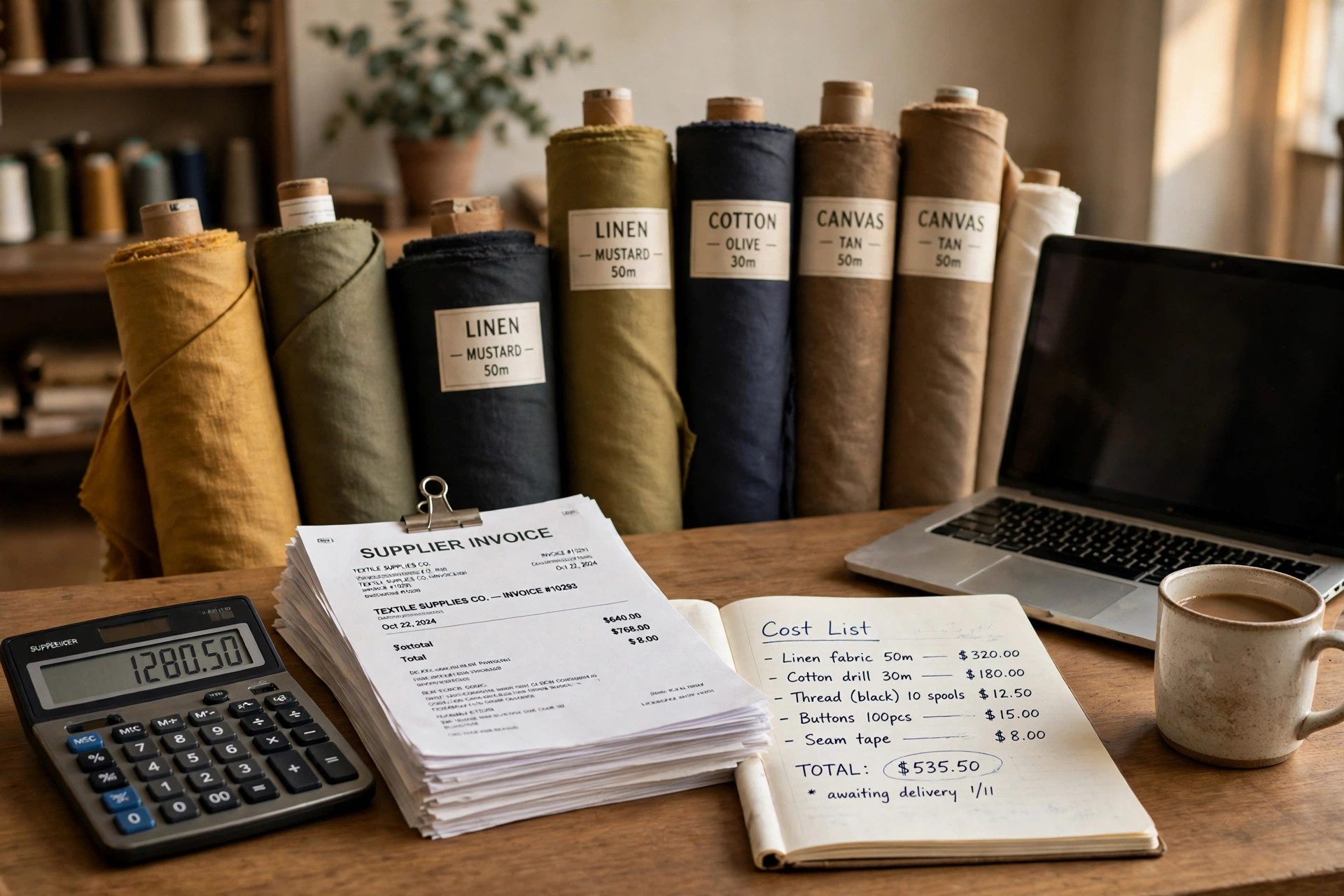
“How much does it cost to start a clothing line?” has no single honest answer — but it has an honest method: list the categories, price each one for your model and your collection size, and add a reserve for being wrong. This guide provides the categories, as part of the starting a clothing line path. Figures are framed as ranges and drivers rather than promises, because a five-style print-on-demand launch and a twenty-style cut-and-sew collection are different businesses.
The Cost Stack, in the Order You Will Meet It
Business setup and brand protection; design and development (patterns, samples, grading, tech packs); materials and production; photography and selling tools; channel costs (trade shows or e-commerce and marketing); freight, duty and packaging; and the reserve — because first seasons always contain a cost nobody predicted.
Development Costs: The Money Before Garments Exist
Patterns, sample sewing, fabric for samples, fit revisions and grading are the first serious spending, and they scale per style — which is why the range plan's style count is a financial decision. Sample rounds are commonly charged at a multiple of the eventual production unit cost, and most styles need more than one round. Add tech pack preparation if you hire it out, and the brand basics: logo and label design, woven labels, hangtags and packaging design. None of these numbers is huge alone; together they routinely consume a noticeable share of a small launch budget before a single sellable garment exists.
Production and Everything Around It
Production itself — fabric, trims and making — is usually the largest single block, and its size is set by minimums: the factory's per-style, per-color quantities from the manufacturer vetting stage, not by how many units you hope to sell. Around it cluster the costs founders forget: freight and duty on materials or finished goods (the landed-cost discipline in the Garment Costing Guide exists precisely for this), quality inspection, warehousing or storage, and the packaging that makes a garment shippable and presentable.
Funding the Line
Self-funding and staged launches
The most common route: personal savings, a deliberately small first collection, and profits recycled into season two. Staging by model — starting with print-on-demand or private label before cut-and-sew — is self-funding by design.
Pre-orders and crowdfunding
Selling before producing converts customers into funders and validates demand. It demands an audience first, and it creates a hard delivery promise: money collected against garments a factory has not yet made must be handled with production-grade discipline.
Loans and credit
Bank and SBA-style lending will ask for the business plan and its financials, and will look hard at collateral and the founder's own stake. Supplier and factor credit exists in the industry but usually arrives after a trading history, not before one.
Partners and investors
Equity money brings expertise and patience but costs ownership. For most first lines the realistic investor is a partner who brings a missing skill — production, sales, an audience — rather than a check alone.
The Reserve Is Not Optional
- A late delivery can move a season's revenue by months while its costs stay put.
- A style that fails leaves its full production cost as inventory.
- Budget a contingency line — experienced founders carry one explicitly rather than discovering it.
Run Your Own Numbers
Common Questions
What is the biggest cost in starting a clothing line?
For a cut-and-sew line, production — fabric, trims and making across the full order — is usually the largest single block, and its size is driven by factory minimums rather than by how many units you expect to sell. For inventory-free models such as print-on-demand, marketing becomes the dominant cost instead, because there is no stock to fund but every customer must be found and persuaded.
How can I start a clothing line with very little money?
Shrink the two things that consume money: styles and inventory. Choose a low-inventory model such as print-on-demand or made-to-order, launch with a handful of designs, sell direct to avoid wholesale terms, and do every job yourself that does not require a specialist. Then recycle early revenue into a wider, better-funded second collection.
Should I take a loan to start my clothing line?
Only against a plan whose numbers you have tested, because fashion's cash-flow pattern — paying for production months before sales arrive — makes borrowed money risky in a specific way. Lenders will require a business plan with credible unit economics and forecasts, and most first-time founders fund the first season from savings, staged models or pre-orders instead.
What costs do clothing line founders most often forget?
The recurring list: sample revision rounds, freight and duty, grading for the full size range, photography and line sheets, packaging and labels, trade show or marketing costs, storage, and a contingency reserve. Each is small next to production; together they are frequently the difference between a budget that holds and one that collapses mid-season.
Back to the Starting a Clothing Line Guide
A budget built category by category will still surprise you — but it will surprise you in one place, not in all of them at once. The full Starting a Clothing Line guide walks the whole path — business plan, business models, manufacturers, collection planning, costs, selling channels and launch.