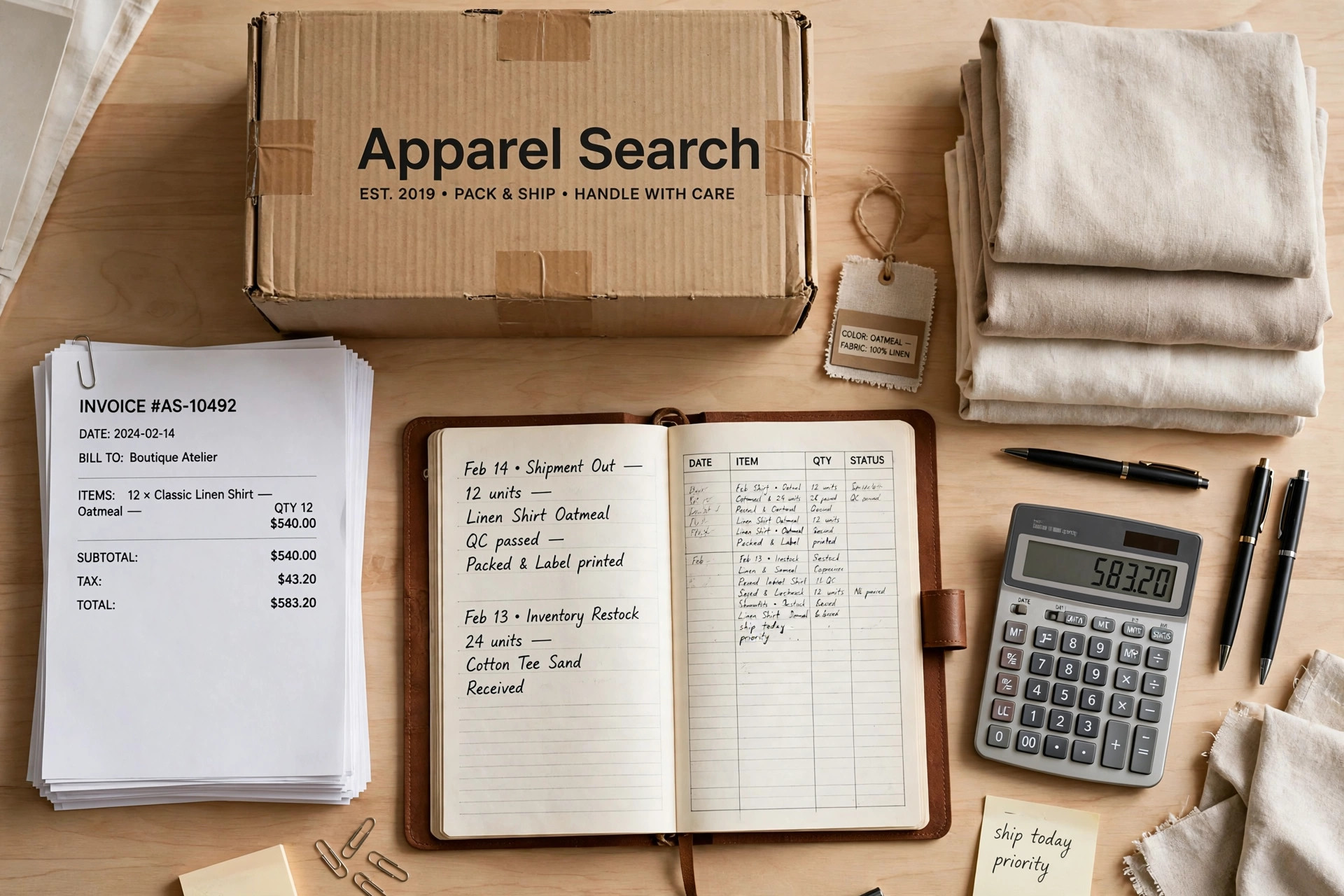
Every clothing brand that sells to stores lives with the same awkward calendar. The factory, the fabric mill and the freight company are paid weeks or months before the goods ship — and then the retailer who bought them pays on terms, commonly net 30, 60 or 90 days after the invoice. The brand finances the gap in between, out of its own pocket, at exactly the moment it is also paying to produce the next season.
Factoring is the apparel industry's classic answer to that gap, and it is older than most of the brands using it. Instead of waiting for the retailer to pay, the brand sells the invoice — the receivable — to a finance company called a factor, at a small discount. The factor advances most of the money shortly after shipment, collects from the retailer at term, and settles the balance. This guide explains how that system works, what it costs, what a factor actually looks at, and where the neighboring tools — purchase order financing, inventory financing and letters of credit — fit around it.
Factoring, in one paragraph
Factoring is the sale of accounts receivable at a discount. A brand ships an order and invoices the retailer; the factor buys that invoice, advances a large share of its face value right away, and collects the full amount from the retailer when it comes due. The factor keeps a fee, returns the held-back reserve, and — just as valuable to many brands — runs the credit checking and collections on the account in between.
Search Apparel Search
01 / Why Brands Factor
The Cash Gap Factoring Solves
Run the timeline of a single wholesale order. A brand cuts and sews in March, paying the factory as production finishes. The goods ship to the retailer in May against an invoice due in July. Rent, salaries and the fall line's deposits all fall inside that window. The brand is profitable on paper the whole time — and short of cash for most of it. Multiply by a full season of orders and the gap, not the margin, becomes the thing that limits how much a brand can grow.
That is why factoring is woven so deeply into apparel. The industry sells on open terms to thousands of independent and chain retailers, ships in concentrated seasonal windows, and produces months ahead of payment. An instrument that converts a shipped order into immediate working capital — and that judges the credit of the store that owes the money rather than the brand that is owed it — fits the shape of the business unusually well.
02 / The Mechanics
How Factoring Works, Step by Step
- The order is approved. Before or as the order is taken, the factor credit-checks the retailer and sets an approval limit for that account. Orders to approved retailers, up to the limit, are the ones the factor will buy.
- You ship and invoice. The goods go out and the retailer is invoiced on the agreed terms — net 30, 60, 90. A copy of the invoice (and usually shipping proof) goes to the factor.
- The factor advances. Within days, the factor advances a large share of the invoice's face value. Advances are commonly in the range of roughly 70 to 90 percent of the invoice amount, varying by factor, by the retailer's credit and by the kind of goods.
- The retailer pays the factor. The invoice directs payment to the factor, whose collections team follows it to maturity.
- The reserve is settled. The factor releases the held-back balance, minus its fee — and minus any deductions the retailer took for shortages, late shipment, co-op advertising or chargebacks. Deductions come out of your side of the settlement, which is why dispute discipline still matters even with a factor collecting.
What it costs. The factoring fee — the discount — is commonly quoted as a percentage of the invoice, often in the low single digits, and it typically grows the longer an invoice stays unpaid, because part of the charge is effectively for time. On top of the headline rate there may be minimums, audit or service charges, and charges for credit checks on new accounts. Exact pricing varies widely with the brand's volume, its average invoice size, the credit quality of its retailer list and how much credit and collection work the factor takes on. Two factors quoting the same headline rate can produce noticeably different settlements once deductions handling and fee schedules are counted, so the full written schedule matters more than the headline number.
03 / The Credit Department
The Credit Department You Rent
For many brands the advance is only half of what the factor sells. The other half is a credit department. Factors maintain files on retailers — payment history, financial condition, trade references — and approve, limit or decline each account a brand wants to ship. A declined approval is worth listening to: it is a professional credit judgment that this retailer's promise to pay in 60 days is no longer one the factor will buy. Brands that ship anyway, on their own risk, sometimes learn the expensive version of the same lesson.
Collections come with it. The factor sends statements, follows up on slow accounts and posts payments — unglamorous work that small brands chronically understaff, and one reason factored invoices often get paid closer to terms than self-collected ones. What the factor does not absorb is merchandise trouble: late delivery, damaged goods, wrong assortments and the chargebacks that follow are the brand's problems, settled out of the brand's reserve. Approval protects against the retailer who cannot pay — not against the shipment that gave a healthy retailer a reason not to.
04 / Two Kinds of Risk
Recourse and Non-Recourse Factoring
The single most important distinction in a factoring agreement is who ends up holding a bad invoice.
Non-recourse factoring
On invoices the factor has credit-approved, the factor absorbs the loss if the retailer fails to pay because of its own financial failure — insolvency or plain inability to pay. The protection is about the retailer's credit, not about disputes: deductions for returns, shortages or chargebacks still come back to the brand.
Recourse factoring
If an invoice is not paid within an agreed window — often a set number of days past its due date — the brand buys the invoice back or replaces it with a fresh one. The credit risk stays with the brand, and because the factor takes less risk, recourse arrangements usually carry a lower fee.
Most real agreements live somewhere along this spectrum, with approval limits, partial guarantees and exclusions doing the fine-tuning. Reading exactly which risks move to the factor and which stay on your side of the page is the core of the negotiation — the two words "non-recourse" alone do not settle it.
05 / The Alternative
A Factor or a Bank Line?
A bank lends against the brand itself: its balance sheet, its history, its collateral. A factor buys receivables and underwrites the retailers — the companies that owe the money. That single difference explains most of the practical contrast between the two. A young brand with thin financials but orders from strong national retailers can often factor meaningfully before any bank will extend a real line, because the factor is mostly judging the stores. An established brand with a strong balance sheet will usually find a bank line cheaper per dollar, because it is no longer paying for credit protection and collections it may not need.
Plenty of mid-size apparel companies run both: a bank line for general purposes and a factor for the receivables book. The two have to be set up so they do not collide — a bank's blanket lien on assets and a factor's ownership of the invoices overlap by nature, and the lenders sort out their positions in writing before the money moves. If you are arranging one while the other exists, expect that conversation and budget time for it.
06 / The Third Tool
Inventory Financing: Borrowing Against the Stockroom
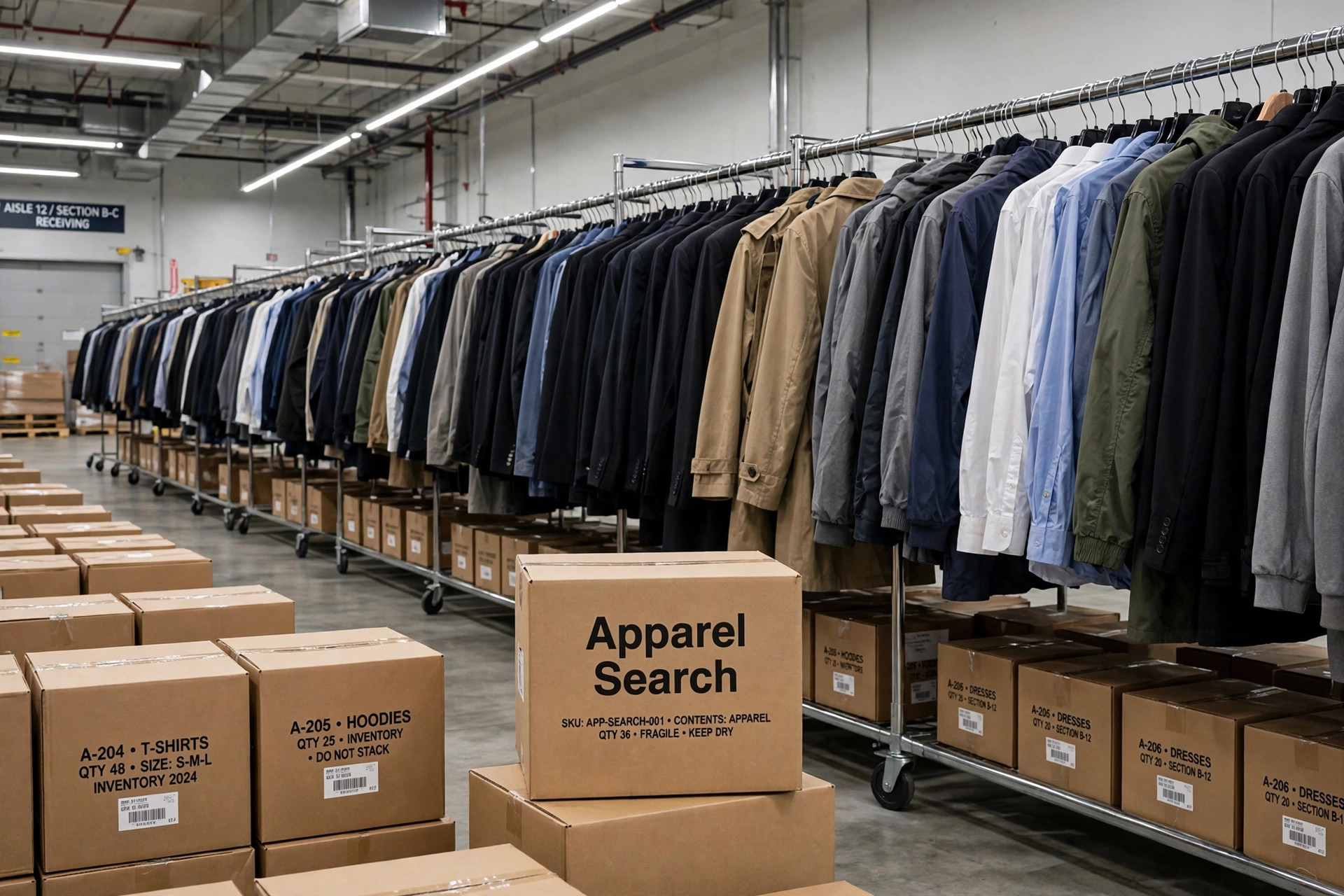
Sometimes the asset waiting to become money is not an invoice at all — it is the warehouse: finished goods built ahead of a shipping window, or a deliberate stock position in a proven style. Inventory financing is borrowing secured by that stock. It is the third member of the apparel finance family, and it is the most conservative of the three, for a simple reason: a lender values inventory at what it would bring in a forced sale, not at retail price and usually not even at full cost. Advances against inventory are therefore typically a fraction of its cost, and the fraction shrinks — or vanishes — for aged, seasonal or odd-lot stock, because last season's styles liquidate at cents on the dollar.
Inventory lines often sit beside a factoring facility with the same lender family; the big apparel factors grew up lending against both sides of the shipping dock. Put together — money against the goods before they ship, and against the invoices after — inventory financing and factoring form the classic apparel working-capital stack. The stage before both is production itself, which is what purchase order financing exists to fund.
07 / Paying the Factory
Letters of Credit: Paying the Overseas Factory
Production abroad flips the trust problem around. The factory will not start — or will not ship — without solid assurance of payment; the importer does not want to pay in full for goods it has never seen. A letter of credit (LC) answers both sides by substituting a bank's promise for the buyer's: the importer's bank issues the credit, and the factory is paid when it presents the documents the credit calls for.
The flow, in brief: the importer applies at its bank, and the credit is opened against the importer's own credit line. The issuing bank sends the LC to an advising bank in the factory's country, which notifies the factory. The factory produces and ships, then presents the required documents — typically the bill of lading, the commercial invoice and the packing list, the same document family that moves through customs clearance. If the documents conform, the bank pays: at sight, on presentation, or at a set term after it (a usance credit), which builds a short stretch of financing into the trade itself. The importer then settles with its own bank under their arrangement.
The sharp edge of an LC is paperwork. Banks examine documents, not garments, and a discrepancy — a misspelled name, a shipment date outside the credit's window, a missing signature — entitles the bank to refuse payment until the discrepancy is corrected or the importer waives it. Discrepant first presentations are common enough that experienced importers build document-checking time into their calendars and treat the LC's document list as a production spec in its own right. Our international trade terms glossary defines the LC family — confirmed, irrevocable and deferred-payment credits, advising banks and discrepancies — term by term.
Where does an LC fit today? First orders with a new factory, large programs, and any relationship where open-account trust has not been earned yet. Long-running partners often graduate to open account — ship now, pay on terms — or to documents-against-payment arrangements that sit between the two. Bank charges for opening and handling a credit are usually a modest fraction of the shipment's value, varying by bank and by the importer's credit; the quieter cost is that an open LC occupies the importer's borrowing line while it runs, and line capacity is usually the scarcer resource. For importers whose orders outrun their lines entirely, the LC is frequently opened by a purchase order financier instead — which is where the next guide begins.
Questions
Common Questions
Is factoring a loan?
No. Factoring is the sale of an asset — your receivables — at a discount. The advance is the purchase price of the invoice, not a loan, so no new debt goes on the brand's balance sheet for it; the factor collects from the retailer. A bank line and an inventory facility, by contrast, are borrowing.
What does factoring cost?
Commonly a low-single-digit percentage of each invoice, with part of the charge tied to how long the invoice stays open, plus possible minimums and service fees. Pricing varies widely by factor, volume, average invoice size and the credit quality of your retailers — get the complete fee schedule, including how deductions are handled, in writing before you sign.
Can a new clothing brand factor its invoices?
Often, yes — if its retailers are creditworthy. The underwriting centers on the companies that owe the money, so a young brand shipping to strong stores can frequently factor before it qualifies for a meaningful bank line. The factor will still review the brand's own operation, margins and paperwork.
What is the difference between factoring and purchase order financing?
Timing. Factoring starts after the goods ship and the invoice exists; it buys the receivable. Purchase order financing starts before production and funds the making of the goods, against the retailer's purchase order. Brands regularly use the two back to back in a single season — PO financing to produce the order, factoring to collect it.
Please note: this guide explains how apparel trade finance generally works. It is general information, not financial advice. Fee, advance and pricing ranges vary widely by provider, transaction and credit, and the ranges mentioned here are commonly cited ranges, not quotes. Talk with your accountant, lender or factor about your own numbers before signing any agreement.
More to Explore
- Purchase Order Financing for Apparel Brands
- How to Start a Clothing Line
- Clothing Line Startup Costs & Funding
- How to Open a Clothing Store
- Wholesale Clothing
- Fashion Retailer Chargebacks
- Importing Clothing Into the United States
- Glossary of International Trade Terms
- Customs Clearance Process for Clothing
- Apparel Industry Financial Information