Product Development & Tech Packs · Hub
Apparel Product Development & Tech Packs
How a clothing idea becomes a production-ready style: the tech pack, the materials list, the measurements, the sample rounds and the calendar that holds them all together.
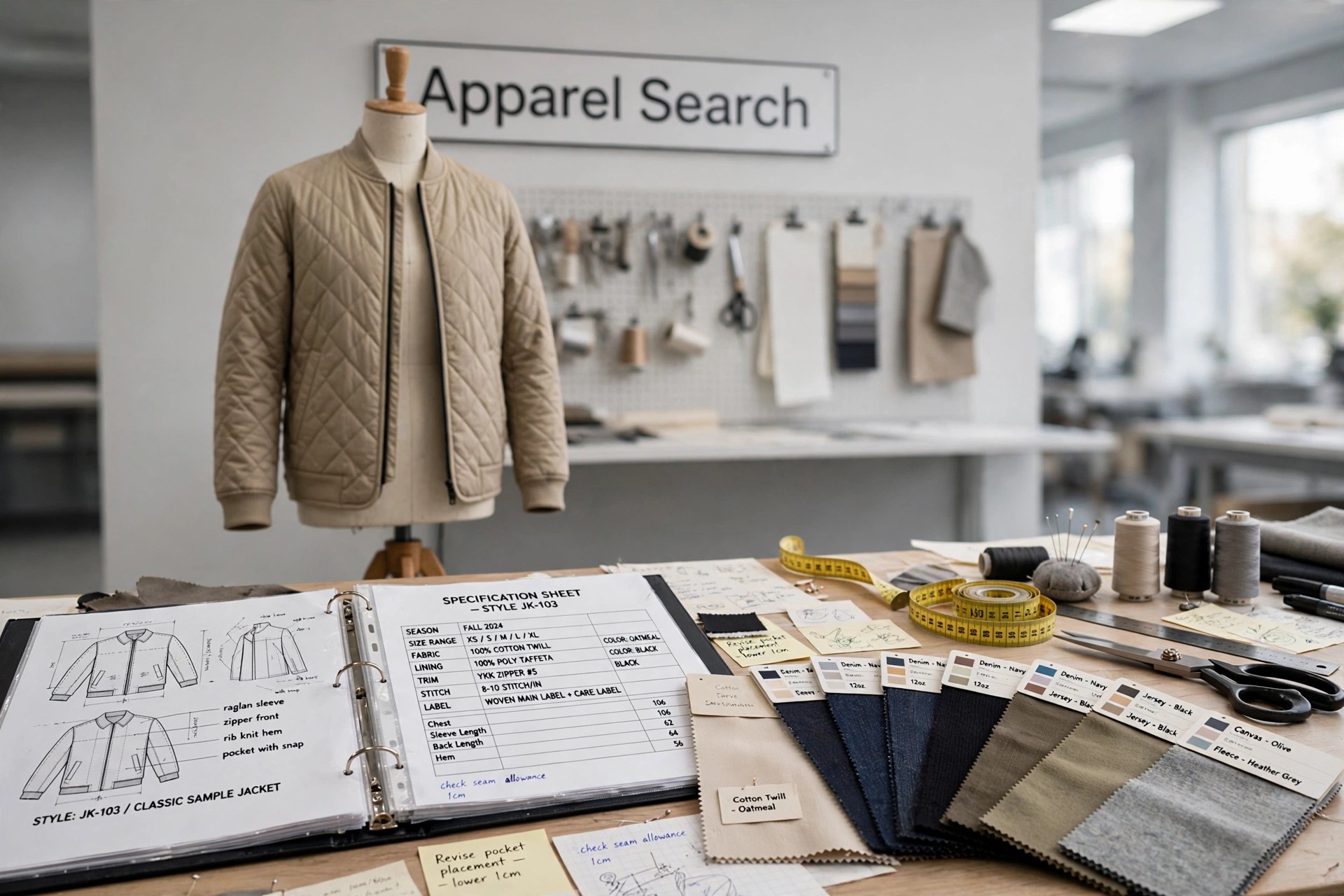
Product development is where a clothing idea becomes a manufacturable product. Design decides what a garment should be; product development turns that decision into the documents, materials, measurements and approved samples a factory needs to make it — the same way, in every size and color, at an agreed cost and date. When development is done well, production is almost boring. When it is done badly, every weakness shows up later as a wrong sample, a late shipment or a container of garments nobody can sell.
This guide walks the whole path — concept, specification, materials and color approval, sampling and fitting, costing and the production handover — and each stage has its own detailed guide in this cluster. If you are starting a clothing line, this is the working process your first collection will follow. The long-standing Apparel Search fashion product development page gathers the related directories and services; this cluster is the teaching companion that explains how the work itself is done.
Product Development, Defined
Apparel product development is the process of converting a design concept into a production-ready style: a complete tech pack, approved materials and colors, a graded set of measurements, an approved pre-production sample and a confirmed cost — everything a factory needs to manufacture the style without guessing.
The Development Path in Five Stages
Concept and Range Planning
Development starts before any sketch: what the line is, who it is for, how many styles, in which fabrics and colors, at what target price. Styles that cannot hit their target cost or delivery date are best dropped here, on paper, where changes are free.
Design and Specification
The design is drawn as technical flats and written down in a tech pack: construction details, a bill of materials and a spec sheet of measurements. This is the stage where the garment is truly decided — everything after it is execution.
Materials and Color Approval
Fabrics and trims are sourced and approved, and color is pinned down through lab dips and strike-offs judged against a color standard. Nothing should reach the cutting table that has not been approved at this stage.
Sampling and Fitting
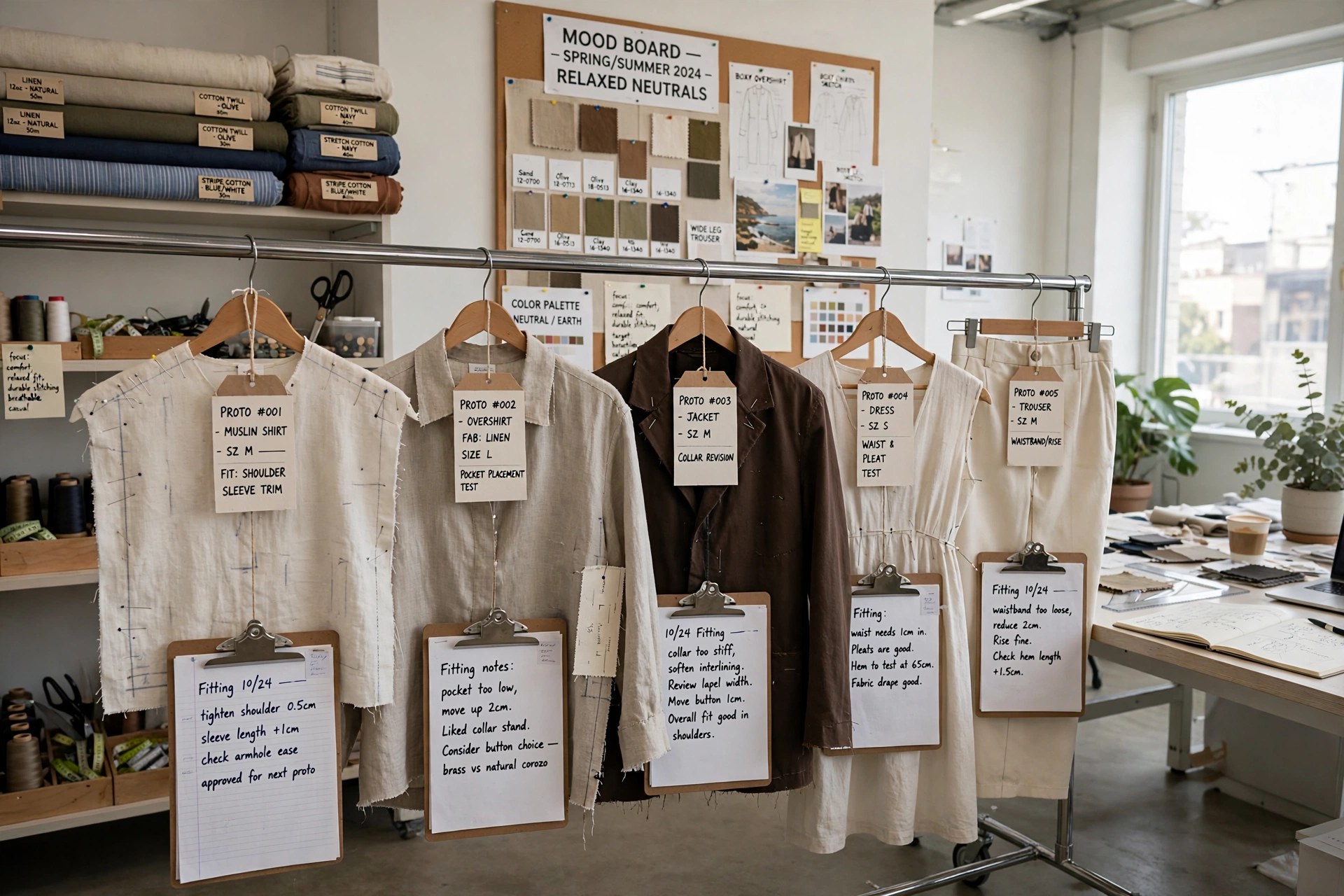
The factory makes a sequence of samples — proto, fit, pre-production — and each round is measured, fitted and commented until the garment matches the spec. The sampling process guide covers every round and what "approved" really means at each one.
Costing, Approval and Production Handover
With an approved sample and final materials, the cost is confirmed (the cost sheet is built from the same bill of materials), the style is approved for production, and the complete, final tech pack — not an early draft — is handed to the production team or factory. Development ends when production can start without questions.
The Documents That Carry a Style
Development runs on paper (or its digital equivalent) because a style may pass through a designer, a technical designer, a pattern maker, a merchandiser and a factory in another country — none of whom can read each other's minds. Four documents do most of the carrying. The tech pack is the master file: identity, drawings, materials, measurements, construction and revisions in one place. The bill of materials lists every fabric, trim and label the garment consumes. The spec sheet fixes the measurements and tolerances the finished garment must meet, size by size. And the line sheet — covered in Line Sheets Explained — is the outward-facing document that sells the finished line to buyers. Each has a full guide in this cluster.
Who Does the Work
At a large brand, development is a team sport: designers own the concept and look, technical designers own the tech pack, measurements and fit, pattern makers translate design into the shapes that produce it, and merchandisers or product developers coordinate materials, costing and the calendar between brand and factory. At a small label, one person may wear all of those hats in a single afternoon — which is exactly why the documents matter more, not less: they are how a one-person team keeps ten styles straight. However the work is divided, one rule holds everywhere: a single named person owns each style's tech pack and its approval decisions.
Keeping Development on Schedule
Development is also a race against a selling season. The product development calendar — the time-and-action, or T&A, plan — works backwards from the delivery date through every approval, because a lab dip that takes three rounds instead of one does not just delay a swatch; it delays fabric, sampling, costing and the ship date behind it. Most development disasters are calendar disasters that started as small, unreported slips at the approval stages.
Where Development Usually Goes Wrong
- Vague specifications — "make it like the photo" instead of measurements, materials and construction details.
- Approving samples against an out-of-date tech pack, so the factory and the brand are building different garments.
- Treating color and material approval as a formality, then rejecting bulk fabric that matches the (unapproved) reality.
- Costing at the end instead of the beginning, and discovering at handover that the style cannot be sold at its target price — the Garment Costing Guide covers that side of the work.
The Guides in This Cluster
Related Guides on Apparel Search
Common Questions
What is apparel product development?
It is the process of turning a design concept into a production-ready style: a complete tech pack, approved fabrics, trims and colors, graded measurements, an approved pre-production sample and a confirmed cost — everything a factory needs to manufacture the garment correctly and repeatedly.
What is a tech pack?
A tech pack is the master document for a style. It contains the technical flat sketches, bill of materials, colorways, measurement spec sheet, construction details, artwork placement, labeling and packaging instructions, and a revision history — the single reference the factory builds and samples from.
How long does product development take?
It depends on the product and the calendar, but a single style commonly takes several months from concept to production approval, because lab dips, fabric development and two or three sample rounds each take weeks and run in sequence. Brands work backwards from the delivery date with a time-and-action calendar to keep the stages on track.
What is the difference between product development and production?
Product development decides and documents exactly what will be made, and proves it with approved samples. Production then manufactures the approved style in bulk. Development ends at the handover: a final tech pack, an approved pre-production sample and a confirmed cost that production can execute without further design decisions.
Start With the Tech Pack
Every stage in this guide produces or depends on one document. If you read only one spoke first, make it the Tech Pack Guide — it is the file the factory actually builds from, and the document every other page in this cluster feeds into.