Product Development & Tech Packs · Process
The Sampling Process
Proto, fit, pre-production and top-of-production: what each sample round proves, what approval means at each stage, and the paperwork that keeps rounds from blurring together.
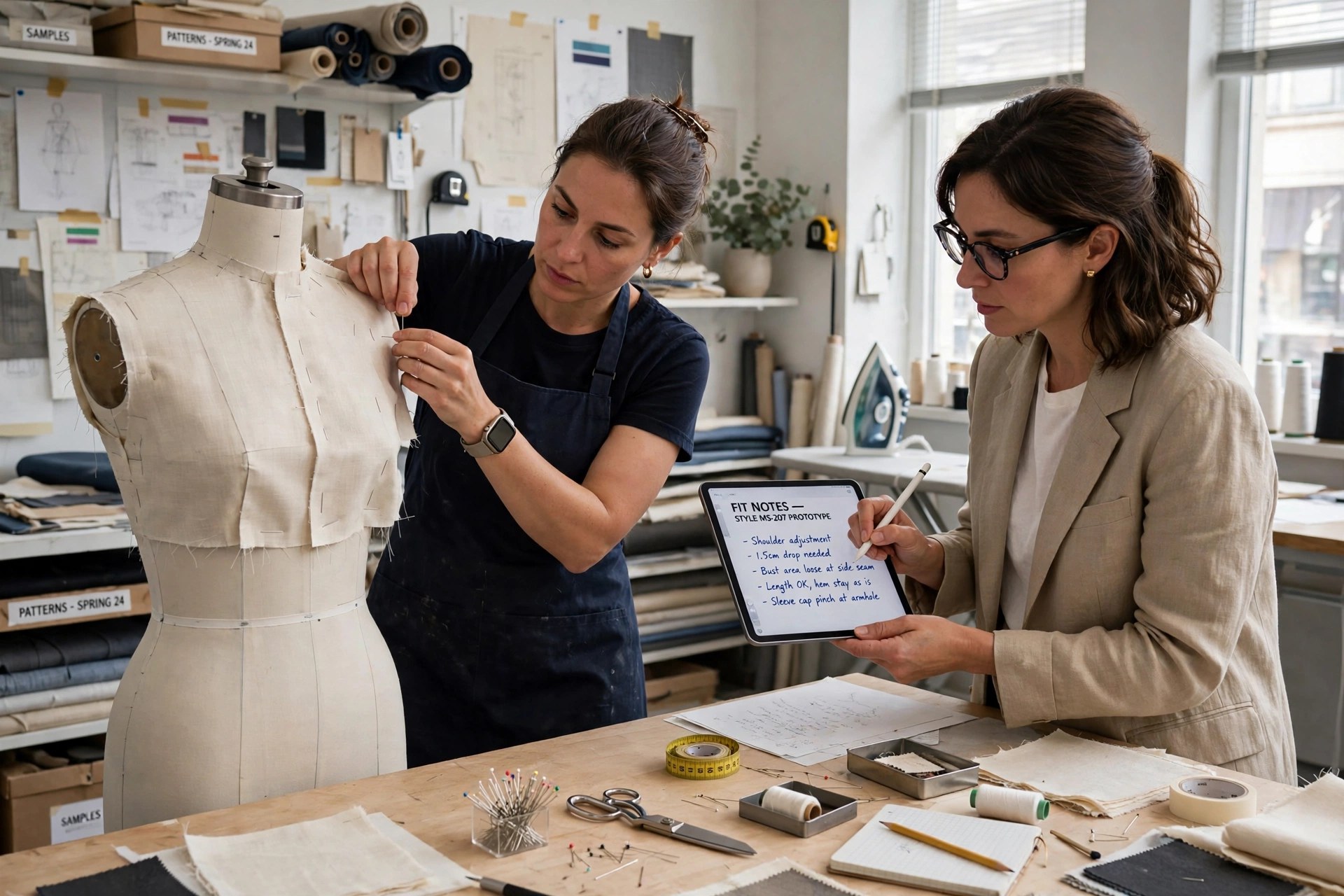
Nobody approves a garment from a drawing. Between the tech pack and bulk production stands a sequence of physical samples, each made to answer a different question: Does it look right? Does it fit? Can the factory make it the approved way, in the real fabric, at production speed? This page of the Apparel Product Development Guide walks the full sequence — proto, fit, pre-production and top-of-production samples — and the approval rounds that connect them.
Why So Many Samples?
Each sample round isolates one risk while it is still cheap to fix. A proto tests the design in any available fabric. A fit sample tests the pattern against the spec sheet on a body or form. A pre-production sample tests the factory's real materials and methods. Approving everything in one giant step is possible only in theory: in practice, a color mistake discovered at the fit stage costs a swatch, while the same mistake discovered in bulk costs the order.
Proto Sample — "Does the Design Work?"
The first physical version of the style, often sewn in a substitute fabric of similar weight and behavior, sometimes in the real fabric if it is already available. The brand reviews silhouette, proportion and construction feasibility, and comments may change the design itself. The Apparel Search proto sample glossary entry gives the short definition. Some brands precede the proto with a muslin or toile for fit-critical styles.
Fit Samples — "Does It Measure and Fit?"
One or more rounds made to the spec in the base size, measured POM by POM on arrival, then fitted on a fit model or form — the working method is described in Fit Models & Fit Sessions. Comments from each round are written into the tech pack, the pattern is corrected, and a revised sample is made until measurements sit within tolerance and the fit is approved. Two or three fit rounds is unremarkable; complex garments take more.
Size Set and Photo Samples
Once the base size is approved, a size set confirms the grading across the range. In parallel, sales and photo samples — made in all colorways where needed — serve showrooms, photography and e-commerce; the catalog and line sheet photography guide covers shooting them.
PP Sample — "Can Production Make It This Way?"
The pre-production (PP) sample is made by the factory that will run the bulk, in the actual approved fabrics and trims, on production machinery, to the final tech pack. It is the last full check before cutting bulk fabric, and its written approval is the formal green light for production. Nothing material may change after PP approval without a new approval.
TOP Sample — "Did Production Stay True?"
The top-of-production (TOP) sample is pulled from the first garments off the production line and sent for confirmation that bulk matches the approved PP sample. It closes the sampling loop: development's last act is verifying that production's first act was faithful.
Counter Samples and Factory Initiative
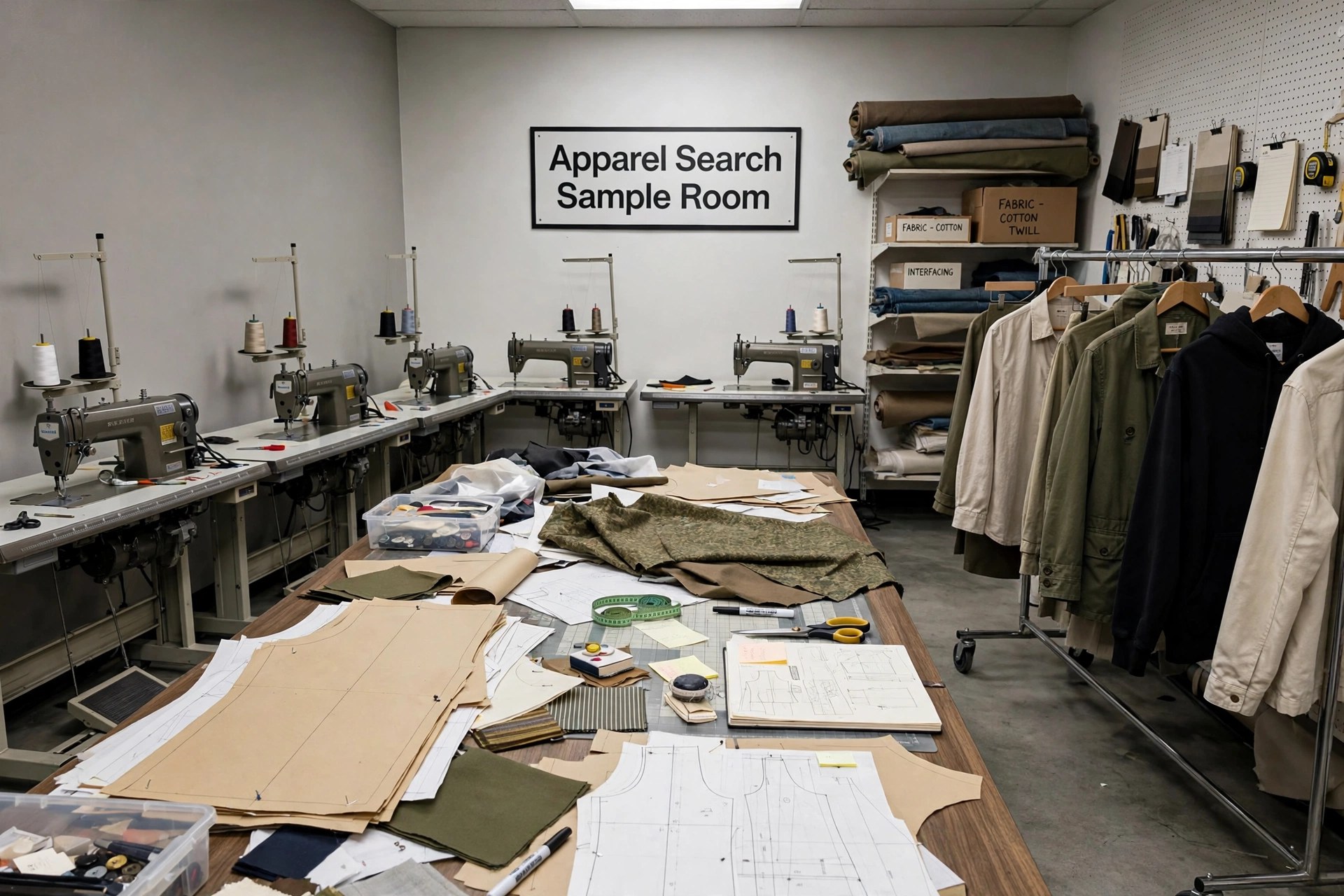
Sometimes the flow reverses: a factory develops a sample from its own materials or interprets a buyer's brief and offers it back. That is a counter sample — the factory's response, which the brand then adopts, adapts through the normal fit rounds, or declines. Counter samples are a normal part of private-label and full-package sourcing, and they enter the same approval discipline as any other sample once adopted.
Comments, Tracking and Discipline
A sample without written comments is just a parcel. Every round is logged: sample type, date sent and received, measurements against spec, fit comments with photographs or marked-up images, and the decision — approved, approved with corrections, or resubmit. Apparel Search offers a downloadable Sample Approval Checklist and a Sample Tracking Log for exactly this paperwork. The cardinal rules: comments go into the tech pack (not just an email), one round changes one set of things, and approval is always explicit — a factory told nothing will, reasonably, proceed.
Sampling Shortcuts That Backfire
- Approving fit from photographs without measurements against the spec sheet.
- Fitting on whoever is nearby instead of the standard fit model or form, then wondering why grades drift.
- Skipping the PP sample because the fit sample "looked fine" — in different fabric, from a different room.
- Letting the calendar pressure convert "approved with corrections" into bulk production without a confirmation sample.
More in the Product Development Guide
Common Questions
What is a proto sample?
A proto (prototype) sample is the first physical version of a new style, made to test the design itself — silhouette, proportions and construction feasibility. It is often sewn in a substitute fabric of similar weight and drape when the real fabric is not yet available, and comments at this stage may still change the design.
What is the difference between a PP sample and a TOP sample?
A PP (pre-production) sample is made before bulk production, by the production factory, in the actual approved materials and methods, and its approval authorizes production. A TOP (top-of-production) sample is taken from the first garments off the production line to confirm the bulk matches the approved PP sample.
How many fit sample rounds does a garment usually need?
Two or three fit rounds is common for a straightforward style; complex, structured or fit-critical garments can take more. Each round is measured against the spec sheet, fitted, commented and re-sampled. Chasing a perfect fit in endlessly small corrections is its own failure mode — at some point the remaining difference is inside tolerance and the style should move on.
Who pays for development samples?
Practice varies: sample charges, per-round fees and the cost of sample yardage are negotiated between brand and factory, and are often partly credited or absorbed when bulk orders follow. What is not negotiable is clarity — who pays for what should be agreed before the first sample is cut, not argued at the PP stage.
Back to the Apparel Product Development Guide
The Apparel Product Development Guide hub walks the whole path — concept, specification, materials and color approval, sampling, costing and the handover to production — with a map of every guide in this cluster.