Product Development & Tech Packs · Documents
Tech Pack Guide
What a tech pack contains, section by section — the master document that a factory quotes from, sews from and checks against.
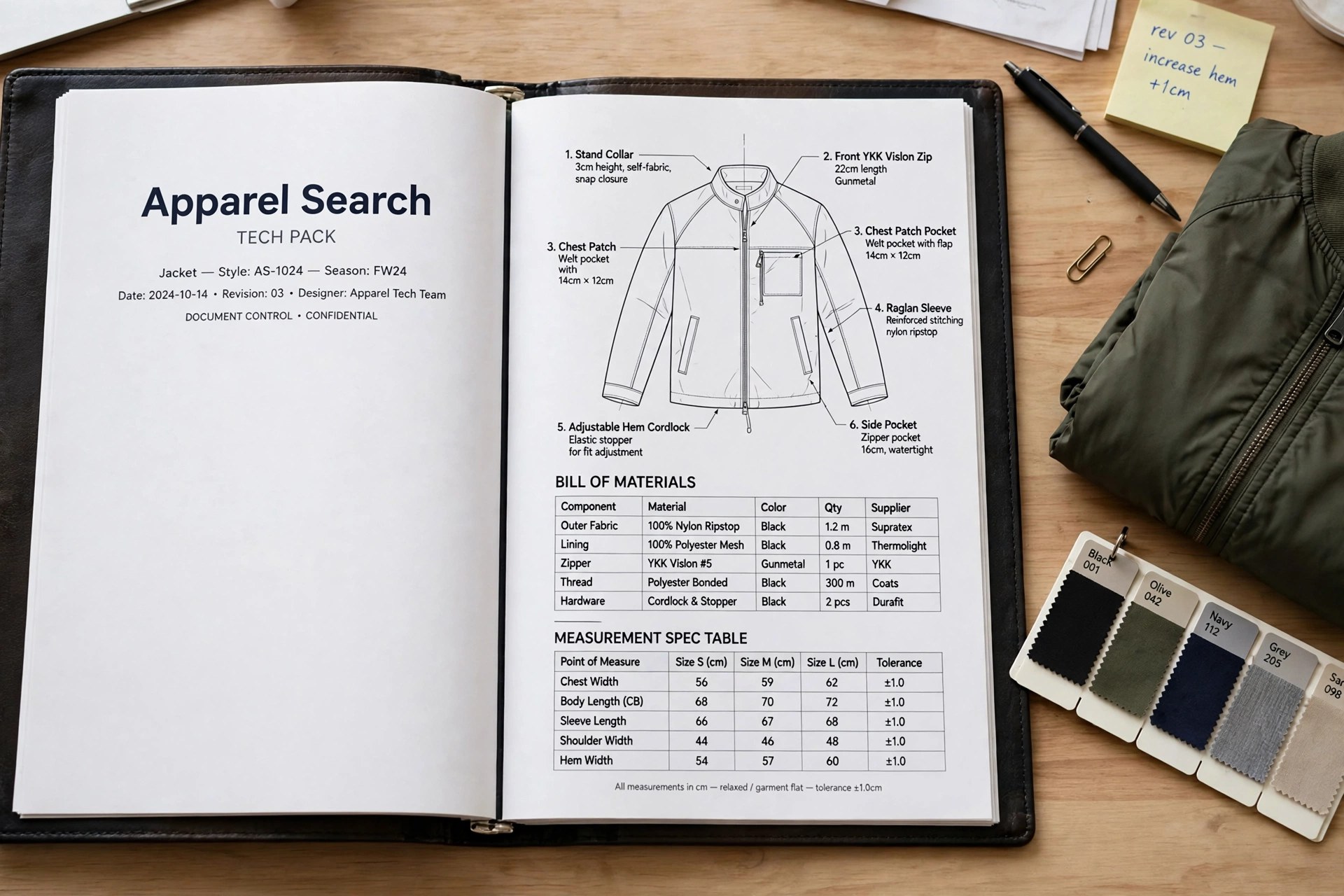
Ask a factory what it needs before it can make your garment, and the answer is always the same: the tech pack. It is the single document a sample room quotes from, sews from and checks against — and the quality of the garment you get back is set, more than by anything else, by the quality of the tech pack you send. This page of the Apparel Product Development Guide explains what a complete tech pack contains, section by section, and how to keep it under control.
Tech Pack, Defined
A tech pack (technical package) is the complete specification document for one style: its identity, technical drawings, bill of materials, colorways, measurements, construction details, artwork, labeling and packaging instructions, plus a record of every revision. If it is not in the tech pack, the factory is entitled to guess — and factories guess in their own favor.
1. Cover Page and Style Summary
The cover identifies the style beyond confusion: style number and name, brand, season, product category, size range, the designer and technical designer responsible, the date and — critically — the version number. Factories may hold several versions of the same style's pack at once; the cover page is what tells a sample room which one is current. Many packs add a photograph or a clear front-and-back image of the intended garment here so anyone opening the file knows the goal in three seconds.
2. Technical Flats and Callouts
Flats are precise line drawings of the garment — front, back and inside where it matters — drawn flat rather than on a body, with callouts naming every detail: pocket shape and placement, placket construction, collar style, vent, cuff, hem finish. Details that cannot be drawn clearly get close-up sketches. The flats are the visual half of the specification; a change that is not reflected in the flats has, from the factory's point of view, not happened.
3. Bill of Materials
The BOM lists every material the garment consumes — shell fabric, lining, interlining, thread, zippers, buttons, elastic, labels, hangtags and polybags — with supplier, content, color and quantity per garment, for every colorway. It drives purchasing and costing alike. The full treatment is in Bill of Materials (BOM) Explained; the Apparel Search bill of materials glossary entry gives the short definition.
4. Colorways and Color Standards
This section names each colorway and ties every material in it to an approved color standard — a physical swatch or a recognized color reference — so "navy" means the same thing to the brand, the mill and the factory. The approval process behind those standards (lab dips for dyeing, strike-offs for prints) is covered in Lab Dips, Strike-Offs & Color Approval.
5. Spec Sheet: Measurements and Tolerances
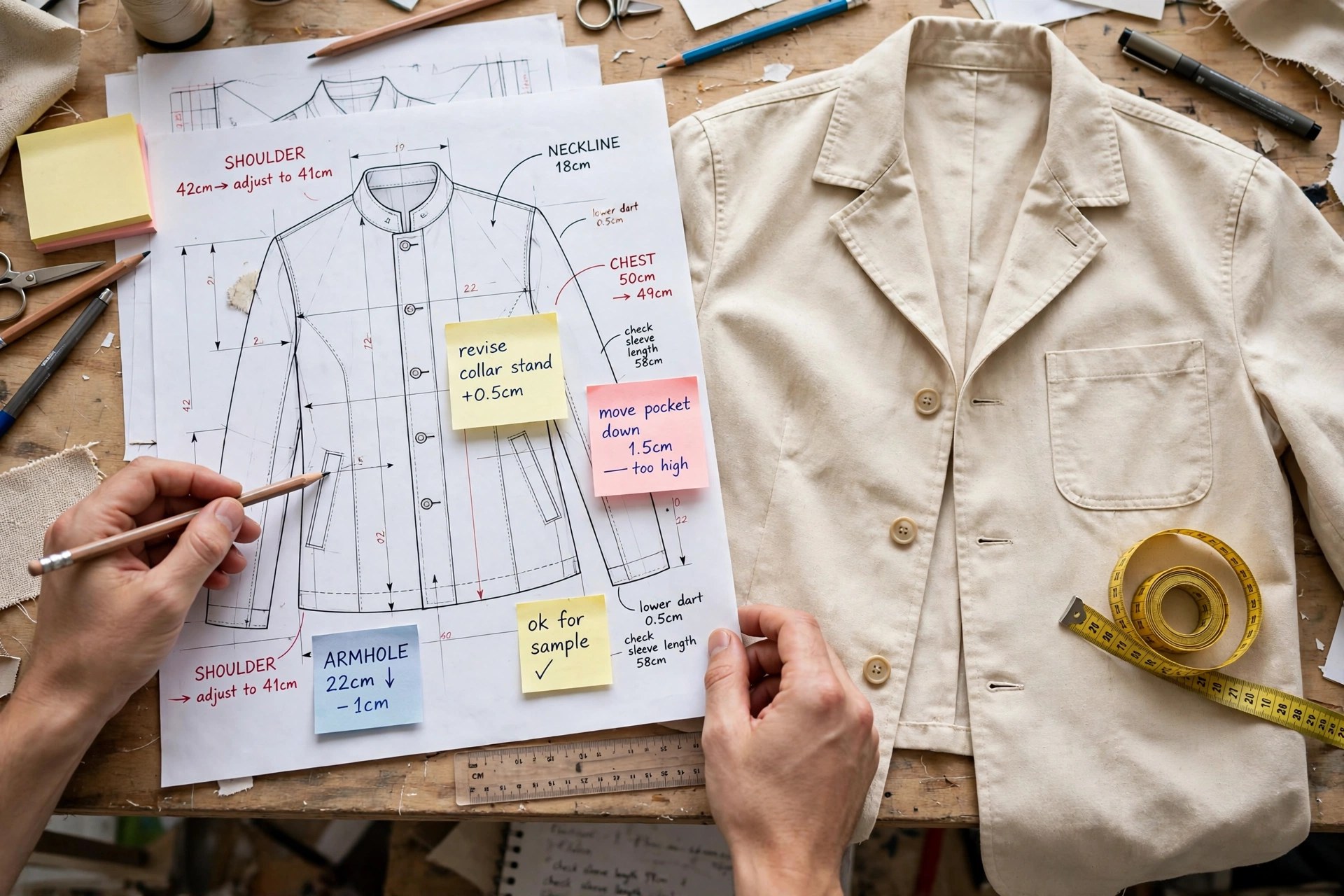
The spec section lists the points of measure for the base size, the grade rules that produce the other sizes, and the tolerance allowed on each measurement. It is the yardstick every sample is measured against. Spec Sheets & Points of Measure explains how POMs are defined, measured and graded.
6. Construction and Stitching Details
Seam types and allowances, stitch type and stitches per inch or centimeter, hem and edge finishes, fusing and interlining placement, buttonhole and bartack positions — the instructions that decide whether a garment merely looks right or is also built right. Construction callouts belong on the flats as well as in this section, so the person sewing sees them at the moment they matter.
7. Artwork, Prints and Embroidery
Anything applied to the garment — screen print, embroidery, appliqué, heat transfer — is specified here with the actual artwork file referenced, its finished size, its exact placement measured from fixed points, and its colors tied to the color standards. Placement measured "from HPS" or "from center front" removes the guesswork that ruins printed garments. The print methods themselves are covered in the Textile Printing Methods guide.
8. Labels, Trims and Packaging
Brand label, size label and care/content label — with placement diagrams — plus hangtags, and how the finished garment is folded, bagged, tagged and packed into cartons. Label content is regulated in most markets, so this section is usually checked against the destination's labeling rules before production, not after.
9. Fit Comments and Revision History
Every sample round produces comments; the tech pack is where they live. Each version records what changed, why, and which sample it responds to, so that three rounds later nobody has to reconstruct why a pocket moved. A pack without a revision history will eventually contradict itself — usually at the most expensive moment.
Formats and Version Control
Tech packs are built in spreadsheets, illustration programs, dedicated builders and full PLM systems; the tool matters far less than the discipline. Send the factory a locked PDF for reference plus the editable file if they work in it, name files with style and version, and confirm receipt of each new version in writing. Apparel Search offers a free Tech Pack Builder, a downloadable Tech Pack Template, a step-by-step guide to creating a tech pack and a tech pack checklist for the final review. One thing a tech pack is not: a cost sheet. Costing reads the same materials and construction data but lives in its own document — see the cost sheet explained in the Garment Costing Guide.
More in the Product Development Guide
Common Questions
What is a tech pack in clothing?
A tech pack is the complete specification document for a garment style: technical flat sketches with callouts, a bill of materials, colorways with color standards, a measurement spec sheet with tolerances and grade rules, construction and stitching details, artwork placement, labeling and packaging instructions, and a revision history. The factory samples and produces from it.
Who creates the tech pack?
Usually the technical designer, working from the designer's sketches and intent, with the pattern maker, merchandiser and sourcing team contributing measurements, materials and costing data. At small brands the designer or founder often builds it directly — the role matters less than having one named owner for the document.
What is the difference between a tech pack and a spec sheet?
The spec sheet is one section of the tech pack — the table of measurements, tolerances and grade rules. The tech pack is the whole package: drawings, materials, colors, construction, artwork, labels and revisions, with the spec sheet inside it.
What format should a tech pack be in?
Most factories work happily from a clearly organized PDF, often accompanied by the editable spreadsheet or illustration file. Dedicated tech pack and PLM software adds version control and shared access. Whatever the tool, every version should be numbered, dated and confirmed received — samples made from an old version are a classic, avoidable loss.
Back to the Apparel Product Development Guide
The Apparel Product Development Guide hub walks the whole path — concept, specification, materials and color approval, sampling, costing and the handover to production — with a map of every guide in this cluster.