Product Development & Tech Packs · Process
Lab Dips, Strike-Offs & Color Approval
How color is proven before bulk exists: dyed swatches and printed strike-offs, judged against a physical standard in controlled light.
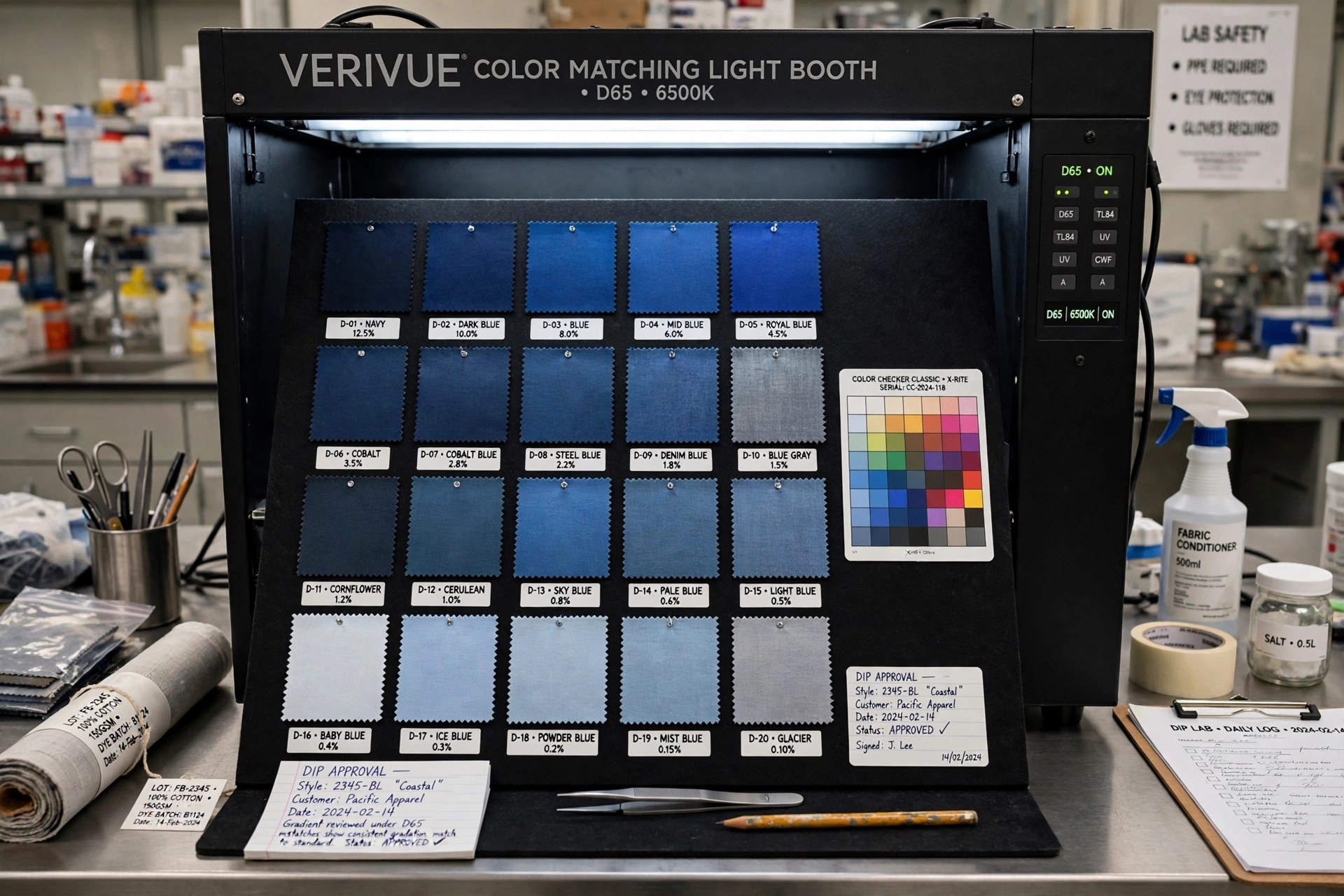
Color is the easiest thing to specify badly and the hardest to fix late. A brand's "forest green" is a dye house's complete guess until it is tied to a physical standard and proven on the actual fabric. Lab dips and strike-offs are the proving mechanism — small, fast, cheap tests of color and print that are approved before bulk material exists. This page of the Apparel Product Development Guide explains how both work and how professionals judge the results. The short definition is in the Apparel Search lab dip glossary entry.
Lab Dip, Defined
A lab dip is a small swatch of the actual production fabric, dyed in the laboratory to a target color, submitted to the brand for approval before bulk dyeing begins. A strike-off is the print equivalent: a short length of fabric printed with the actual artwork, screens and colors, submitted for approval before the print run.
Lab Dips: Proving a Dyed Color
The process starts with a color standard: a swatch, a cutting from a previous approved lot, or a reference from a color system the brand uses. The standard goes to the mill or dye house with the fabric to be dyed, and the lab returns several dips — near-matches bracketing the standard, because dyeing is chemistry, not photocopying, and the first submission is an educated bracket rather than a bullseye. The brand judges the dips against the standard and responds with approval, approval of the closest dip as the new working standard, or comments ("greener, lighter") that send the lab around again. Two or three rounds is normal; each round is days to weeks, which is why color approval sits on the critical path of the development calendar.
Strike-Offs: Proving a Print
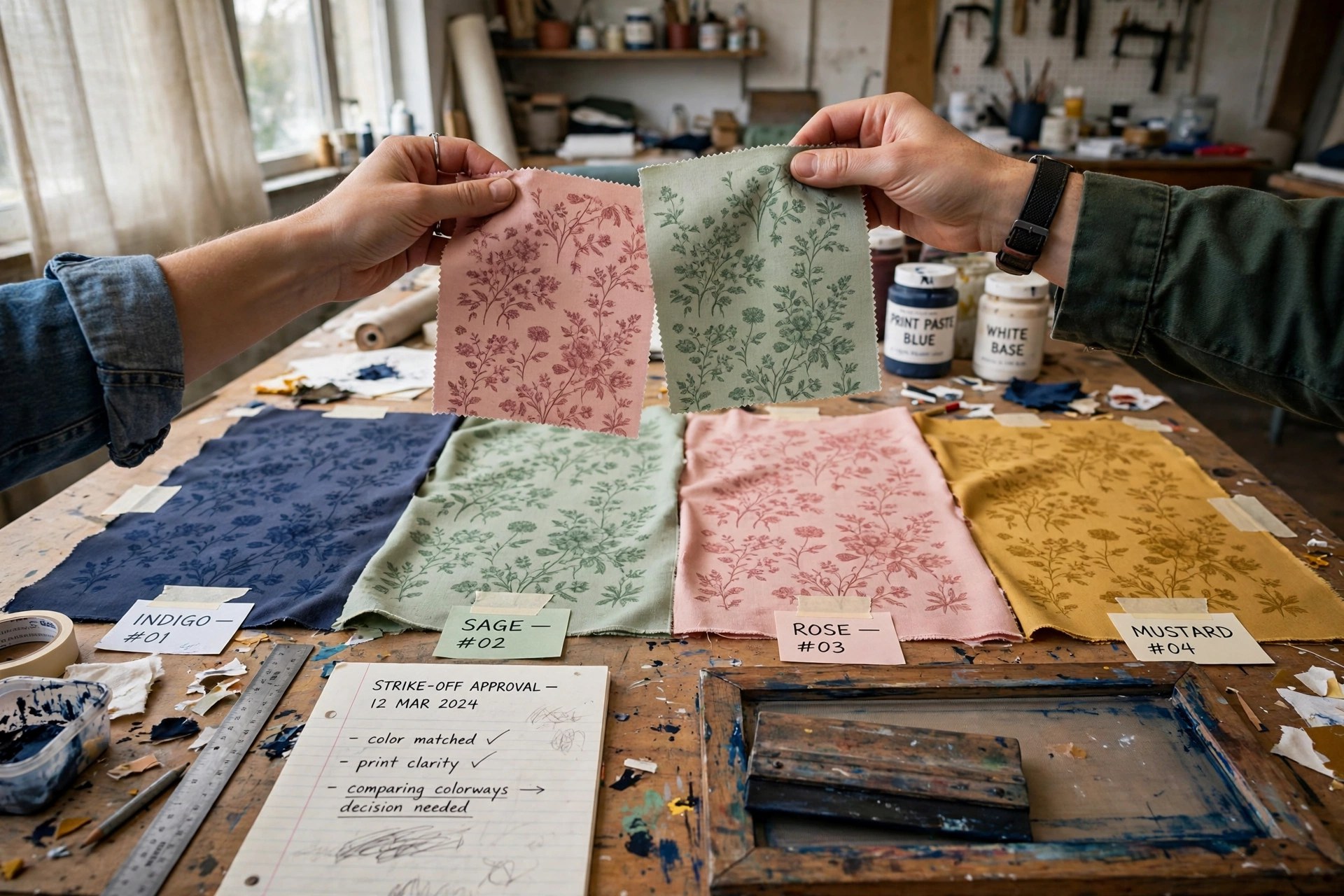
A strike-off proves three things at once: that the artwork's scale and repeat work on the real fabric, that each screen or color in the design matches its standard, and that the print quality — registration, coverage, hand feel — is acceptable. The reviewer checks the strike-off against the artwork and color standards, marks corrections directly on the cloth, and approves one strike-off as the production reference, which the printer keeps for matching the run. Print methods and their trade-offs are covered in the Textile Printing Methods guide, and the dyeing side of color is covered in the companion Textile Dyeing & Finishing guide.
Judging Color Like a Professional
Color is judged under controlled light, because color is not a property of the swatch alone — it is a property of the swatch in a light. Approvals are made in a light box under a standard daylight illuminant (D65 is the industry's usual daylight standard), away from stray colored surroundings, with the dip and the standard side by side, in the same fabric and finish. The classic trap is metamerism: two swatches that match under daylight but diverge under store or home lighting, because their dye recipes differ even though one light makes them agree. Checking under a second light source is the cheap insurance. Comments should be directional and physical — too red, too dull, too light — never "make it pop."
From Approval to Bulk: Shade Continuity
Approval does not end at the lab. Bulk dyeing is approved lot by lot against the approved dip, within an agreed shade tolerance; large orders dyed in several lots are checked for lot-to-lot consistency (shade bands within a garment order can be as damaging as a wrong color). Color that is right but will not stay right is a different failure, caught by testing rather than viewing — see the Colorfastness Testing Guide for how wash, rub and light fastness are verified, and the wider Textile Testing & Quality Standards hub for the full framework. Approved standards, dips and strike-offs are filed with the tech pack so that next season's reorder has something physical to match.
Color Approval Mistakes
- Judging dips under office fluorescents at the desk, then rejecting bulk viewed in daylight.
- Approving a dip on a substitute fabric — the same dye recipe lands differently on a different fiber or construction.
- Verbal standards ("match the photo on my phone") instead of a physical swatch both parties keep.
- Forgetting that trims — thread, zippers, buttons — need their own color approvals against the same standard.
More in the Product Development Guide
Common Questions
What is a lab dip?
A lab dip is a small swatch of the actual production fabric, dyed in the lab to match a color standard, and sent to the brand for approval before bulk dyeing. Mills usually submit several near-matches; the brand approves one, or comments and requests another round.
What is a strike-off?
A strike-off is the print version of a lab dip: a short length of the real fabric printed with the final artwork, screens and colors, submitted for approval of scale, repeat, color and print quality before the production print run begins.
Why does the same color look different under different lights?
Because of metamerism: two materials with different dye recipes can match under one light source and differ under another. That is why color is approved in a light box under a standard daylight illuminant such as D65, and why careful approvers also check under a second light before signing off.
How many lab dip rounds does a color usually take?
Two or three rounds is typical. The first submission brackets the standard, comments refine it, and approval follows when a dip sits within tolerance of the standard on the actual fabric. Unusual colors, difficult fibers and very tight standards take longer — one reason color approval is scheduled on the development calendar's critical path.
Back to the Apparel Product Development Guide
The Apparel Product Development Guide hub walks the whole path — concept, specification, materials and color approval, sampling, costing and the handover to production — with a map of every guide in this cluster.