Product Development & Tech Packs · Documents
Line Sheets Explained
The wholesale selling document for a collection: the photographs, facts, prices and delivery dates a buyer needs to write an order.
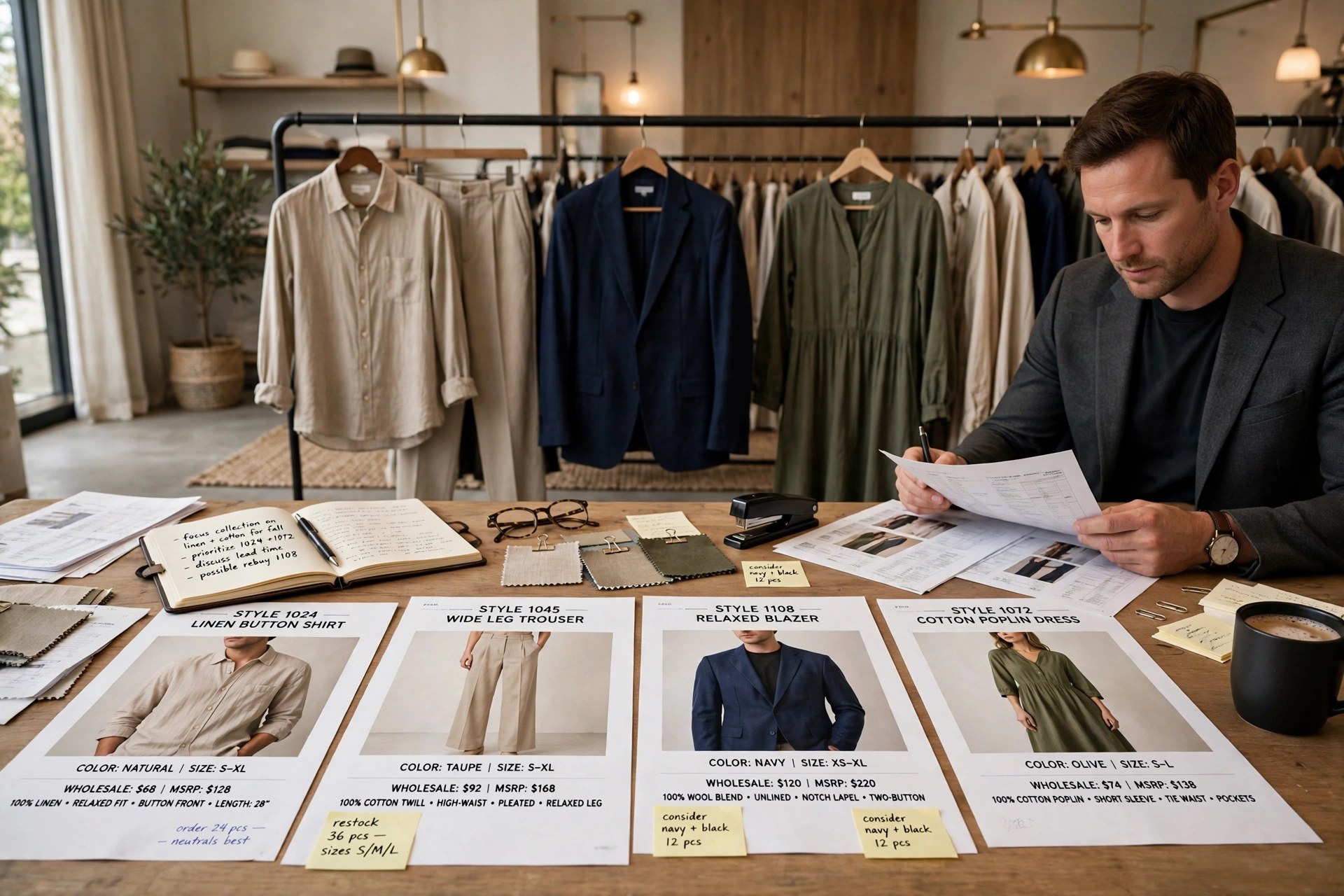
The tech pack tells a factory how to make a garment; the line sheet tells a buyer why to order it. A line sheet is the wholesale selling document for a collection — one page (or a few) per style or per delivery, carrying the photographs, facts and prices a buyer needs to write an order. This page of the Apparel Product Development Guide explains what belongs on a line sheet, how it differs from a catalog and a lookbook, and how buyers actually use it.
Line Sheet, Defined
A line sheet is a wholesale document listing each style offered for a season or delivery, with its style number, photograph or flat image, description, available colorways and sizes, wholesale price (and usually suggested retail), minimum order requirements and delivery window — everything a buyer needs to place an order without asking basic questions.
What Belongs on a Line Sheet
Identification: brand, season and delivery, style number and style name, and the brand's contact and ordering information — buyers file line sheets and return to them weeks later, so a sheet that cannot identify its own brand fails at its simplest job. The product: a clear front image of each style (back or detail views where they sell the garment), a short factual description including fabric content, and every colorway shown or swatched. The offer: wholesale price and suggested retail price, the size range, minimums per style or per order, and the delivery window the prices apply to. Terms that affect the order — prepay or net terms, shipping point, cancellation date — appear on the sheet or its cover page.
Line Sheet, Catalog, Lookbook: Three Different Jobs
The three documents are confused constantly and built differently. A line sheet is a working order document: complete, factual, priced. A catalog presents the line more richly — more photography, more context — but still supports ordering. A lookbook sells mood and brand: beautiful images, no prices, no order information, built for press and impression rather than purchase orders. Most brands need the line sheet first; the others are amplifiers. Confusing a lookbook for a line sheet leaves buyers inspired and unable to order.
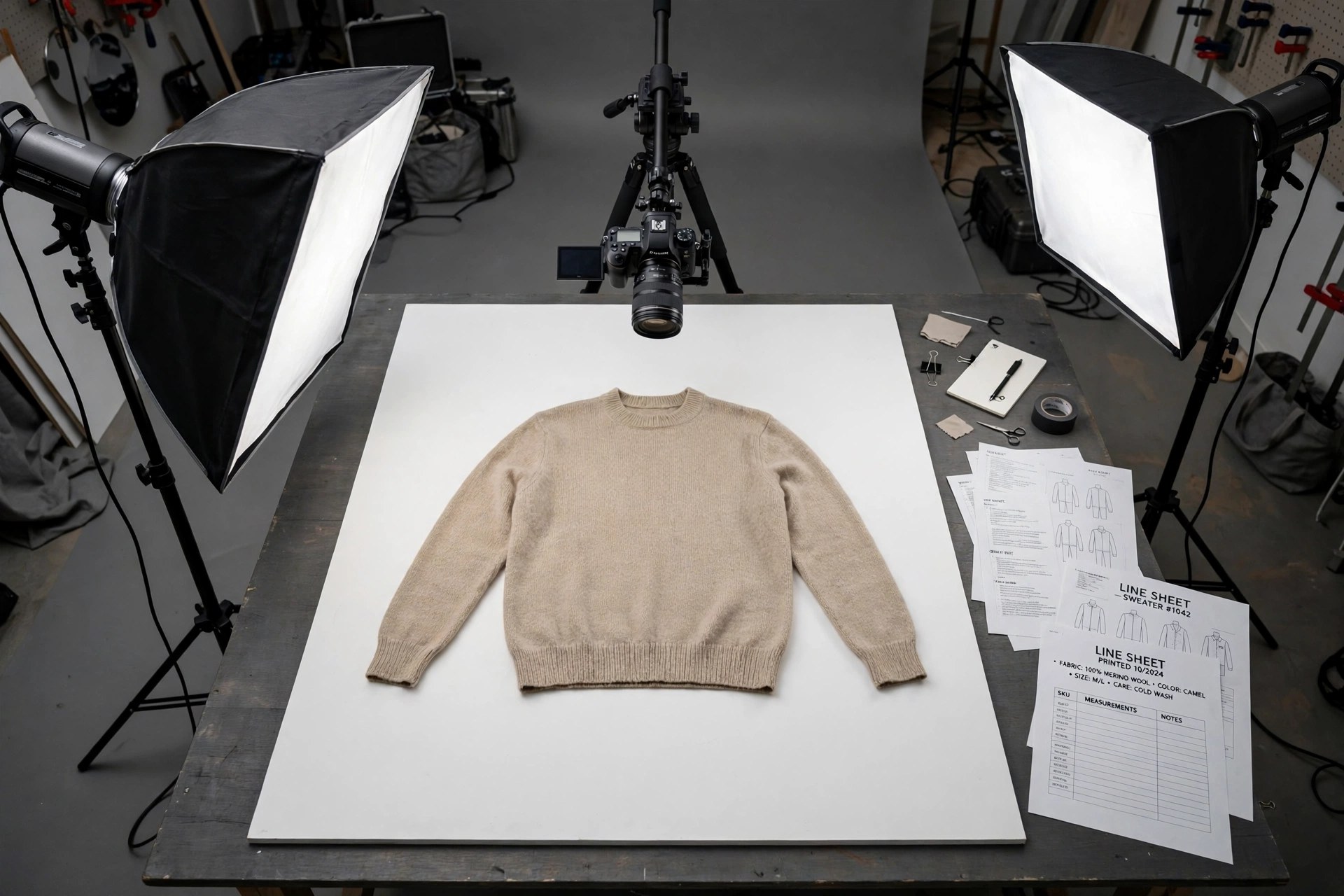
Photography for Line Sheets
Line sheet images are functional before they are beautiful: the garment squared to the camera, true color, on a model, form or flat, consistent across the line so buyers can compare styles at a glance. Ghost-mannequin and flat-lay techniques exist precisely for this document. Shooting specifically for selling documents is covered in Catalog & Line Sheet Photography in the Fashion Photography guide cluster.
How Buyers Use Line Sheets
Buyers work through line sheets at market appointments and afterwards, marking styles, building assortments and checking that prices and deliveries fit their open-to-buy. A good line sheet answers their questions in their order: What is it? What does it cost? When does it ship? What are the minimums? Prices on the sheet must be final and consistent with the brand's pricing structure — the math behind wholesale and retail prices is covered in Wholesale & Retail Pricing. Digital line sheets and B2B platforms have replaced much paper, but the content discipline is unchanged: the document still has to identify, show, price and date every style, and it is still built from the same product data as the tech pack — style numbers, colorways and sizes must agree across every document a style appears in.
Line Sheet Errors Buyers Remember
- Style numbers or color names that do not match the order form, samples or tech pack.
- Prices that change verbally after the sheet is printed — one price, in writing, per delivery.
- Photographs of colorways that are not actually offered, or offered colorways with no image.
- Delivery dates the production calendar cannot keep — the sheet is a promise, and the development calendar is how the promise gets kept.
More in the Product Development Guide
Common Questions
What is a line sheet in fashion?
A line sheet is the wholesale selling document for a clothing line. For each style it shows a photograph, style number and name, description and fabric, available colorways and sizes, wholesale and suggested retail prices, minimum order quantities and the delivery window — everything a buyer needs to place an order.
What is the difference between a line sheet and a lookbook?
A line sheet is a factual order document with prices, sizes, minimums and deliveries. A lookbook is a brand and mood document — styled photography without prices or ordering information, made for press and impression. Buyers order from line sheets; lookbooks support the story around them.
When in the season is a line sheet made?
Line sheets are prepared for market, when the line is shown to buyers — which means the styles, colorways, prices and delivery dates must be settled while sampling is still finishing. The data comes from the same product records as the tech pack, so style numbers and colorways agree across documents.
Do line sheets still exist in digital form?
Yes — most line sheets today are PDFs or pages inside B2B ordering platforms rather than printed binders. The format changed; the content did not. A digital line sheet still has to identify every style, show it clearly, state its prices and minimums, and promise a delivery date production can keep.
Back to the Apparel Product Development Guide
The Apparel Product Development Guide hub walks the whole path — concept, specification, materials and color approval, sampling, costing and the handover to production — with a map of every guide in this cluster.