Product Development & Tech Packs · Documents
Bill of Materials (BOM) Explained
Every fabric, trim, label and bag a garment consumes — itemized by colorway, with quantities — and the one list that purchasing, costing and quality control all share.
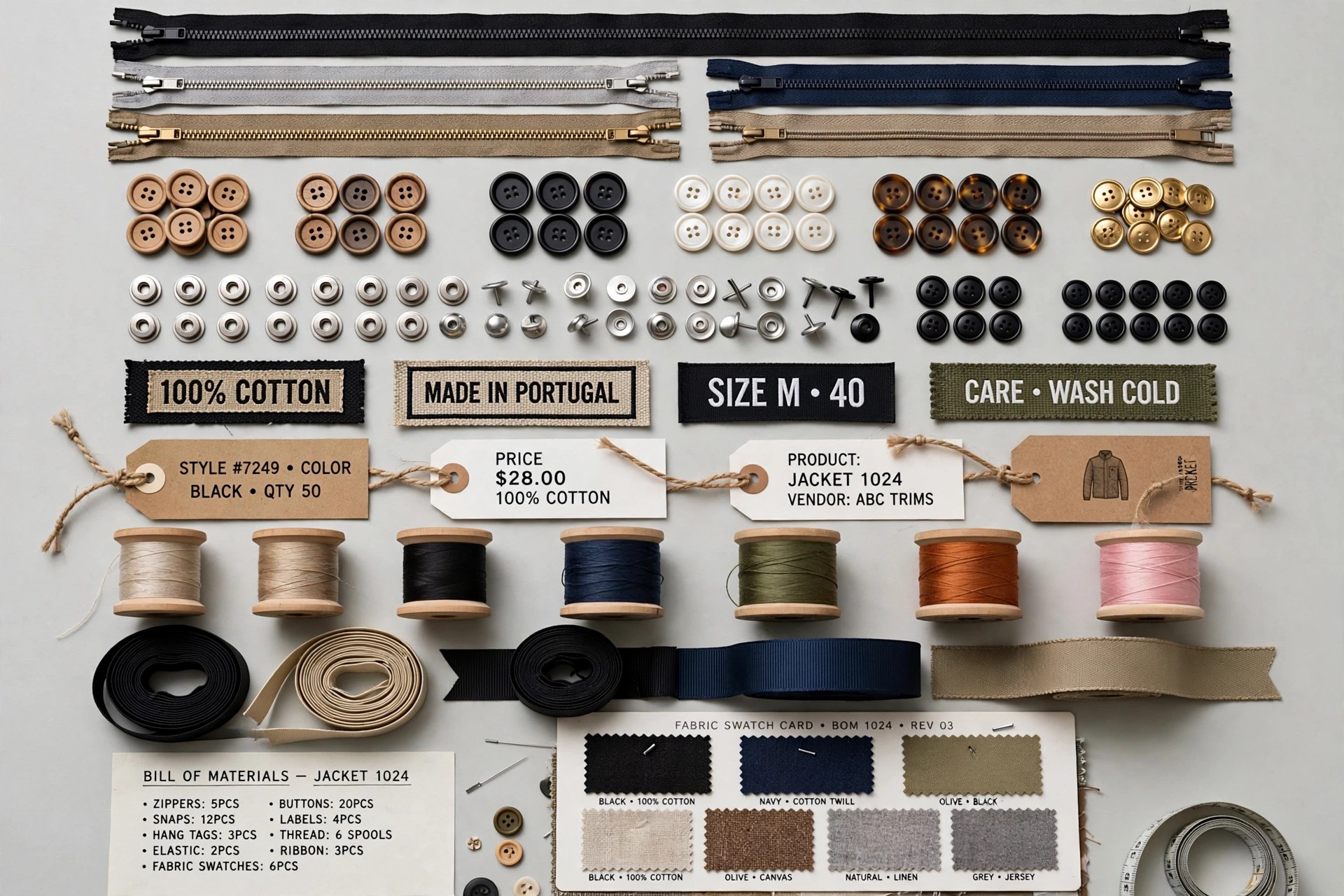
Every garment is a shopping list before it is a garment. The bill of materials — the BOM — is that list, formalized: every fabric, trim, label and bag the style consumes, in the right color, from the right supplier, in the right quantity. This page of the Apparel Product Development Guide explains what belongs on a BOM, how quantities and colorways work, and why the same list serves purchasing, costing and quality control at once. For the short version, see the Apparel Search bill of materials glossary entry.
Bill of Materials, Defined
A bill of materials is the itemized list of all materials required to manufacture one unit of a style: each component's description, supplier or source, content and specification, color, placement on the garment, and the quantity consumed per garment — repeated or varied for every colorway the style is offered in.
What Goes on a BOM
A complete BOM covers five families. Fabrics: shell, lining, pocketing, interlining and any contrast or combo fabrics, each with fiber content, construction, weight and width. Trims: zippers (type, length, finish), buttons (size in lignes, material), snaps, hooks, elastic, drawcords, shoulder pads, and the thread — often specified by type and ticket size for each operation. Labels: brand label, size label, care and content label, plus any compliance or country-of-origin labels the destination market requires. Artwork materials: print pastes or embroidery threads are sometimes carried on the BOM when they are purchased as materials rather than as a process. Packaging: hangtags and their attachers, polybags, tissue, carton and any retail-ready extras. If it ends up in the carton, it belongs on the BOM.
One BOM, Every Colorway
Materials are color-specific, so a BOM is organized by colorway: either a separate column per colorway on one sheet, or a base list with a colorway matrix showing which color of each component pairs with which body color. Thread, zippers and buttons must match (or deliberately contrast with) each fabric color, and it is the BOM — not memory — that records those pairings. Most material errors in production are colorway errors: the right zipper, in the color belonging to a different colorway.
Quantities and Consumption
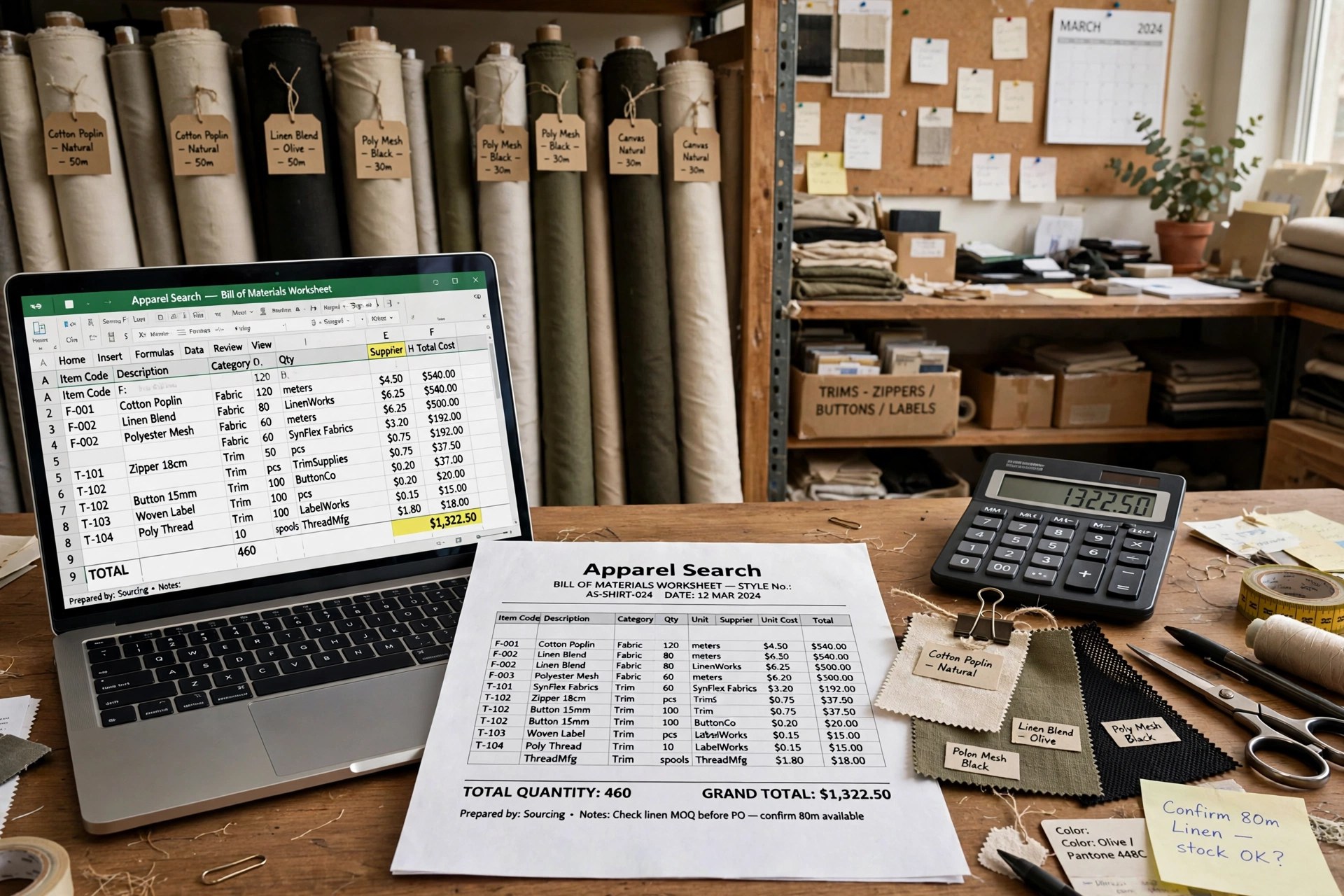
Each line carries the quantity consumed by one garment — fabric in meters or yards per garment (from the marker or an estimated yield), trims in pieces, thread in estimated length or cones per dozen, labels and bags at one per garment. Consumption figures start as estimates at the design stage, sharpen when the pattern and marker are made, and are locked before bulk purchasing. Small errors here multiply silently: a fabric consumption that is 5 percent low is a production run that is 5 percent short.
The BOM's Three Jobs
Purchasing orders from the BOM — it is the single list that tells the sourcing team what to buy, from whom, and how much, including the buffer for wastage the buyer adds on top. Costing prices from the BOM: multiply each consumption by its price and the materials cost of the garment falls out — which is why the BOM sits inside the tech pack and feeds the cost sheet directly. Quality control checks against the BOM: incoming materials and finished garments are verified line by line, so a substituted interlining or a lighter zipper is caught against a written standard rather than an opinion.
Cards, Stages and Versions
Two physical companions often travel with samples: the trim card, which mounts the actual trims for a style, and the fabric card, which mounts the approved fabrics with their details. The BOM itself evolves through development — early versions carry nominated or placeholder materials, later versions the confirmed suppliers and prices — and like the tech pack it lives in, it is versioned: purchasing from a superseded BOM is the same class of error as sewing from a superseded pattern.
Common BOM Mistakes
- Listing a trim without its size, finish or color per colorway — "zipper, black" is not a specification.
- Forgetting the invisible materials: interlining, pocketing, thread, and the packaging that retail orders require.
- Leaving consumption as the first estimate after the pattern has changed.
- Letting the BOM and the cost sheet drift into different documents with different numbers.
More in the Product Development Guide
Common Questions
What does BOM stand for in apparel?
BOM stands for bill of materials: the itemized list of everything consumed to make one garment of a style — fabrics, linings, interlinings, thread, zippers, buttons, elastic, labels, hangtags and packaging — with each item's specification, supplier, color and quantity per garment.
What is the difference between a BOM and a spec sheet?
The BOM lists what the garment is made of; the spec sheet lists how big it must be. The BOM covers materials and quantities, the spec sheet covers measurements, tolerances and grade rules. Both live inside the tech pack and both are checked during production — materials against the BOM, dimensions against the spec.
Is the BOM per style or per colorway?
Both: there is one BOM per style, organized by colorway, because most components are color-specific. A colorway matrix shows which color of thread, zipper, buttons and labels pairs with each body fabric color, so materials can be ordered and checked colorway by colorway.
Who uses the bill of materials?
Purchasing orders materials from it, costing prices the garment from it, and quality control verifies incoming materials and finished garments against it. The factory's own merchandisers also work from the BOM to plan material receipts against the production schedule.
Back to the Apparel Product Development Guide
The Apparel Product Development Guide hub walks the whole path — concept, specification, materials and color approval, sampling, costing and the handover to production — with a map of every guide in this cluster.