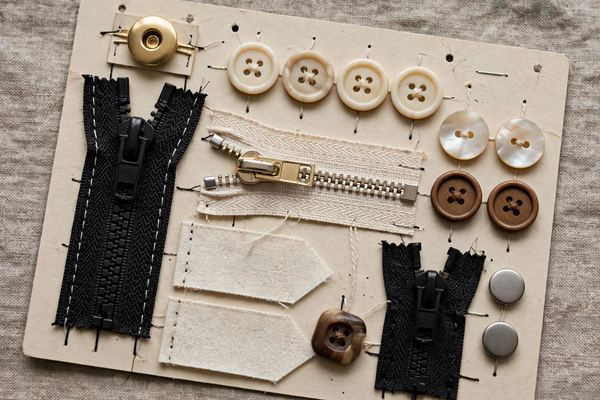
A trim card is a reference card displaying all trims for a garment - buttons, zippers, labels, thread - with supplier and color information for production.
What's on a Trim Card
- Physical trim samples - actual buttons, zipper pulls, and labels attached to the card
- Supplier details - vendor name, item numbers, and contact info
- Color references - matched against approved lab dips
- Placement references - which trim goes where on the garment
Trim Card vs BOM
The trim card is the physical, visual reference - you can see and touch exactly what was approved. The BOM (bill of materials) is the complete written list with quantities and costs. They work together: the card shows what, the BOM shows how much and from whom.
The Trims Themselves: What Gets Carded
Almost anything that is attached to a garment but is not the main fabric counts as a trim, and each one earns a place on the card:
- Buttons - a sample of every button on the style, with its size (measured in lignes), material, finish, and color. A single shirt may need separate samples for the front placket, the cuffs, and the collar.
- Zippers - the pull and a short piece of tape, noting the type (coil, metal, or invisible), the length, and the tape color, which is normally dyed to match the garment.
- Snaps, rivets, and hooks - carded with their finish (antique brass, matte black, bright nickel), because the wrong finish is one of the easiest production mistakes to make - and one of the easiest for a customer to spot.
- Labels - the main brand label, the size label, and the care and content label, shown exactly as they will be sewn in, including the fiber content and care wording the law requires.
- Thread - a winding of the actual sewing thread with its color number. Thread is matched to the fabric under the same standard lighting used for lab dips, because a match under factory lights can fail in daylight.
- Elastic, drawcords, and tapes - samples with their width and color, plus cord ends, toggles, and aglets where the style uses them.
- Decorative trims - lace, braid, binding, patches, badges, and appliqués, mounted flat so their size, color, and quality can be judged before they are sewn on.
How a Trim Card Is Used in Production
The card is assembled during development, once the designer and the technical team have settled on the trims for a style. When the pre-production sample is reviewed, every trim on the sample garment is checked against the card. The card is then approved - usually signed and dated - and only after that approval are bulk trim orders placed.
From that point on, the card is a working standard rather than a design document. The purchasing team orders against the supplier names and item numbers written on it. When the bulk trims arrive at the factory, they are compared with the card before they are released to the sewing floor. During inline inspections and again at final inspection, quality control staff hold the card next to finished garments to confirm that every button, zipper, and label is the approved one.
This is why substitutions are controlled so tightly. If a factory runs short of the approved zipper, buying a similar one locally may look harmless, but the similar zipper was never costed, tested, or approved. Against the card, it is simply the wrong trim - and a common cause of rejected shipments and chargebacks.
Trim Cards, Tech Packs, and Golden Samples
A trim card never works alone. The style's tech pack includes a trim page within its bill of materials, listing every component in writing. The trim card is the physical companion to that list: a written line can say "matte black snap, 12 mm," but the card removes all doubt about which matte black snap was meant.
The approved pre-production sample - often called the golden sample - is the sewn counterpart, a complete garment made with the approved fabric and the approved trims. Together, the three answer the questions production asks every day: what does the style consist of (the bill of materials), what do the components actually look like (the trim card), and what should the finished garment look like (the golden sample)?
How to Read or Build a Trim Card
- Start with the header. Every card is headed with the style number, style name, season, and date, so it can never be mixed up with another style's card.
- Mount one sample of each trim. Attach the actual button, zipper pull, label, or tape - not a photograph. Oversized trims are sometimes cut down to a workable size, as long as the finish and color stay true.
- Label every item. Next to each sample, record the supplier, the item or article number, the size, the material, and the color or finish.
- Add placement notes. Write where each trim belongs - "front placket," "cuff," "center back neck" - so the sewing floor never has to guess.
- Approve and date it. The responsible designer or production manager signs the card. That signature is what turns a board of samples into the standard for the order.
- Control revisions. If a trim changes, issue a revised card (or mark and re-approve the change) and withdraw the old card, so two versions are never in use at the same time.
FAQs
- Who approves the trim card?
- The brand's designer or production team, before bulk ordering.
- Can trims change after approval?
- Only with written approval - unapproved substitutions are a common quality issue.
- Do I need trim cards for every style?
- Yes - each style's trims should be carded and approved.
- What is the difference between a trim card and a fabric card?
- A fabric card (sometimes called a color card) carries the approved fabric and color standards for a style. A trim card carries the components attached to or sewn into the garment - buttons, zippers, labels, thread. Most styles in production have both, and the two are usually approved together.
- Who keeps copies of the trim card?
- Usually several people: the brand's production team keeps the master copy, the factory keeps one on the production floor, and the QC or inspection team works from another. Because every copy shows the same approved standard, a trim can be checked against it at any stage, from bulk ordering to final inspection.
Glossary: see the full fashion glossary for more apparel industry terms.
Search Apparel Search