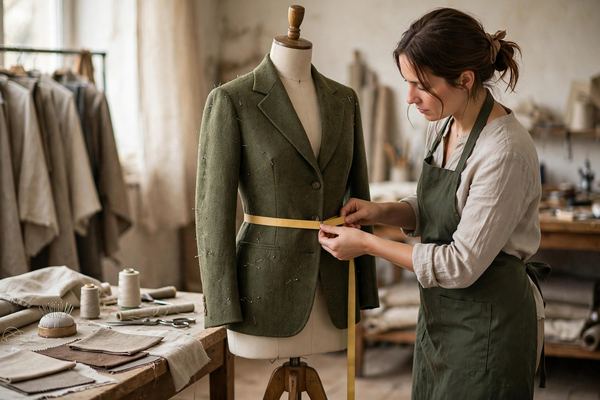
Ease is the difference between body measurements and garment measurements. Wearing ease allows movement and comfort; design ease creates the intended silhouette.
Two Types of Ease
- Wearing ease: the minimum extra room needed for movement and comfort - typically 2-4 inches at the bust for a woven top
- Design ease: additional fullness added for style - an oversized sweater has lots of design ease on top of its wearing ease
How Ease Affects Fit
Too little ease and the garment pulls, gaps, and restricts movement. Too much and it looks sloppy - unless the slouch is the design intent. Getting ease right is the difference between "tailored" and "tight," between "relaxed" and "baggy."
Ease by Garment Type
A tailored blazer needs precise wearing ease plus modest design ease. An oversized hoodie is mostly design ease. Stretch leggings use negative ease - the garment is cut smaller than the body and expands to fit.
FAQs
- What is negative ease?
- When the garment is smaller than the body - used in stretch garments like leggings that expand to fit.
- How much ease does a t-shirt need?
- Typically 2-4 inches of wearing ease at the chest for comfort.
- Can ease be adjusted?
- Yes - it's controlled in the pattern. That's what fit sessions refine.
Glossary: see the full fashion glossary for more apparel industry terms.