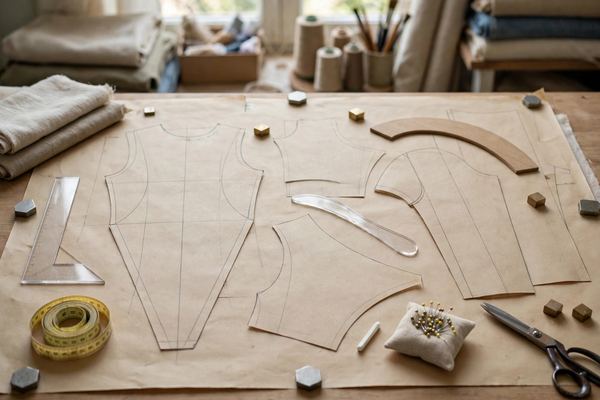
A flat pattern is a pattern drafted on paper using measurements and geometric principles, as opposed to draping fabric on a form.
The Flat Pattern Method
Flat pattern work starts from basic blocks - simple fitted patterns with no style lines. Through slash-and-spread, pivoting, and added seam lines, the pattern maker manipulates darts, creates style lines, adds fullness, and shapes the design exactly as sketched. Every change is measurable and repeatable.
Flat Pattern vs Draping
Flat pattern is precise, repeatable, and ideal for tailored or structured garments. Draping is sculptural and intuitive, better for fluid, complex shapes. Most professional pattern makers learn both and choose per design - many garments use a combination.
Essential Tools
- Pattern paper - dotted or plain, for drafting and tracing
- Rulers and curves - straight rulers, hip curves, French curves
- Notcher and awl - for marking notches and drill holes
- Measuring tape - for checking every line against the spec
FAQs
- What is a block pattern?
- A basic fitted pattern with no style lines - the starting point for flat pattern work.
- Is flat pattern better than draping?
- Different tools for different jobs. Most professionals learn both.
- Can I learn flat pattern at home?
- Yes - many books and courses teach the method.
Glossary: see the full fashion glossary for more apparel industry terms.