Apparel Search»Football Kits»Kit Design & Manufacturers
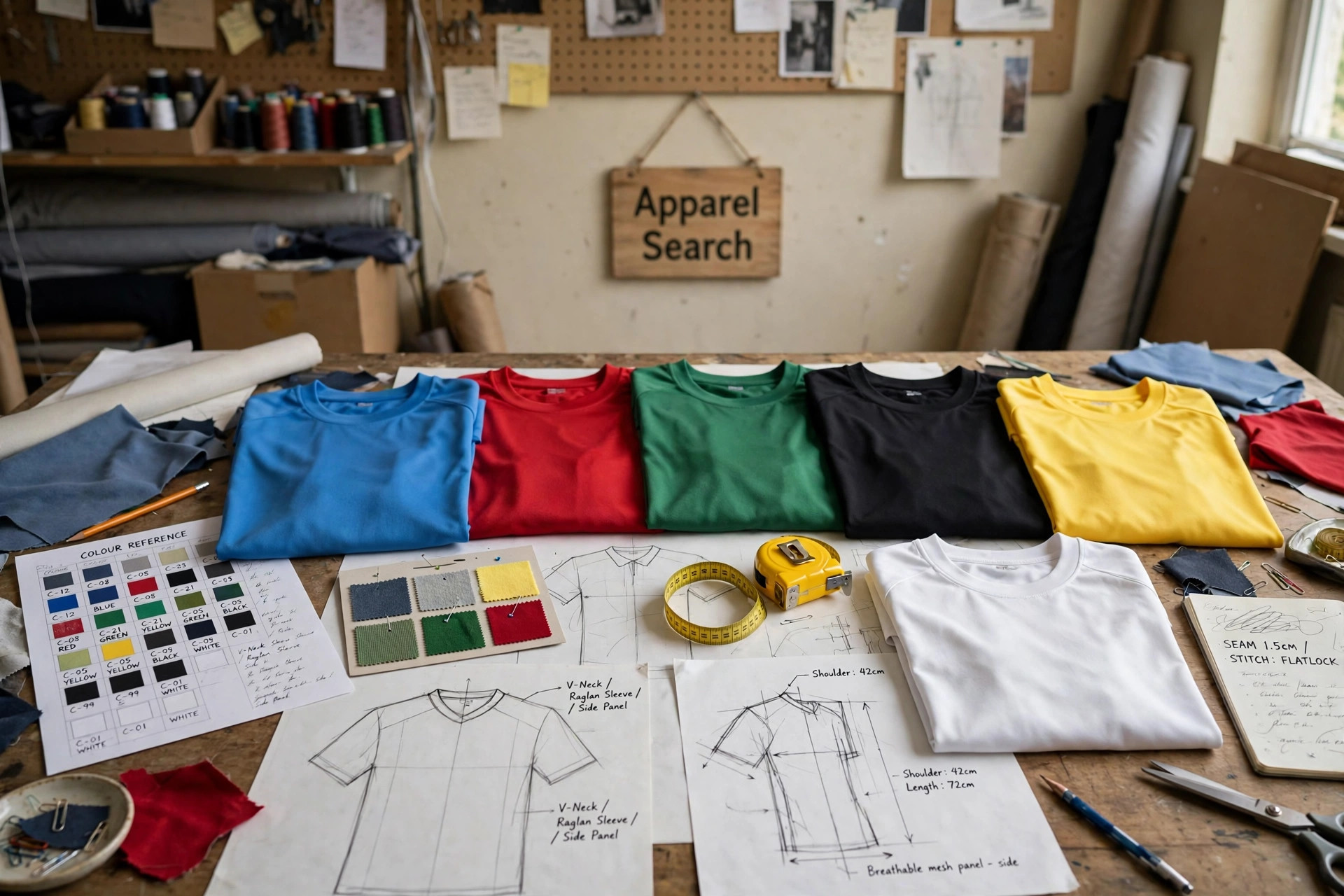
Illustrative image created for this guide — a kit designer's studio with generic shirts; no club's official kit is shown.
Football Kit Design & Manufacturers
Every summer, hundreds of new football kits appear — and every one of them was designed roughly two years before anyone saw it. The football shirt is one of the most engineered garments in fashion: a performance product, a piece of graphic design, a licensing business and a cultural symbol, all negotiated between a club, a manufacturer and, increasingly, the supporters who will decide within minutes of launch whether the design is a classic or a crime. This guide explains who makes the world's kits, how the design process works, and the rules that shape what a shirt is allowed to look like.
The Big Three — and the Challengers
Three companies dominate the top of the market. Adidas dresses Real Madrid, Manchester United, Liverpool, Arsenal, Bayern Munich, Juventus and Argentina, among many others. Nike's roster includes FC Barcelona, Paris Saint-Germain, Chelsea and the national teams of England, Brazil and France. Puma's flagship club is Manchester City, alongside Borussia Dortmund and AC Milan. Between them, the three supply the great majority of Europe's elite clubs and the most valuable kit contracts in sport — the largest deals are reported to be worth over £100 million per year once guarantees and royalties are combined.
Below that tier the market is far more varied, and often more creative. Italian makers Macron and Kappa, Spanish brand Joma, Danish company Hummel (famous for the chevrons on Denmark's beloved 1986 World Cup shirt), British heritage brand Umbro and relative newcomer Castore all hold significant portfolios. Smaller clubs frequently receive more individual attention from a challenger brand than a giant's template department would give them — one reason kit-watchers often rate the season's best designs from outside the elite.
How a Kit Deal Works
In a modern kit-supplier contract, the manufacturer pays the club a guaranteed annual fee plus royalties on sales, and in return receives the exclusive right to design, manufacture and distribute the club's kit and training wear. The biggest contracts run for a decade or more: stability matters because a manufacturer's design and retail operation becomes part of the club's identity. When a giant club changes supplier — as Liverpool did in returning to adidas in 2025 after five years with Nike — it is a business story, a design story and a nostalgia story all at once.
National team deals work the same way at federation level, with one difference: the shirt is a country's colours, and design changes are judged against decades of history. A federation shirt that strays too far from tradition — as several federations have discovered — provokes a reaction no club shirt ever quite matches.
The Two-Year Design Cycle
Kit design typically begins around two years before launch. The manufacturer's designers research the club's archive — old shirts, crests, photographs, anniversaries — and develop concepts with the club's brand team. A design is then engineered: fabrics selected, ventilation and panel construction tested by players, and the graphics applied. Production volumes for replica shirts are committed months ahead, which is why a shirt leaked online in spring is almost never a fake of the design process — by then, the shirts already exist in warehouses.
Anniversaries drive many of the best designs. A club celebrating a famous season, a stadium, or a founding year gives its designers a story to tell, and the resulting shirts — often reviving an archive pattern or colour — are consistently the most loved. The retro wave in modern kit design is not laziness; it is the archive being used as the design brief.
Templates vs Bespoke Design
The recurring argument in kit design is the template. Manufacturers work more efficiently when several clubs share a shirt pattern with different colours applied, and in some seasons the similarity across a brand's roster is obvious. Supporters hate it: a shirt is supposed to be theirs alone. The counter-argument is craft — a well-engineered template in a club's true colours, with bespoke details in the collar, cuffs and trim, can still feel individual. The balance has shifted in recent seasons toward more club-specific graphics, storytelling and local references, because clubs have learned that a shirt fans consider generic is a shirt fans do not buy.
The Rules on the Shirt: Sponsors, Names and Numbers
A football shirt is also regulated space. Leagues and competitions control the size and position of the manufacturer's mark, the club crest, front-of-shirt and sleeve sponsors, and the competition badge worn on the sleeve. In the Premier League, a single league-wide font has been used for names and numbers since 2017 (updated in 2023), so every club's shirts share the same lettering — one of the few places the league, not the club, owns the design. Sponsor rules keep evolving: from the 2026-27 season, Premier League clubs no longer carry gambling brands on the front of the shirt, the latest step in a long negotiation between commerce and the shirt's dignity.
European competition adds its own layer: UEFA's kit rules govern how much of a shirt can be given to pattern and sponsor, which is why a club's European shirt sometimes differs in small details from its league version.
Fabrics and the Sustainability Push
The modern match shirt is a technical garment: recycled polyester yarns, body-mapped mesh, bonded seams and sweat-wicking finishes, engineered to be as light as possible when wet with rain or sweat. Sustainability has become a genuine design input rather than a footnote — Puma's RE:FIBRE programme, for example, makes replica shirts from at least 95 per cent recycled textile waste, and all three major makers now build their flagship shirts primarily from recycled polyester. The direction of travel is clear: within a few seasons, a top-level shirt made from virgin plastic will be the exception worth remarking on.
Shopping for Kits and Training Wear?
Shirts from the makers covered here — club and national team, current season and retro — are widely sold through Amazon. The Apparel Search Amazon guide keeps the shopping links in one place.
Shop on Amazon via the Apparel Search GuideThis link opens the Apparel Search shopping guide for Amazon, where the product links are kept in one place.
Common Questions
Which company makes the most football kits?
Adidas, Nike and Puma together supply most of Europe's major clubs and national teams, with adidas and Nike holding the largest rosters of elite clubs. Below them, Macron, Joma, Kappa, Hummel, Castore and Umbro supply many more clubs across the leagues.
How far in advance is a football kit designed?
Typically around two years before it is worn. Design, player testing, manufacturing and retail distribution all have to happen in sequence, which is why new kits are often leaked shortly before launch — by then the shirts are already made.
Why do some clubs' shirts look similar in the same season?
Manufacturers sometimes build several clubs' shirts on a shared template pattern, changing colours and details. It is efficient but unpopular with supporters, and recent seasons have moved back toward more individual, club-specific designs.
Related Reading
Search Apparel Search