Women's Soccer Socks Guide
A soccer sock is a long, performance-knit sock worn a few inches below the knee, made long specifically to hold and cover a shin guard.
Shop Women's Soccer Socks Now
Shop Women's Soccer Socks on Amazon Shop Women's Soccer Socks on eBayThe Amazon and eBay links on this page are affiliate links. If you make a purchase through them, Apparel Search may earn a commission.
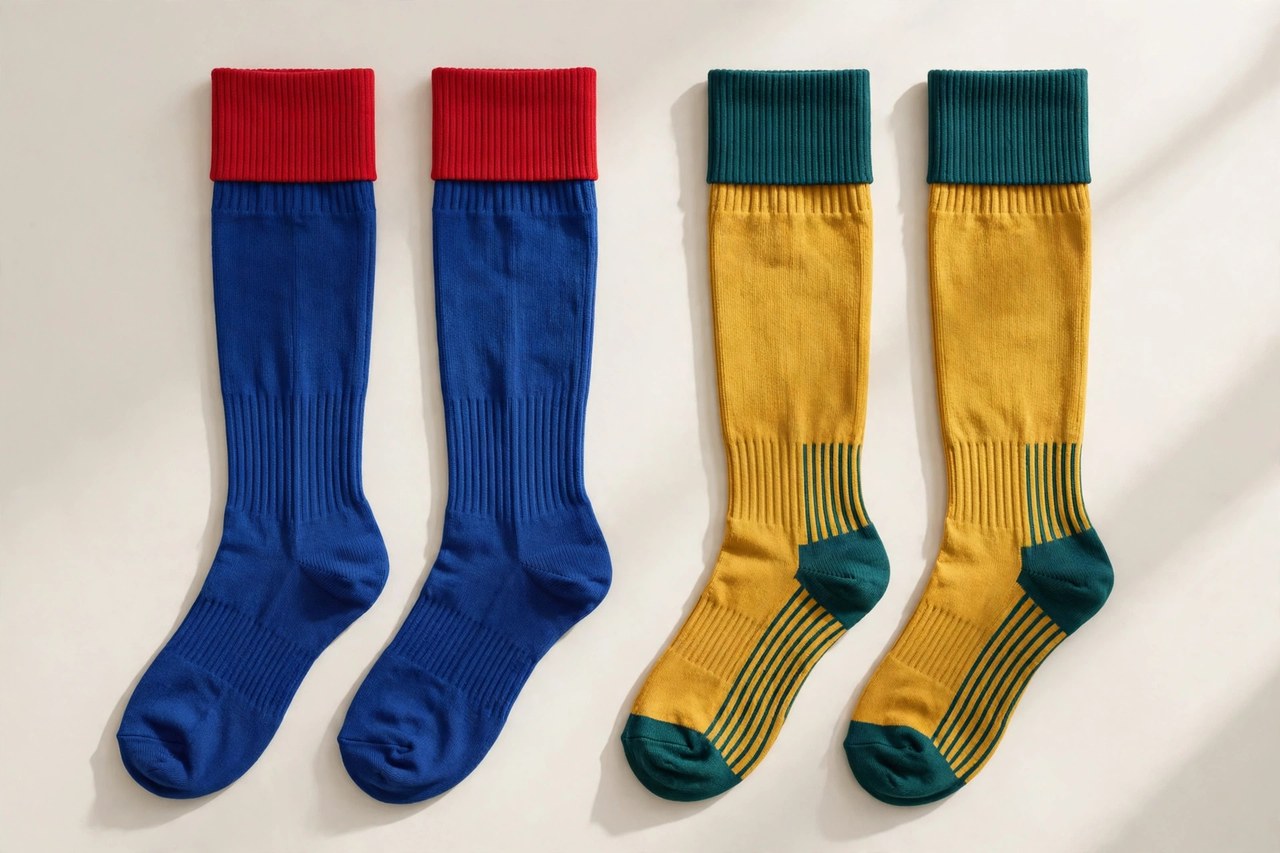
A sock is an item for the foot and lower leg, typically knitted from wool, cotton, silk, nylon or blends, in various styles and lengths. The soccer version is defined by one relationship: a women's soccer sock is typically long so that it can accommodate the use of shin guards. Everything else about it — its length, its knit, its firmness — follows from being the garment that holds protective equipment in place through ninety minutes of running.
Soccer socks are often referenced as calf socks because they cover the entire calf, and they are typically worn a few inches below the knee, for games and practices alike. This guide covers the sock and guard system, the performance knits that replaced the old cotton tube, how a soccer sock is fitted and matched to a kit, and the washing discipline that keeps them in service.
The Sock and Shin Guard System
A shin guard is a pad worn to protect the shins when playing soccer and other sports, worn primarily on the front of the shin to protect it from injury. Two arrangements exist: some shin guards slip between the sock and the wearer's shin, held by the sock's own tension and sometimes an ankle strap or sleeve, while others are incorporated directly into the sock, with the protective plate sewn or pocketed into the garment itself.
Slip-in guards with a separate sock are the standard at most levels, since guard and sock wear out at different rates and wash differently. The sock must be firm enough to hold the guard without tape, which is why soccer socks are knitted with strong elastic content and a ribbed leg rather than cut as a loose tube. A guard that rotates or slides mid-match is usually a sock problem, not a guard problem, and a fresher, firmer pair solves it.
Performance Knits: Wicking, Cushion and Compression
Similar to other athletic socks, soccer socks are made to provide the best possible comfort and to aid performance, and they are generally made from high performance fabrics with wicking properties in mind. Modern soccer socks are nylon and polyester blends with elastane, knitted thin over the top of the foot for a close cleat fit, cushioned at the heel and toe where impact lands, and ribbed or lightly compressive through the arch and calf to stay up and feel secure.
Details separate match socks from gym socks. A left and right specific knit, where offered, shapes the arch correctly. Ventilation mesh across the instep keeps the foot cooler inside a close-fitting cleat. Anti-blister yarns and flat toe seams address the two spots a long sock can hurt a foot over a full match. Cotton, the fiber of the old tube sock, is the one material to avoid: it absorbs sweat, stays wet, loses its hold on the guard and raises blisters, undoing every property above at once.
Kit Matching and Fit
Soccer socks are part of the uniform: in league play the sock color is specified with the shirt and shorts, and referees expect the set to match, including that the sock fully covers the shin guard. Players keep the kit pair for matches and plainer pairs for practice, where the same length and guard fit still apply. Because the sock is the visible leg of the kit from shorts to cleats, its color discipline is stricter than a practice shirt's ever is.
Fit by shoe size range and by the guard test: with your guard in place, the sock should pull up smoothly to a few inches below the knee, cover the guard completely, and stay there through a jog and a few jumps without being folded down or taped. Too short, and the guard's top edge shows and slips; too loose in the leg, and no folding trick keeps it up for a match. A snug cuff and a fresh elastic life are the fit, so a sock that will not stay up is a sock at the end of its career.
Washing: The Shin Guard Problem
Wash soccer socks after every wear, inside out, and hang them dry; the performance knit keeps its elasticity far longer out of the dryer. Wash the guards themselves regularly too, and one warning is plain: shin guards typically smell horrible, so keep them clean as best you can. Air guards after every game rather than sealing them in the kit bag, wash straps and shells as the maker directs, and let everything dry fully before the next session.
Keep at least two pairs of match-weight socks in rotation so a washed pair is always dry and recovered; elastic rebounds during rest exactly as shoe foam does. Replace socks when the leg will not hold a guard, the heel or toe thins, or the wicking feels gone and blisters return. Of all the kit on these soccer pages, the sock is the cheapest item and the one whose failure is felt soonest — which is why experienced players are quietly particular about it.
Related Women's Guides
More to Explore on Apparel Search
Looking for Women's Clothing Stores?
This guide helps you choose women's soccer socks. To browse where to buy, visit our women's clothing store directory, where you can find retailers that carry them.