Women's Corduroy Pants Guide
It is the fabric, not the cut — ribbed cotton corduroy in every wale, from pin-thin to wide and plush.
Shop Women's Corduroy Pants Now
Shop Women's Corduroy Pants on Amazon Shop Women's Corduroy Pants on eBayThe Amazon and eBay links on this page are affiliate links. If you make a purchase through them, Apparel Search may earn a commission.
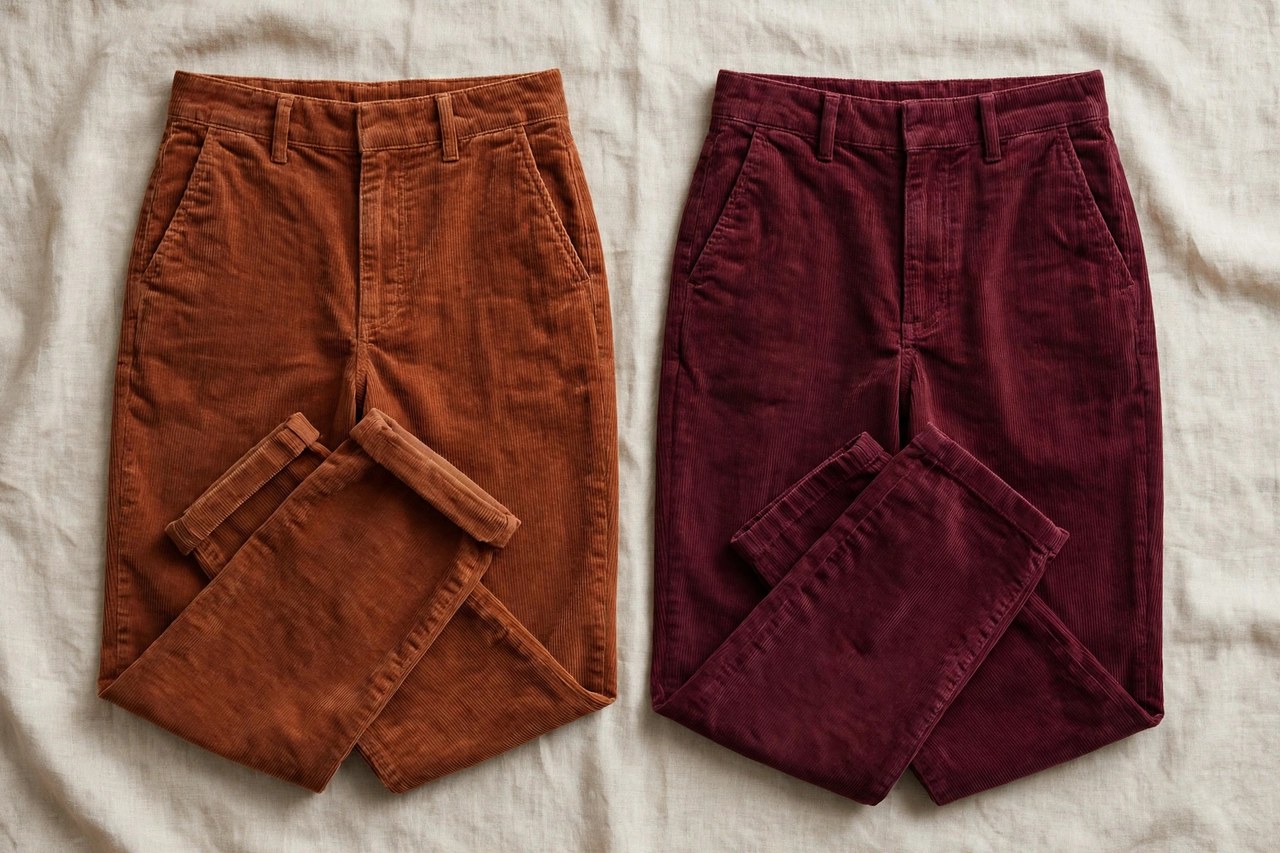
Corduroy pants are the exception in this group of guides: they are defined not by length or pockets but by fabric. Corduroy is a cotton textile woven with raised parallel ribs, called wales, that give it a soft, ridged texture, a subtle sheen as light crosses the ribs, and quiet warmth. Almost any trouser cut can be made in corduroy — straight, wide-leg, cropped, bootcut, five-pocket jean style — and each one behaves a little differently from the same cut in twill or denim because of the pile. That is why this guide is organized around the fabric itself: how wale counts change the look, which colors corduroy does best, which cuts flatter its texture, and how to wash it without crushing the ribs that make it worth wearing in the first place.
Wales Explained: Pincord, Standard, and Wide Wale
Wale count means the number of ribs per inch, and it runs opposite to intuition: the higher the number, the finer the rib. Pincord or needlecord, at roughly fourteen to sixteen wales per inch, has hair-thin ribs and reads almost like velvet from a distance; it drapes softly, suits tailored and dressier pants, and shows the least obvious texture. Standard or mid-wale corduroy, around eight to eleven wales, is the classic trouser fabric — visible ribs, good body, unmistakably corduroy without shouting. Wide wale, at three to eight wales, has bold, plush ribs and a relaxed, retro character that suits wide-leg and casual cuts. Stretch is common in modern corduroy through a small elastane content, which improves comfort and knee recovery. When shopping photos, zoom in: wale scale changes the entire personality of the pant more than color does, and listings do not always state the count clearly.
Colors: Where Corduroy Shines
Corduroy's ribbed pile catches light unevenly, which makes colors look deeper and richer than the same dye on flat cotton — and it is why the fabric owns a particular palette. The classics are rust, camel, chocolate brown, burgundy, forest and olive green, and navy, all autumnal tones that the texture flatters. Cream and winter white corduroy has become a cold-season favorite, brightening dark sweaters while staying seasonal. Black corduroy reads softer than black denim, closer to a matte velvet. Pastel corduroy appears in spring in pincord weights, blush and pale blue working best. Expect the pile to make any color look slightly different from different angles and in motion; that living quality is the appeal. One caution: the ribs hold lint and light-colored dust visibly on dark shades, so a lint roller is corduroy's everyday companion, kept wherever the pants are stored.
Cuts That Flatter a Textured Fabric
Texture adds visual weight, so cut choice matters. Straight-leg corduroys are the timeless option, the ribs running cleanly down a moderate leg that pairs with everything. Wide-leg corduroys embrace the fabric's retro warmth and look best in mid or wide wale, styled with a tucked knit to define the waist. Five-pocket, jean-style corduroys are the easiest entry point — familiar fit, new texture — and suit pincord and standard wales. Cropped corduroys show a boot or sock and keep plush hems off wet winter pavements, a practical advantage. Very skinny corduroys can strain the pile at the knee and shine with wear, so a slim rather than skin-tight fit ages better. Whatever the cut, check the inner thigh and seat in good light when trying on; pile crush in those zones is the first sign of wear on older pairs and should not be present on new ones.
Seasonality and Styling
Corduroy is a cool-weather fabric at heart. The pile traps a thin layer of air, giving mid and wide wales genuine warmth, while pincord extends the season into spring and early fall. Style corduroys as the textured element of the outfit: a cream fisherman sweater, a denim or chambray shirt, a plaid flannel, or a simple black turtleneck all let the ribs do the visual work. Leather boots and loafers suit the fabric's weight; suede doubles the texture and looks intentional in matched earth tones. Avoid pairing corduroy pants with a corduroy jacket unless the wales and colors differ clearly — a full matching suit in identical cord reads as costume rather than outfit. For a modern note, wide-leg corduroys with clean sneakers and a cropped jacket bridge the retro fabric into current styling without effort.
Washing Corduroy Without Crushing the Pile
Corduroy care centers on protecting the ribs. Turn pants inside out before washing so the pile is shielded, close zips and buttons, and wash in cold water on a gentle cycle with similar colors — corduroy sheds lint in early washes and collects it in later ones, so wash cords with cords or dark, sturdy fabrics, never with towels you want lint-free. Skip heavy fabric softener, which mats the pile over time. Dry on low, removing while slightly damp, or line dry; high heat stiffens the ribs. Shake the pants out and smooth the pile with your hand in one direction to restore its even sheen. Store hung by the waistband rather than folded tightly in a drawer, since hard fold lines can leave lasting crease marks across the ribs. With that modest care, cotton corduroy softens beautifully with age while keeping its character for many winters.
Related Women's Guides
Looking for Women's Clothing Stores?
This guide helps you choose women's corduroy pants by style, fabric and fit. To browse where to buy, visit our women's clothing store directory, where you can find retailers that carry them.