Women's Cotton Corduroy Pants Guide
The ribbed pile weave that turns cotton into autumn’s warmest trouser — once you know your wales.
Shop Women's Cotton Corduroy Pants Now
Shop Women's Cotton Corduroy Pants on Amazon Shop Women's Cotton Corduroy Pants on eBayThe Amazon and eBay links on this page are affiliate links. If you make a purchase through them, Apparel Search may earn a commission.
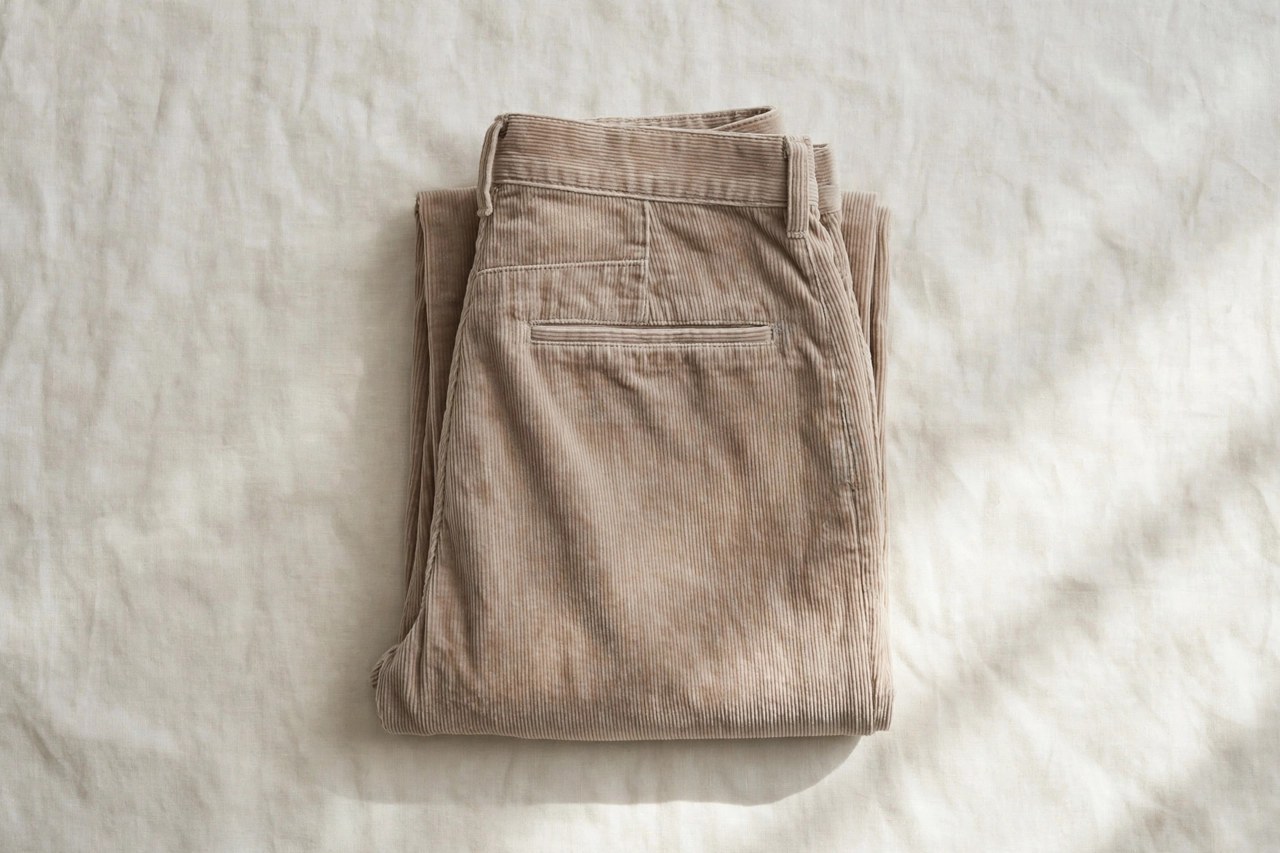
Corduroy is cotton woven with extra weft threads that are cut and brushed into parallel raised ribs, called wales, running the length of the leg. That cut-pile surface is what makes corduroy pants feel warmer and look richer than plain cotton trousers of the same weight — the pile traps a thin layer of air against the cloth and catches light differently as you move. Almost all women's corduroy pants are 98 to 100 percent cotton, sometimes with one or two percent elastane for recovery at the knee and seat. If you learn one thing before shopping, learn the wale count, because it decides whether a pair reads as a refined trouser, a casual five-pocket, or a bold retro statement. Everything else — rise, leg shape, color — layers on top of that choice.
Wale Counts: Pinwale, Needlecord and Wide Wale
Wales are counted per inch across the cloth. Needlecord, sometimes called pinwale, packs 14 to 16 or more fine ribs per inch; at a distance it looks almost like velvet, and it makes the dressiest corduroy pants — slim trousers and tailored crops that pair with blazers and heeled boots. Standard wale, around 11 ribs per inch, is the versatile middle ground: the rib is visible but not loud, and it suits straight-leg and bootcut pants for everyday autumn wear. Wide wale drops to 8 or fewer ribs per inch, and chunky or jumbo cord goes lower still; the ribs become a deliberate texture, best on relaxed, wide-leg and vintage-inspired cuts. Finer wales shed their pile a little less and resist flattening at the seat, while wide wales show wear sooner but feel plushest. Match the wale to the occasion: fine for the office, standard for weekends, wide for statement outfits.
Weight, Warmth and When to Wear Them
Corduroy pants are typically woven at 250 to 320 GSM, noticeably heavier than summer poplin, and the pile adds insulation that plain weave cotton cannot match. That makes them a genuine cold-weather trouser for autumn and winter, comfortable from the first frost through early spring, and too warm for humid summer days. The cotton pile breathes better than synthetic fleece-lined pants, so you get warmth without the clammy feeling of polyester. Dark and earthy colors dominate for good reason: rust, burgundy, forest, chocolate and navy hide the slight shading differences that appear where pile bends in opposite directions. Lighter shades — cream, stone, dusty pink — look fresh in fine needlecord but show pile crushing sooner. A useful test in the shop: stroke the fabric both ways; quality corduroy feels smooth one way and slightly resistant the other, with no bald patches along the fold lines.
Fit and Silhouettes That Suit the Pile
Because corduroy has body and a visible texture, it rewards clean, simple silhouettes. Straight-leg and slim tapered pants are the most forgiving: the ribs run uninterrupted and the pile does not add bulk at the thigh. Wide-leg corduroys in wide wale make a strong retro outfit but add visual width, so keep tops fitted or tucked. Five-pocket jean-style cords are the casual staple and break in like denim, softening at the creases over time. High rises work well because the waistband sits where the pile is least stressed; low rises can gap as the stiffer cloth resists curving. Check the seat and knees on a pre-owned or long-worn pair — flattened, shiny pile in those spots is the classic corduroy wear pattern and cannot be fully revived. If you are between sizes, choose the larger one: corduroy eases with wear, but a too-tight pair will shine at the stress points within a season.
Shrinkage, Washing and Pile Care
Cotton corduroy shrinks mostly in length, typically two to three percent in the first warm wash, so buy hems a touch long or commit to cold washing from the start. Always turn corduroy pants inside out before washing: the pile rubs against other garments and the drum, and inside-out washing preserves the rib surface and keeps lint from settling into the grooves. Wash cold on a gentle cycle with similar colors, skip fabric softener, which coats the pile and dulls its hand, and dry flat or on low heat. Between washes, a clothes brush stroked in one direction lifts dust out of the wales and restores the nap. Creases from sitting can be steamed rather than ironed; if you must press, use a towel over the pile and press from the wrong side so the ribs are not crushed flat. Stored folded, cords can develop fold lines in the pile — hang them by the waistband instead.
Styling Corduroy Pants Day to Night
For daytime, standard-wale cords with a chunky knit sweater, a denim or utility jacket, and ankle boots make one of autumn's easiest uniforms. Needlecord trousers sharpen up with a tucked blouse, a tailored coat and loafers or heeled boots for the office. Wide-wale wide-legs want balance: a fitted turtleneck or cropped cardigan keeps the proportions intentional. Corduroy pairs naturally with other matte, textured fabrics — wool knits, suede, tweed, washed denim — and looks less at home with high-shine satin, which fights the pile for attention. One practical note for pet owners and lint-prone households: the grooves between wales collect lint and hair more readily than smooth cotton, so a lint roller by the door is a corduroy owner's best friend. Choose the wale first, the color second, and these pants will carry you through several cold seasons.
More to Explore on Apparel Search
- benefits of cotton fabrics
- Clothes
- Clothing Retail Stores
- Cotton
- Cotton Definition
- Cotton News
- Fashion
- Fashion Designers
- Organic Cotton
- Popular Brands
- What are Pants
- What is Corduroy
- Women's Clothes
- Women's Clothing Stores
- Women's Clothing Wholesalers
- Women's Corduroy Pants
- Women's Cotton Clothing
- Women's Fashion
- Women's Pants
Photos

Looking for Women's Clothing Stores?
This guide helps you choose women's cotton corduroy pants by wale and fit. To browse where to buy, visit our women's clothing store directory, where you can find retailers that carry them.