Women's Designer Pants Guide
Trousers are tailoring you wear all day — the drape, waistband, and lining details that make a designer pair sit, move, and last differently.
Shop Women's Designer Pants Now
Shop Women's Designer Pants on Amazon Shop Women's Designer Pants on eBayThe Amazon and eBay links on this page are affiliate links. If you make a purchase through them, Apparel Search may earn a commission.
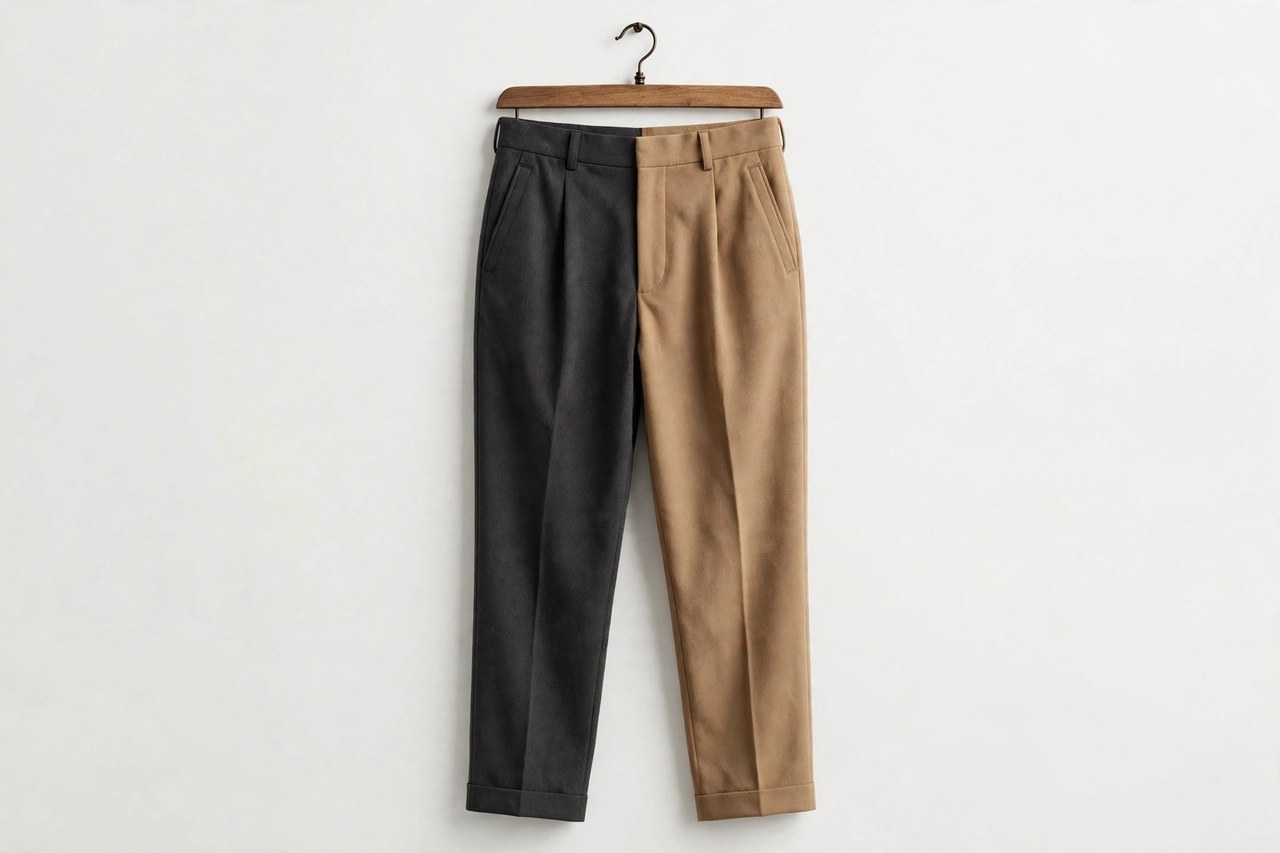
Of all designer purchases, trousers may be the most honest. A dress can rely on a beautiful print and a jacket on strong shoulders, but a pant succeeds or fails on pattern, cloth, and patience — on whether the waistband sits without rolling, the crease falls straight, and the drape survives a full day of sitting, standing, and stairs. Designer pants span sharply tailored wool trousers, fluid wide-leg styles in silk or crepe, cropped cigarette pants, relaxed pleated pairs, and polished technical fabrics that travel without wrinkling. What unites them is finishing you can feel the first time you put them on. This guide explains the fabrics and construction that create that feeling, how the main fits behave on real bodies, why prices vary so widely, and how to style and care for tailored pants so they hold their line for seasons rather than weeks.
Fabrics and the Drape They Create
Drape is simply how cloth falls, and fabric choice decides it before a single seam is sewn. Wool crepe is the tailor's favorite for women's trousers: its finely twisted yarns give a matte, slightly textured surface that resists wrinkling, breathes across seasons, and falls in a clean, fluid line. Smooth tropical wool is lighter and crisper for summer suiting; flannel is softer and warmer in winter. Silk and silk-blend trousers move almost like liquid and belong to evening and warm-weather dressing, though they demand gentler handling. Viscose and modern lyocell blends offer a similar flow at lower cost with better crease recovery. Technical fabrics — stretch wool, performance twill, and travel jersey — add hidden comfort and are the working woman's quiet upgrade. Whatever the cloth, hold it to the light and let it fall over your hand: quality fabric drops in long, even folds without stiffness, shine in the wrong places, or thin patches.
Construction: Waistbands, Lining, and Finishing
The waistband is the engineering core of a good trouser. Better designer pairs build it in shaped sections with interior structure — sometimes a curtain waistband borrowed from men's tailoring — plus a tab, hook, and interior button so the closure never depends on a single point of strain. The band should be finished inside as neatly as outside, with no raw edges or bulky seam allowances to print through. Lining is the second tell: tailored trousers are often lined to the knee in front, which lets the cloth glide over the leg, prevents wool from itching, stops knee bagging, and helps the pant keep its crease. Pockets should lie flat and be cut deep enough to be useful without disturbing the hip line. Check the hems, too — a blind-stitched hem with adequate allowance lets a tailor adjust length now and later. Seams should be pressed open and flat, the fly should lie perfectly smooth, and the crease, if the style has one, should run arrow-straight from waistband to hem.
Fits, Choosing, and Price Logic
Choose fit by the line you want and the day you live. Slim straight trousers are the wardrobe workhorse, pairing with loafers, heels, and sneakers alike; wide-leg and palazzo cuts need enough length to graze the shoe and look best with a defined waist above them; cropped and cigarette pants show the ankle and suit ballet flats and ankle boots; pleated, relaxed trousers offer room through the hip and thigh with a tapered finish. In the fitting room, sit, climb a step, and check the back view: fabric should skim rather than pull horizontally, and the waistband should stay put without a belt doing structural work. Designer prices reflect natural-fiber cloth, hand-finishing, lined construction, and European or Japanese tailoring labor, running from a few hundred dollars for contemporary labels to well past a thousand at heritage houses. Judged by cost per wear — a perfect navy or black trouser may be worn weekly for years — the best-made pair is often the economical one.
Styling and Care for Tailored Trousers
Designer pants make surrounding clothes look better almost automatically. A tailored black trouser with a white shirt and loafers is a complete thought; the same trouser with a silk camisole and sandals turns evening-ready. Wool crepe wide legs pair beautifully with fine knits tucked in, fluid silk pants anchor a structured jacket, and cropped pants let statement shoes do their work. Keep hems honest: trousers should be hemmed for the shoe height you actually wear most, since a dragging hem frays and a floating one shortens the leg. For care, rest trousers a day between wearings on a clamp or fold-over hanger that preserves the crease, brush off dust, and steam rather than ironing directly — a press cloth protects wool's surface if you do press. Dry-clean tailored pairs sparingly, only when soiled, and ask for a light press; washable technical styles should go in cold water and line-dry. Store out of direct light, and a good tailor remains your best investment: small adjustments keep a designer pant perfectly yours.
Related Women's Guides
Photos

More to Explore on Apparel Search
Looking for Women's Clothing Stores?
This guide helps you choose women's designer pants by cut, cloth and occasion. To browse where to buy, visit our women's clothing store directory, where you can find retailers that carry them.