Women's Designer Shirts & Blouses
A beautifully cut shirt in silk or crisp poplin can anchor an entire wardrobe — here is what the designer premium actually buys you.
Shop Women's Designer Shirts Now
Shop Women's Designer Shirts on Amazon Shop Women's Designer Shirts on eBayThe Amazon and eBay links on this page are affiliate links. If you make a purchase through them, Apparel Search may earn a commission.
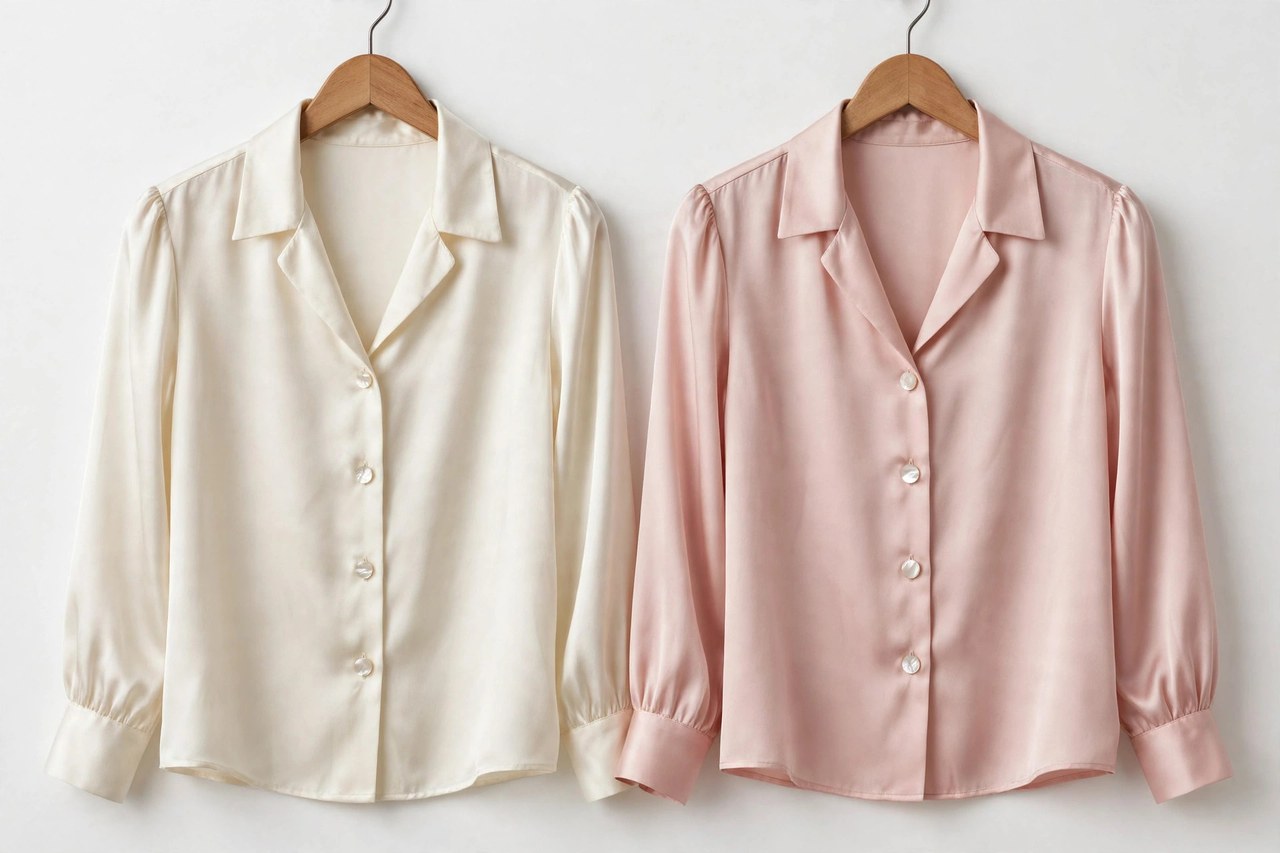
A designer shirt or blouse is where luxury tailoring meets everyday dressing. Unlike a basic button-down, a designer version starts with a pattern drafted for movement and drape, then adds cloth with real character — fluid silk charmeuse, crisp cotton poplin, or sheer silk georgette — and finishes you can feel the moment you fasten it. It is the piece that makes jeans look polished and a tailored trouser look intentional.
The houses treat the shirt as a signature, not a staple. Expect a collar that sits cleanly open or closed, a placket that lies flat, and prints drawn from the season's collection rather than a generic stripe. Whether you prefer a sharp white shirt, a soft pussy-bow blouse, or a relaxed camp-collar style, the difference lies in proportion, cloth, and the quiet precision of the making.
Silk, Poplin and the Cloths That Matter
Silk is the classic designer blouse fabric. Charmeuse has a satiny face and fluid fall that skims rather than clings, crepe de chine is matte and slightly more forgiving, and organza or chiffon layers add airiness over a camisole. Good silk feels cool, substantial, and smooth, with colour that looks deep rather than flat. It breathes surprisingly well, though it does ask for gentler care and a steamer instead of a hard press.
Cotton poplin is the shirtmaker's choice for structure: a tight plain weave with a faint rib, a crisp hand, and a smooth surface that takes a sharp collar and cuff. Long-staple cotton poplin wrinkles less, feels softer, and holds white brightly for longer. You will also meet cotton voile for summer softness, linen blends for texture, and stretch poplin with a touch of elastane for ease through the shoulders. Check the fabric content honestly — a high natural-fibre share is usually the better long-term buy.
Tailoring Details Worth Paying For
Look first at the seams. French seams, where raw edges are enclosed inside a second line of stitching, are a hallmark of fine blouses: they look clean inside and out, resist fraying, and let sheer fabrics stay elegant without a serged edge showing through. Single-needle tailoring, matched patterns across the placket and pockets, and a curved hem that stays tucked are other quiet markers of care.
Buttons tell a similar story. Mother-of-pearl buttons have natural variation, a cool touch, and a soft lustre that plastic cannot imitate, and they are usually sewn with a shank or cross-stitch that leaves room for the placket thickness. A well-made collar has removable or stitched interlining that keeps its roll, cuffs close neatly without gaping, and the yoke sits smoothly across the back. None of this shouts, but together it is why the shirt still looks composed at the end of a long day.
Fit, Price Logic and Choosing Well
Fit should follow how you will wear it. A classic tailored shirt skims the waist and leaves enough ease to raise your arms; a relaxed or oversized cut is meant to drape, so size down only if the shoulder seam drifts far past your own shoulder. Try a blouse buttoned fully — any pulling across the bust means you need room, a different cut, or a style with bust darts and a shaped back. Sleeve length should break just past the wrist bone.
Prices reflect cloth, construction time, and the house itself. A silk blouse from a major house costs more because the silk is heavier, the print is exclusive, and the finishing is labour-intensive, not simply because of the label. You get best value by choosing one impeccable white or ivory shirt and one print or colour you will repeat often, rather than several near-duplicates. A cost-per-wear view favours the shirt you reach for weekly for years.
Styling Tucked, Untucked and Proper Care
The full tuck is the sharpest option with trousers and pencil skirts: tuck smoothly, blouse the fabric slightly, and let the collar sit open at the throat. A front half-tuck suits jeans and straight skirts, giving definition without formality. Untucked works when the hem is designed for it — curved, not too long, and in a fluid fabric — worn over slim pants or shorts with the sleeves pushed to the forearm for ease.
Layer a fine shirt under a sleeveless dress, a crew-neck sweater with collar and cuffs showing, or a blazer where the cuff extends just beyond the jacket sleeve. Care keeps the investment sound: wash silk cold on a gentle cycle in a mesh bag or hand-wash, roll in a towel, and dry away from heat; wash poplin cool, hang promptly, and iron while slightly damp. Store buttoned on padded hangers, out of direct light, and your shirts will keep their colour and shape season after season.
Related Women's Guides
Photos

Looking for Women's Clothing Stores?
This guide helps you choose women's designer shirts by label, style and fit. To browse where to buy, visit our women's clothing store directory, where you can find retailers that carry them.