Women's Drawstring Pants
The comfort waistband done right reads as a deliberate style choice — fabrics, fit and styling keep it intentional, never pajama.
Shop Women's Drawstring Pants Now
Shop Women's Drawstring Pants on Amazon Shop Women's Drawstring Pants on eBayThe Amazon and eBay links on this page are affiliate links. If you make a purchase through them, Apparel Search may earn a commission.
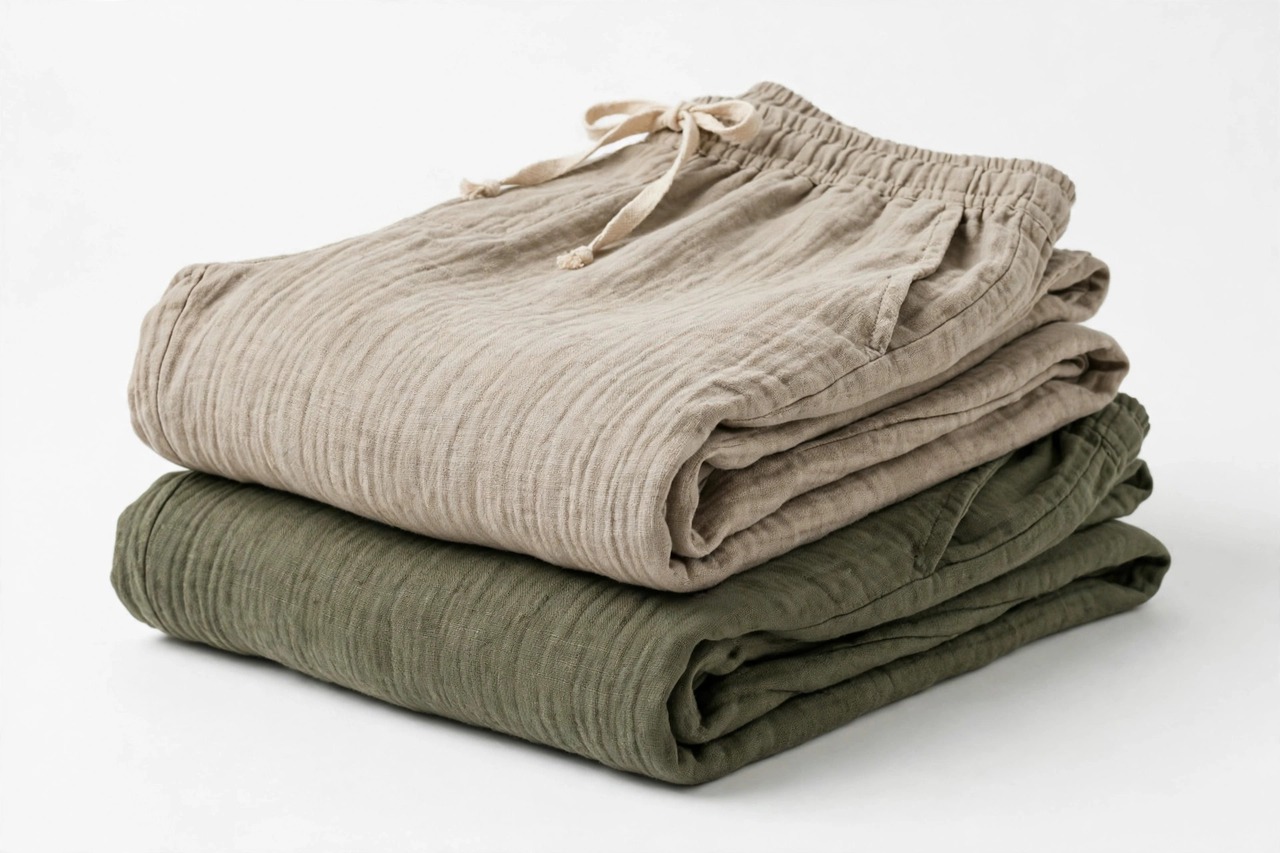
Drawstring pants live or die on intent. In the right fabric, with a clean waistband and a deliberate shoe, they read as relaxed tailoring — the pant equivalent of a good linen shirt. In the wrong fabric, worn with the tie dangling and a sloppy hem, they read as sleepwear that left the house. The difference is not the drawstring itself but everything around it: waistband construction, fabric weight, leg shape and styling. This guide sorts those variables so the comfort stays and the pajama signal goes.
The payoff is real. An adjustable waist that never digs, binds or needs a belt is worth having for travel, long days and warm weather — provided the pant is built and worn like clothing.
Waistbands: Full Drawstring vs. Elastic Plus Drawstring
A true drawstring waist has no elastic at all: the fabric gathers on a cord or flat tie, and the fit depends entirely on how you tie it. It offers the most adjustability and the cleanest look when the tie is a flat, self-fabric or grosgrain band tied in a neat bow or simple knot. The trade-off is security — a pure drawstring can loosen through the day, and smooth cords are the worst offenders, so check that the tie has enough texture to hold a knot and that the waistband channel is not so wide the fabric bunches unevenly.
Elastic-plus-drawstring waists, sometimes called comfort or hybrid waists, are the more common and practical design. Elastic does the holding while the drawstring fine-tunes and provides the visual detail; many dressier versions hide the elastic inside a flat waistband so the front looks like a tailored trouser, with the tie emerging from small eyelets or buttonholes. Smocked and shirred elastic waists gather evenly and suit casual styles. For a polished result, prefer flat-front bands with the drawstring tied and tucked or neatly bowed, and avoid exposed thick cords and metal aglets, which push the look toward sportswear.
Fabrics: Linen, Gauze, Ponte and Denim-Look
Linen and linen blends are the classic drawstring fabric: breathable, textured and naturally a little rumpled, which suits the relaxed waist. Pure linen creases sharply, so many wearers prefer linen-cotton or linen-viscose blends that soften the creasing. Cotton gauze and double-gauze versions are featherweight and ideal for heat, but they are casual by nature and best kept in easy, wide-leg cuts. Crepe and Tencel twill drape more fluidly and dress the style up, moving it toward evening and office-appropriate territory.
Structured fabrics change the category entirely. Ponte knit drawstring pants hold a trouser shape with a smooth surface and read as genuine pants in any setting, and denim-look knits and lightweight chambray give the jeans silhouette with a soft waist. The rule of thumb: the softer and thinner the fabric, the more the styling has to work to keep the outfit intentional; the more structure the fabric has, the more the pant does the work itself.
Fit and Styling: Keeping It Intentional
Fit starts at the rise. A mid or high rise that sits at the natural waist looks deliberate and pairs with tucked or cropped tops; a low, slouchy rise slides toward loungewear. Leg shapes run from tapered jogger-adjacent cuts to full wide legs and relaxed straights. Tapered legs with a clean ankle are the easiest to dress up, wide legs need a hem that clears the shoe without pooling, and every style benefits from a hem at the correct length — dragging hems are the fastest route to the pajama effect. Pockets should lie flat; on-seam pockets in a smooth fabric keep the line clean.
Styling does the rest. Tuck or half-tuck the top so the waistband and tie show as a designed detail, or choose a top that ends at the waistband. Match the shoe to the ambition: loafers, clean sneakers, ballet flats and heeled sandals all lift drawstring pants; flip-flops and worn trainers lower them. A structured layer — a blazer, a crisp overshirt, a fitted knit — over a soft pant creates the contrast that reads as an outfit. Keep the tie tied, the waistband smooth and the rest of the look finished, and no one will mistake them for sleepwear.
Travel Comfort and Care
Drawstring pants are close to ideal travel clothing. The waist adjusts through long flights and large lunches, there is no belt to remove at security, and knit or crepe versions arrive nearly wrinkle-free. For travel, choose darker colors in ponte, Tencel twill or a denim-look knit, which hide wear, resist creasing and can be styled up for dinner with a change of top and shoe. A tapered leg stays off airport floors, and flat waistbands sit comfortably under a seated seatbelt for hours.
Care depends on the fabric. Linen and gauze wash well in cool water and soften with every wash; line dry to avoid shrinkage, and embrace the natural texture rather than ironing it into stiffness. Ponte and knit styles should be washed cold, inside out, and dried flat or on low heat to protect the elastic; heat is the enemy of every elastic waistband, loosening it permanently over time. Store drawstring pants folded rather than hung by the waistband, retie loose cords before washing so they do not escape their channel, and thread a lost cord back through with a large safety pin — a two-minute fix that saves the whole garment.
Related Women's Guides
Photos

Looking for Women's Clothing Stores?
This guide helps you choose women's drawstring pants by style, fabric and fit. To browse where to buy, visit our women's clothing store directory, where you can find retailers that carry them.