Women's Pleated Pants Guide
Pleats are small folds below the waistband that lend room, drape and a tailored line — forward or reverse, one, two, three, or none at all.
Shop Women's Pleated Pants Now
Shop Women's Pleated Pants on Amazon Shop Women's Pleated Pants on eBayThe Amazon and eBay links on this page are affiliate links. If you make a purchase through them, Apparel Search may earn a commission.
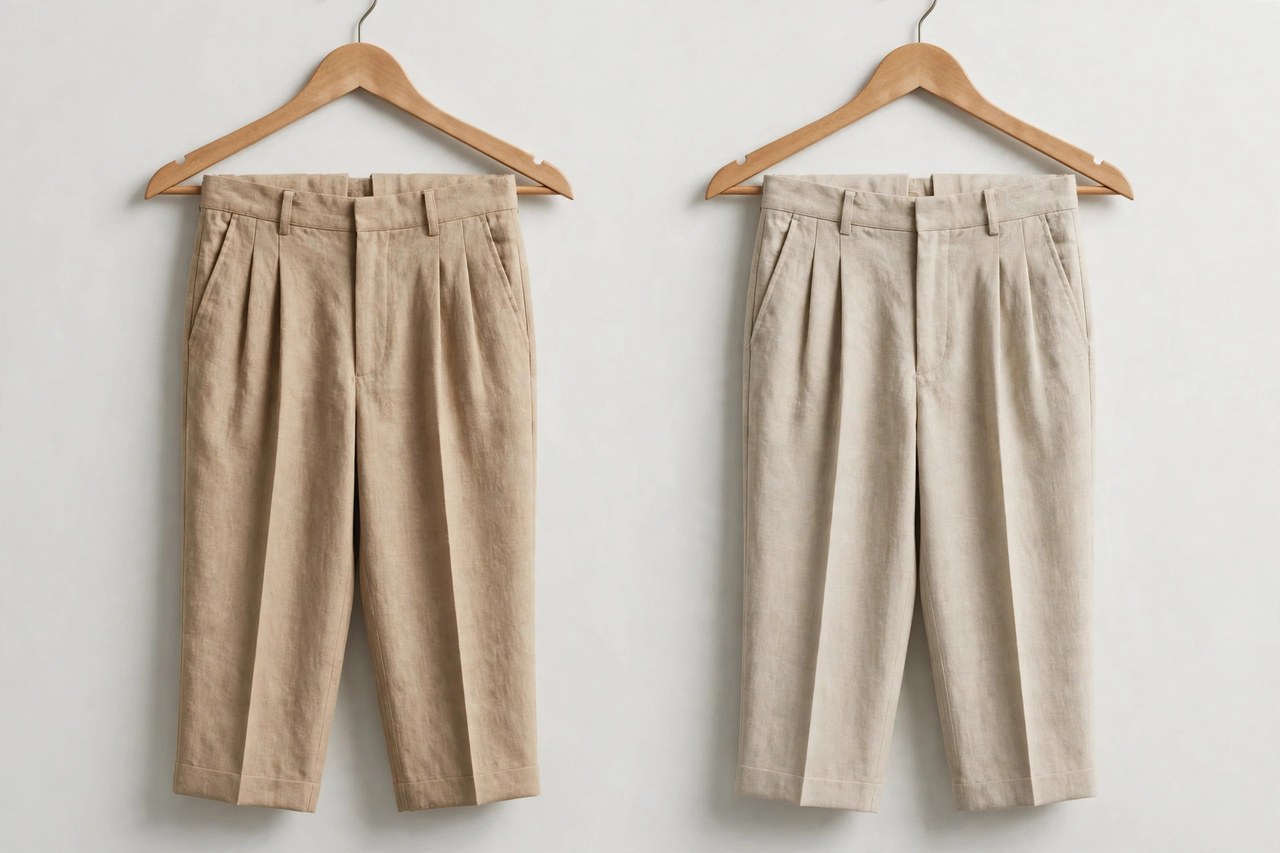
Pleated pants carry their definition at the front of the waist: pleats are folds of fabric stitched below the waistband on the front of the trouser, at the rise, which open when you sit, bend or stride and lie flat when you stand. A pleat is working tailoring, not decoration alone — it stores a small reserve of fabric exactly where the body folds, so a tailored trouser can look smooth standing and still give you room to sit down to dinner.
Fashion has argued about pleats for decades, swinging between pleated and flat-front decades, but the tailoring facts stay constant, and they are what this guide covers: the two directions a pleat can open, how the number of pleats changes fit and formality, which fabrics carry pleats well, and how to choose and style a pleated trouser that flatters rather than billows.
Forward, Reverse, and Plain Front
Pleats are named by the direction the fold opens. Forward pleats open toward the fly — the fold's edge points inward, toward the center front. This is the classic English tailoring direction, and it tends to produce the cleanest line, because the fold lies toward the trouser's flattest plane. Reverse pleats open toward the pockets — the fold's edge points outward, toward the side seams. Reverse pleats are the more common direction on ready-to-wear women's trousers and give a slightly softer, more relaxed drape at the hip.
And then there are none: trousers with no pleats at all are plain front (also called flat front), a smooth panel from waistband to fly. Plain front is the most streamlined and modern-looking construction, and the least forgiving — with no stored fabric, a plain-front trouser must fit the waist and seat exactly, and it shows strain as horizontal pulling the moment it does not. Neither construction is better in the abstract. Pleats trade a whisper of extra fabric at the front for comfort, drape and forgiveness; plain front trades that ease for sleekness.
One, Two, Three: Pleat Counts
Pleats come in counts, and the count calibrates formality and fullness. A single pleat per side is the contemporary standard for women's dress pants: a touch of ease and a vertical line that lengthens the leg, with minimal extra fabric. Double pleats — a main pleat plus a smaller second pleat toward the pocket — are the classic mid-century tailored arrangement, fuller through the hip and thigh, and the natural partner of wide-leg and high-rise cuts.
More pleats mean more room and more drape, and also more fabric that must be managed by the cut: a well-cut double-pleat trouser is sewn so the pleats lie closed when standing and open only in motion, while a poorly cut one gapes open at the front and adds visual bulk that was never the intention. When trying pleated pants, always judge them standing still in a mirror, front on: pleats should hang as neat, closed vertical lines.
Fabrics and Which Bodies Pleats Suit
Pleats need fabrics with drape and memory. Wool crepe, tropical wool and wool-blend gabardine are the dress-pant classics: they hold a stitched pleat, release wrinkles and hang in the clean column pleats are meant to create. Linen pleated trousers are a summer staple, softening as linen does. Cotton twill and chino pleats read casual. Stiff fabrics fight the fold; very fluid fabrics collapse it.
The old rule that pleats suit only slim figures is wrong; the real rule is about proportion and rise. Pleats add their ease at the front rise and hip, so they genuinely help anyone who sits all day, carries weight at the front, or dislikes a trouser that binds when seated. A high rise lets pleats hang from the waist in a long, lengthening line and is the most flattering arrangement for most bodies; a low rise crowds the pleats and lets them open.
Styling, Care and Buying Tips
Style pleated pants as tailored trousers first. Single-pleat dress pants pair with blouses, fine knits and blazers for work, the pleats reading as quiet quality rather than a feature. Double-pleat wide trousers take tucked tees, fitted sweaters and cropped jackets, the volume of the leg balanced by a defined waist. Keep footwear clean-lined — loafers, pointed flats, sleek boots — so the trouser's line runs unbroken. A belt is optional with pleats; many tailored styles are designed to sit cleanly without one, and a side-adjuster waistband is the connoisseur's version of that clean finish.
Care protects the folds. Hang pleated pants from the waistband or folded over a hanger bar with the pleats aligned, so gravity maintains the crease and the folds. Press with a cloth, following the pleat lines rather than ironing across them, and send wool dress pants for occasional dry cleaning rather than frequent washing. When buying, sit down in the fitting room and feel the pleats do their job, stand and check they close neatly, and check the stitch-down length and pocket placement.
Related Women's Guides
Photos


More to Explore on Apparel Search
Looking for Women's Clothing Stores?
This guide helps you choose women's pleated pants. To browse where to buy, visit our women's clothing store directory, where you can find retailers that carry them.