Women's Short Pants Guide
Short pants is the older, formal name for what Americans simply call shorts — trousers cut short, knee length or above, and the terminology has a history worth knowing.
Shop Women's Short Pants Now
Shop Women's Short Pants on Amazon Shop Women's Short Pants on eBayThe Amazon and eBay links on this page are affiliate links. If you make a purchase through them, Apparel Search may earn a commission.
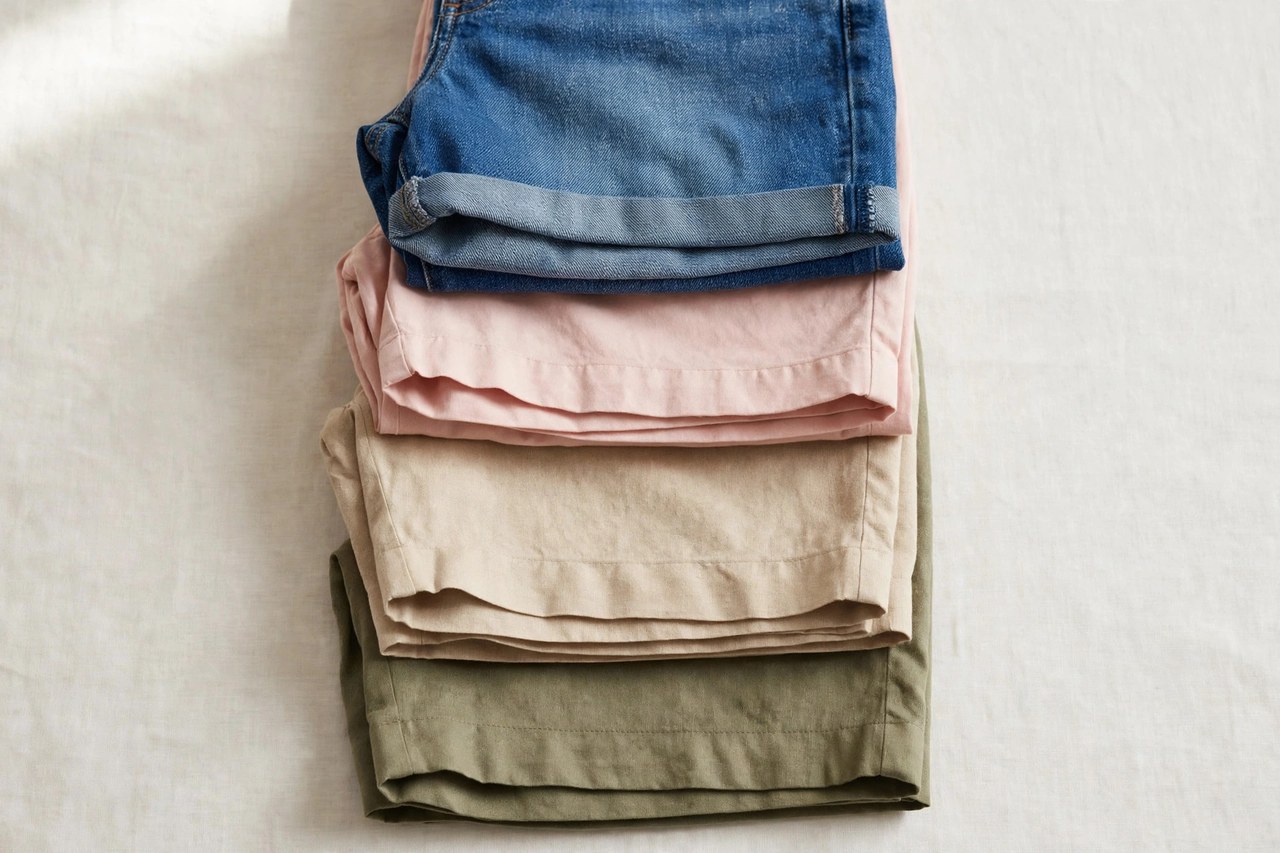
What are short pants? Possibly you know these garments by another name — they are most commonly referenced as shorts in the United States. The two terms name the same garment, and this page exists because the older term still appears in catalogs, school dress codes, vintage listings and much of the English-speaking world outside the US. Women's pants come in a wide variety of lengths, and two of the primary length descriptions are simply long pants and short pants: long pants run past the knee to the ankle, short pants stop at the knee or above it.
Where the general shorts guide on this site is a shopper's tour of styles, this page is about the term itself and the length system behind it. It explains where short pants came from, how the length ladder from cropped trousers down to hot pants is organized, which fabrics the category uses, and why the words on a label — short pants, shorts, Bermudas, culottes — still change what a retailer shows you and what a dress code allows.
A Brief History of the Short Pant
Short trousers began as boys' clothing. Through the 19th and early 20th centuries, short pants were the standard dress for schoolboys in Britain and much of Europe, with long trousers marking the move toward adulthood. Adult men adopted them for sport, military service in hot climates and hiking between the wars, and women's versions followed as cycling, tennis and resort wear loosened dress rules in the 1930s and after. The Bermuda short — a tailored, knee-length short pant — became respectable warm-weather business dress in Bermuda itself, worn with knee socks and a blazer.
For women, short pants carried a mild scandal into the 1950s, when they were still banned in some public places, before becoming ordinary summer dress in the 1960s and 70s. The vocabulary kept the history: short pants sounds formal and slightly old-fashioned because it was the term of school uniforms and dress codes, while shorts sounds casual because it won in everyday American speech. Vintage and resale listings still favor short pants, so knowing the synonym genuinely helps when you search older garments.
The Length Ladder
Short pants are typically knee length or shorter, and the category only makes sense as a ladder measured against the leg. At the longest edge sit Bermuda shorts, ending just above the knee with a tailored cut. Below them, walking shorts and mid-thigh shorts in the 5-to-7-inch inseam range are the everyday standard. Short shorts and dolphin shorts shorten the inseam to a few inches, and hot pants, a named fashion moment of the early 1970s, are the briefest tailored version of all.
Two neighbors often get confused with short pants and deserve their boundaries. Culottes are wide, flowing short pants that hang like a skirt, and capri or cropped pants end below the knee at mid-calf, which by the length definition makes them cropped long pants rather than short pants at all. One useful clarification from the shorts pages: boyshorts are underwear, not short pants, despite the name. When a dress code says short pants, it almost always means the tailored Bermuda-to-mid-thigh middle of the ladder.
Fabrics and Construction
Women's short pants come in the same fabric range as trousers, shortened: denim, cotton twill and chino cloth, linen, polyester and performance blends, plus knit versions in French terry and jersey for casual wear. The spread is exactly that — popular denim shorts, cotton, polyester and blends — and the choice follows the same logic as long pants. Woven twills and denims hold a tailored shape and a crease; knits trade structure for comfort; linen breathes best and wrinkles most honestly.
Construction details carry over from trousers too: a waistband with belt loops and a fly on tailored styles, elastic or drawstring waists on casual and athletic ones, and pockets that shrink as the inseam does. Hem finish signals formality — a cuffed or clean-finished hem reads as short pants in the dress-code sense, while a raw cut-off hem reads as the most casual shorts there are. Chafing is the category's practical enemy, so longer inseams and smooth inner seams matter more the more you walk in them.
When Short Pants Are the Right Choice
Short pants are typically worn in warm weather, or anywhere comfort and air flow matter more than protection of the legs — still the right test. They trade coverage for cooling and freedom of movement, which makes them correct for summer errands, sports, gardening and resorts, and wrong for sun exposure without protection, brush and bramble, cold rain, and formal settings, where the long pant still rules. Sunscreen the legs they expose; the cooling benefit and the sunburn risk are the same square inches of skin.
To choose a pair, start with the occasion's place on the formality scale, then the length that matches it, then fabric weight. Keep one tailored Bermuda or walking short in a neutral twill for the dress-code situations where the words short pants actually appear, and let denim and knit versions handle the rest of summer. Measured that way, short pants stop being a vague synonym and become what they have been for a century: the warm-weather half of the trouser family, cut at the knee or above.
Related Women's Guides
Photos

More to Explore on Apparel Search
Looking for Women's Clothing Stores?
This guide helps you choose women's short pants. To browse where to buy, visit our women's clothing store directory, where you can find retailers that carry them.