Women's Cycling Shorts Guide
The single most important comfort purchase in cycling — padded shorts, bibs, and the chamois explained honestly.
Shop Women's Cycling Shorts Now
Shop Women's Cycling Shorts on Amazon Shop Women's Cycling Shorts on eBayThe Amazon and eBay links on this page are affiliate links. If you make a purchase through them, Apparel Search may earn a commission.
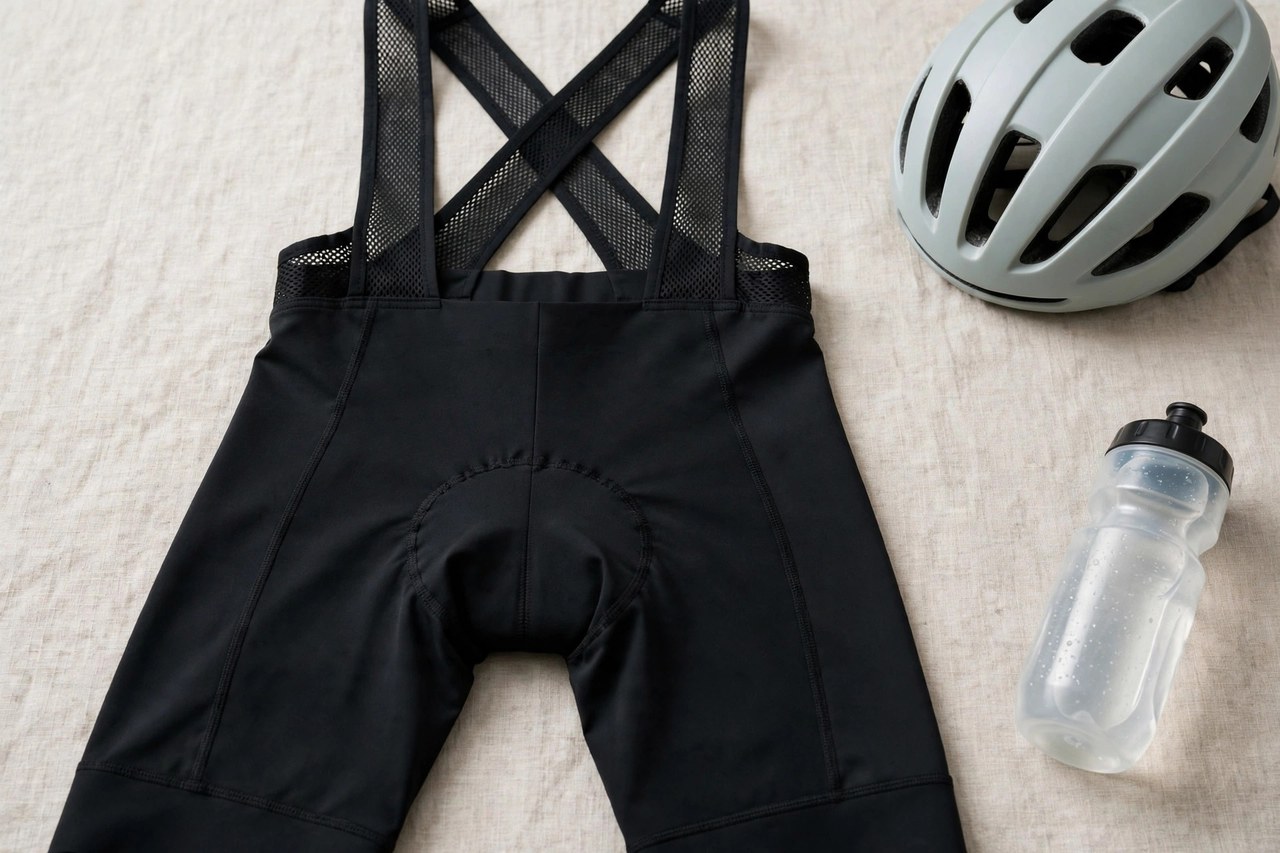
If you buy one piece of cycling clothing, buy padded shorts. Saddle discomfort is the number one reason new riders quit, and it is rarely the saddle's fault: it is ordinary clothing seams, cotton underwear, and unprotected sit bones pressing into a narrow perch for an hour at a time. Cycling shorts remove all three problems at once. Their built-in pad — the chamois, pronounced shammy — cushions the contact points and wicks sweat, while the stretch fabric supports muscles and eliminates bunching and chafing. Women's cycling shorts use pads shaped for female anatomy and come as waist shorts, bib shorts with shoulder straps, and lightweight liners meant to hide under ordinary clothes. They are worn without underwear, a fact that surprises beginners and converts them within one ride. This guide explains the styles, the pads inside them, and how to keep them working for seasons.
Bib Shorts Versus Waist Shorts
Waist shorts are the familiar format: an elastic or drawstring waistband, easy on and off, no straps to wrestle. On longer rides the waistband can dig in as you bend over the bars, gap at the back, and slowly work downward. Bib shorts solve all of that with shoulder straps that hold the shorts exactly in place; the pad never migrates, the waistband disappears, and most riders who try bibs never go back. The historical objection — bathroom breaks requiring near-undressing — has been answered by women's-specific designs: drop-tail bibs, halter-style straps that slip off over the head, and straps positioned for comfort across the chest. Warm-weather bibs use mesh uppers that double as a base layer. Knickers and three-quarter tights extend the same logic into cool weather, and full tights with a pad cover winter. Choose waist shorts for short spins, commuting over clothes changes, and indoor classes; choose bibs for anything over an hour.
The Chamois: What the Pad Actually Does
The chamois is not a cushion in the armchair sense — a good pad is surprisingly firm. Its jobs are to spread pressure away from the sit bones, absorb road vibration, and manage moisture and friction where skin meets saddle. Modern pads are engineered foam sandwiches: denser foam under the sit bones, thinner and more flexible foam toward the edges and front, with perforations for airflow and an antibacterial top surface. Women's pads are wider at the rear and shaped differently through the center channel. Thicker is not automatically better. A bulky pad can bunch, hold sweat, and feel like a nappy off the bike, while a quality mid-density pad disappears for four hours. Match the pad to your riding: slim, firm pads suit aggressive road positions and racing; plumper endurance pads suit upright, long-distance, and gravel riding where you sit heavier and longer. Whatever you choose, the pad must sit directly against skin — underwear underneath defeats the entire design and guarantees chafing.
Lengths, Leg Grippers and Waistbands
Inseam length is part fashion, part function. Longer legs, ending just above the knee, offer more muscle support, more sun protection, and the classic road look; shorter lengths suit hot weather, indoor training, and riders who simply prefer them. Women's ranges now span roughly five to nine inches of inseam. Leg grippers hold the hem in place without a tourniquet: wide elastic bands with silicone dots or a raw-cut edge with an internal gripper both work, while a narrow elastic band is the design most likely to dig and create the dreaded sausage-leg effect. Waistbands on waist shorts have improved too, with wide, high-rise yoga-style bands that stay comfortable in the bent-over position. Compression should feel supportive, not restrictive — you should be able to breathe fully and pedal without the fabric fighting you. More panels generally mean a more anatomical fit, and flatlock seams mean nothing raised to rub.
Liners Under Casual Shorts and Skirts
Not every ride wants the full Lycra look. Padded liner shorts — essentially a lightweight mesh brief or short with a slimmer chamois — slip under ordinary shorts, trousers, or a skirt and give you saddle comfort with street clothes on top. They are the commuter's secret weapon and standard wear under mountain bike baggies. Liner pads are thinner than those in full cycling shorts, sized for rides up to a couple of hours, and the mesh construction keeps them cool under layers. Mountain bike shorts are often sold as a liner-plus-baggy system, interchangeable across brands. For multi-day touring, two liners rotated and rinsed nightly can carry you indefinitely. The one rule carries over from full shorts: the liner goes against the skin, with no underwear in between, and anything worn over it should have smooth inner seams.
Washing and Caring for Padded Shorts
Cycling shorts work in the least hygienic environment in your wardrobe, and their care rules exist to protect both you and the pad. Wash after every ride — no exceptions, because bacteria in a worn chamois cause saddle sores faster than any other factor. Turn the shorts inside out so the pad faces the water, use a cool or warm gentle cycle or hand wash, and choose a mild detergent; skip fabric softener, which coats the pad and the fabric's wicking fibers, and never use bleach. Hang dry out of harsh sun; tumble-dryer heat degrades elastane and foam alike. Store shorts unrolled so the pad is not crushed in a fold for months. With this treatment, quality shorts survive several seasons; retire them when the pad stays compressed, the fabric thins at the sit points, or the grippers give up.
Related Women's Guides
Photos


More to Explore on Apparel Search
Looking for Women's Clothing Stores?
This guide helps you choose women's cycling shorts by style, fabric and fit. To browse where to buy, visit our women's clothing store directory, where you can find retailers that carry them.