Women's Maternity Cotton Pants Guide
Cotton twill trousers with panels that adapt as you do — a practical guide to waistbands, fits and wear after pregnancy.
Shop Women's Maternity Cotton Pants Now
Shop Women's Maternity Cotton Pants on Amazon Shop Women's Maternity Cotton Pants on eBayThe Amazon and eBay links on this page are affiliate links. If you make a purchase through them, Apparel Search may earn a commission.
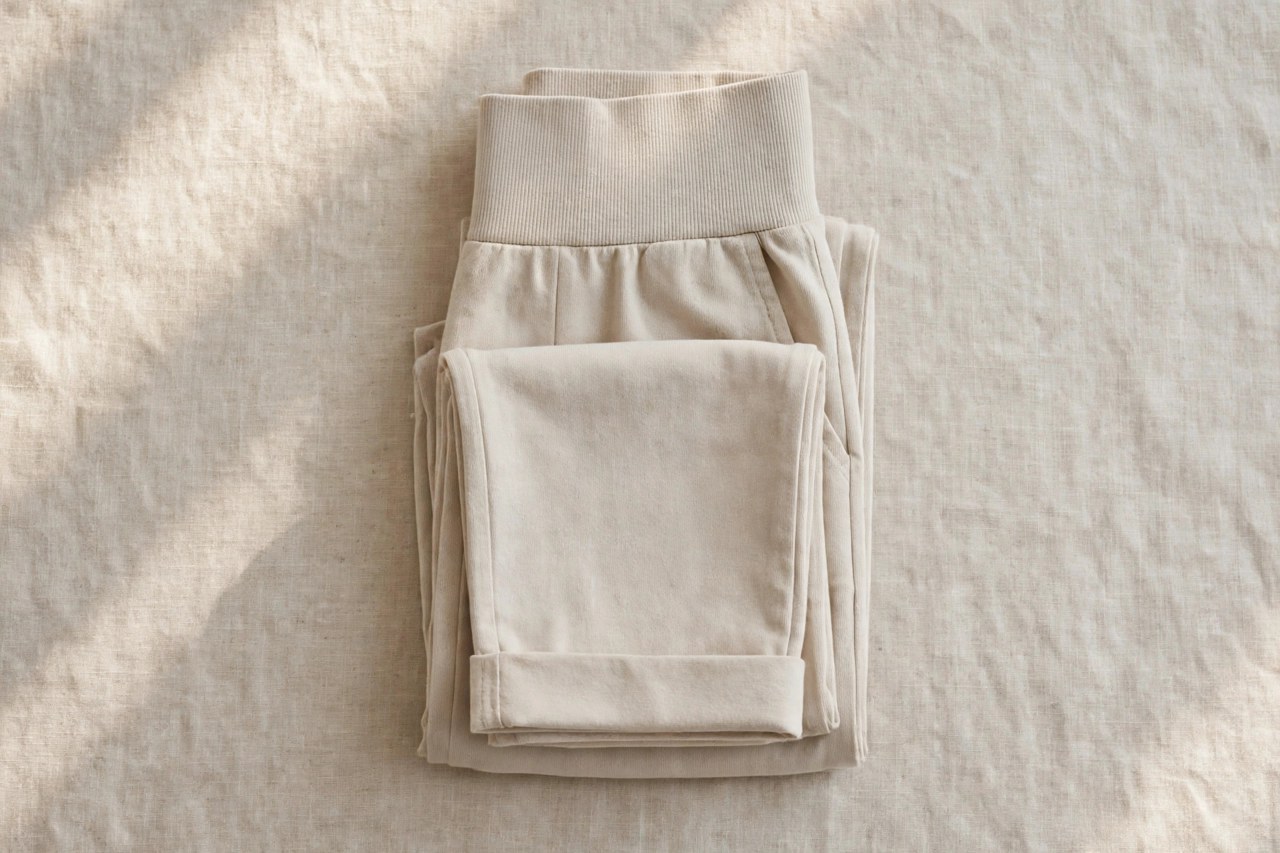
Maternity pants solve a specific engineering problem: a trouser whose waist must change size continuously for months while the legs stay the same. The usual construction pairs a familiar cotton trouser — most often cotton twill, the chino cloth — with a stretch panel or elastic system at the waist that expands over or under a growing bump. Cotton earns its place here for practical reasons: it breathes against skin that often runs warmer during pregnancy, it feels familiar and non-clingy, it washes easily and often, and twill's durability stands up to the heavy rotation maternity clothes receive in a short life.
The Three Waistband Systems Explained
Over-the-bump panels use a wide band of soft stretch knit — usually cotton jersey or a nylon-elastane blend — that pulls up over the belly to the natural waist or beyond. They give the most support and smoothness under tops, stay put without adjustment, and many wearers prefer them from the second trimester onward and in cooler weather; the extra layer can feel warm in summer. Under-the-bump waistbands sit low, below the belly, with a shaped elastic or contoured band; they feel cooler and less enclosing, work early in pregnancy and for those who dislike pressure on the bump, but can slide or dig as the bump grows and often work best in the first and early second trimester. Side-panel designs keep a normal-looking trouser front and hide stretch inserts at the side waist; they look most like ordinary pants, suit workplaces, and expand a modest amount — ideal early on, and often outgrown latest in pregnancy.
Why Cotton Twill Dominates Maternity Trousers
Look through maternity ranges and cotton twill appears again and again, and the reasons are structural. Twill's diagonal weave is strong at trouser weight, drapes over changing hips without clinging, and holds a chino or trouser shape that keeps maternity pants looking like real clothes rather than adapted loungewear. A small amount of elastane, typically one or two percent, is usually added to the twill itself so the seat and knees recover through long days of sitting at a desk or clinic waiting room. Cotton's breathability matters more than usual: many pregnant wearers run warm, and a cotton leg with a jersey panel is noticeably cooler than a fully synthetic trouser. The honest trade-offs are cotton's familiar ones — it creases, it fades with frequent washing, and it dries slowly — plus one specific to maternity: the stretch panel, not the cotton, wears out first, so wash panels cool and air-dry them.
Sizing: Buy Your Pre-Pregnancy Size, Then Verify
Maternity sizing is designed around a simple convention: in most brands you buy your usual pre-pregnancy trouser size, and the pattern has already added room through the hip, seat and waist system for a typical pregnancy shape. That convention works well for many wearers and poorly for some, because bodies change in different proportions. Practical checks beat rules: the legs and seat should fit as your ordinary pants fit, neither tight across the front thigh nor sagging; the panel should reach and grip without rolling down when you sit and stand repeatedly; and there should be expansion room left in the system at the time you buy — a panel fully extended in month five has nowhere to go in month eight. Waist adjusters borrowed from children's clothing — hidden buttonhole elastic inside some waistbands — are a genuinely useful feature that fine-tunes fit week by week; ask about them when shopping.
Styles for Work, Weekends and the Whole Rotation
Because maternity pants work hard in a small wardrobe, versatile styles pay off. A black or navy cotton twill maternity trouser with a side panel or a neat over-bump band covers office requirements and pairs with maternity shirts, longer regular tops, tunics and blazers left open. Chino-style twill pants in khaki or stone handle weekends and casual workplaces. Five-pocket maternity styles cut like jeans but woven in cotton twill give the denim look with a softer hand, while pure cotton jersey or sweat styles belong to home and exercise rather than the trouser category. Length deserves a thought: hems chosen early in pregnancy sit slightly differently as posture changes, and a simple hem that clears the shoe without dragging is the safest across trimesters. Two to three pairs in rotation, washed frequently, is the pattern most wearers settle into; cotton twill tolerates that rotation well if the stretch panels are washed cool.
Care, Comfort Details and Sensible Buying
Wash maternity cotton pants inside out, cool and gentle, and dry flat or on a line rather than in high heat: heat is the enemy of the elastic and knit panels, and it also drives cotton's two to three percent length shrinkage, which matters when hems were chosen carefully. Check the small details that decide daily comfort — panel edges should be soft and covered, never a raw elastic line against the skin; seams over the belly should be flat; and tags belong outside the panel area or printed rather than sewn. Pockets on maternity trousers are sometimes sacrificed to the panel design, so confirm pocket depth if you rely on them. On buying strategy: maternity clothes are worn intensely and briefly, which makes borrowing circles, secondhand pairs in good condition, and resale afterward all sensible, with cotton twill among the best fabrics for a second owner because it shows its wear honestly. Choose the waistband system by how it feels at the end of a long day rather than in a two-minute try-on, and these hardest-working pants will do their job quietly well.
More to Explore on Apparel Search
Photos

Looking for Women's Clothing Stores?
This guide helps you choose women's maternity cotton pants by panel and trimester. To browse where to buy, visit our women's clothing store directory, where you can find retailers that carry them.