Women's Cotton Trousers Guide
The classic tailored pant — pleats or flat fronts, pressed creases, and cotton cloth with real structure.
Shop Women's Cotton Trousers Now
Shop Women's Cotton Trousers on Amazon Shop Women's Cotton Trousers on eBayThe Amazon and eBay links on this page are affiliate links. If you make a purchase through them, Apparel Search may earn a commission.
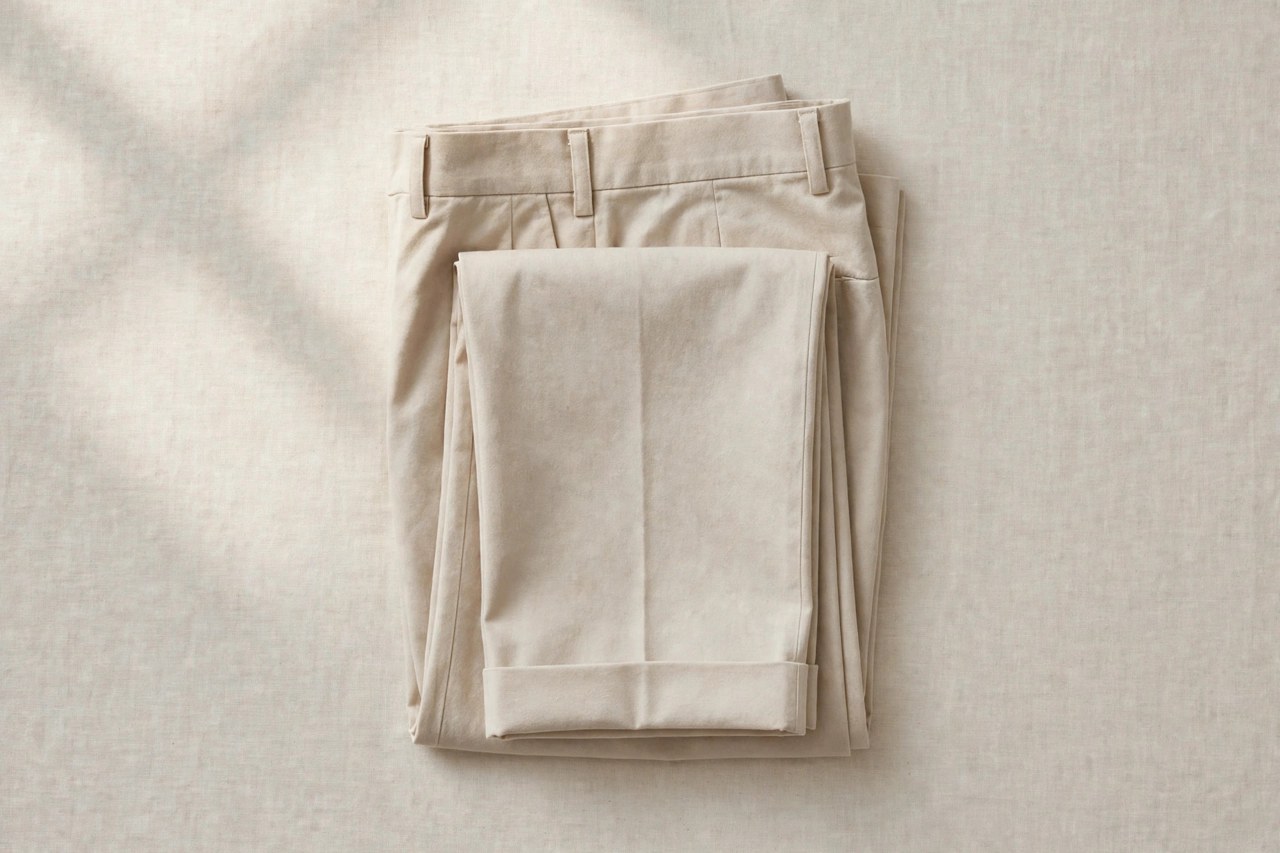
Trousers is the older, more formal word for a tailored pant, and in women's clothing it still carries that lineage. Where slacks are the relaxed American cousin, a cotton trouser is built like the bottom half of a suit: a defined waistband with an extended closure, a rise that sits at the natural waist, a leg shaped and pressed with a crease, and fabrics chosen for structure rather than softness alone. Cotton might seem a casual fibre for so formal a garment, but woven properly — as a firm twill, a gabardine, or a polished sateen — it holds a crease, takes a press, and gives tailoring a breathable, washable practicality that wool trousers cannot match. For women who want a genuinely tailored silhouette without dry-clean-only upkeep, cotton trousers are the quietly sensible choice.
Trousers Versus Slacks Versus Dress Pants
It helps to place the trouser precisely among its neighbours in this guide. Trousers are classic tailoring: pleats are common, the crease is expected, the rise tends higher, and the whole garment references suiting tradition. Slacks are the semi-tailored step down — flatter, simpler, and aimed at business-casual ease rather than formal correctness. Dress pants aim at maximum polish for office and occasion wear, with the sharpest finishes and creases. In practice you will find shops using all three labels loosely, so judge the garment, not the tag: look at the closure, the pockets, the presence of pleats and a crease, and the hand of the cloth. A flat-front, uncreased cotton pant in a soft twill is a slack whatever its label says; a pleated, creased, high-rise pant in firm gabardine is a trouser even if a retailer calls it casual. Buying by construction keeps your wardrobe coherent.
Pleats, Flat Fronts, and Leg Shapes
Pleats are the trouser's signature decision. A single forward pleat releases fabric when you sit and creates the long, fluid drape that defines classic tailoring; double pleats add more room and a more traditional, fuller leg. Pleated cotton trousers suit women who carry weight at the hip or thigh and anyone who prefers movement over a close fit, but they need enough length and a firm enough cloth to hang in clean folds — soft, thin cotton makes pleats collapse into untidiness. Flat-front trousers give a cleaner, more modern line and work better cropped or tapered. Leg shapes run from straight and wide — the wide-leg cotton trouser is a strong contemporary silhouette in a heavy twill — through classic straight legs to tapered cuts that narrow to the ankle.
Cotton Cloths With Tailoring Structure
A tailored shape is only as good as the cloth holding it. Cotton gabardine, a tight steep twill with a fine rib, is the premium trouser fabric: smooth, firm at roughly 250 to 320 GSM, resistant to bagging at the knee, and able to take a sharp press. Standard cotton twill, slightly softer, makes the everyday trouser and the familiar chino-style cut. Cotton sateen gives a dressier surface sheen for trousers worn into the evening, while cotton corduroy — covered in its own page in this guide — is the autumn trouser cloth, its pile replacing the crease as the surface interest. Pure cotton holds tailoring best; a small elastane content, 1 to 2 percent, adds sitting comfort but too much stretch softens the crease and lets the leg twist.
Fit, Creases, and Alterations
Trousers reward the alterations that slacks often skip. The waist should close without strain at the natural waist, the pleats — if present — should lie flat and closed while standing, opening only as you sit, and the crease should run straight down the centre of the leg to the shoe without spiralling. Seat fit is the honest test: horizontal pulling means too small, while vertical folds of spare cloth mean the seat can be taken in cheaply and well. Hem to the shoe you will actually wear: a classic trouser breaks once at the front and sits longer at the back, while a cropped tailored trouser should end cleanly above the ankle bone. Cotton shrinks a little in length, generally 2 to 3 percent unless pre-shrunk, so wash or at least steam thoroughly before final hemming.
Wearing and Keeping Cotton Trousers
Style cotton trousers as the tailored piece they are. They take a tucked cotton dress shirt, a fine-gauge cotton sweater, or a knit polo with a formality that slacks soften and jeans refuse; loafers, brogues, and heeled ankle boots all honour the cut, while trainers push the outfit into deliberate high-low territory that works best with a plain, dark trouser. Care is where cotton trousers beat wool decisively: most are machine washable in cold water, inside out, and ask only for a proper press to restore the crease — press along the existing line with a cloth between iron and fabric on sateen, and hang from the waistband on a clamp hanger so the legs fall straight overnight. Retire or demote a pair when the crease will no longer hold, the knees have bagged permanently, or the twill thins at the seat; until then, a well-cut cotton trouser is one of the hardest-working formal garments a wardrobe can own.
More to Explore on Apparel Search
Photos


Looking for Women's Clothing Stores?
This guide helps you choose women's cotton trousers by cut and fabric. To browse where to buy, visit our women's clothing store directory, where you can find retailers that carry them.