Women's Cotton Clothing Guide — Page 3: Pants, Shorts & Bottoms
Twill, corduroy, denim, and poplin — the woven workhorses below the waist, plus leggings, shorts, and every fit in between.
Shop Women's Cotton Pants & Shorts Now
Shop Women's Cotton Pants & Shorts on Amazon Shop Women's Cotton Pants & Shorts on eBayThe Amazon and eBay links on this page are affiliate links. If you make a purchase through them, Apparel Search may earn a commission.
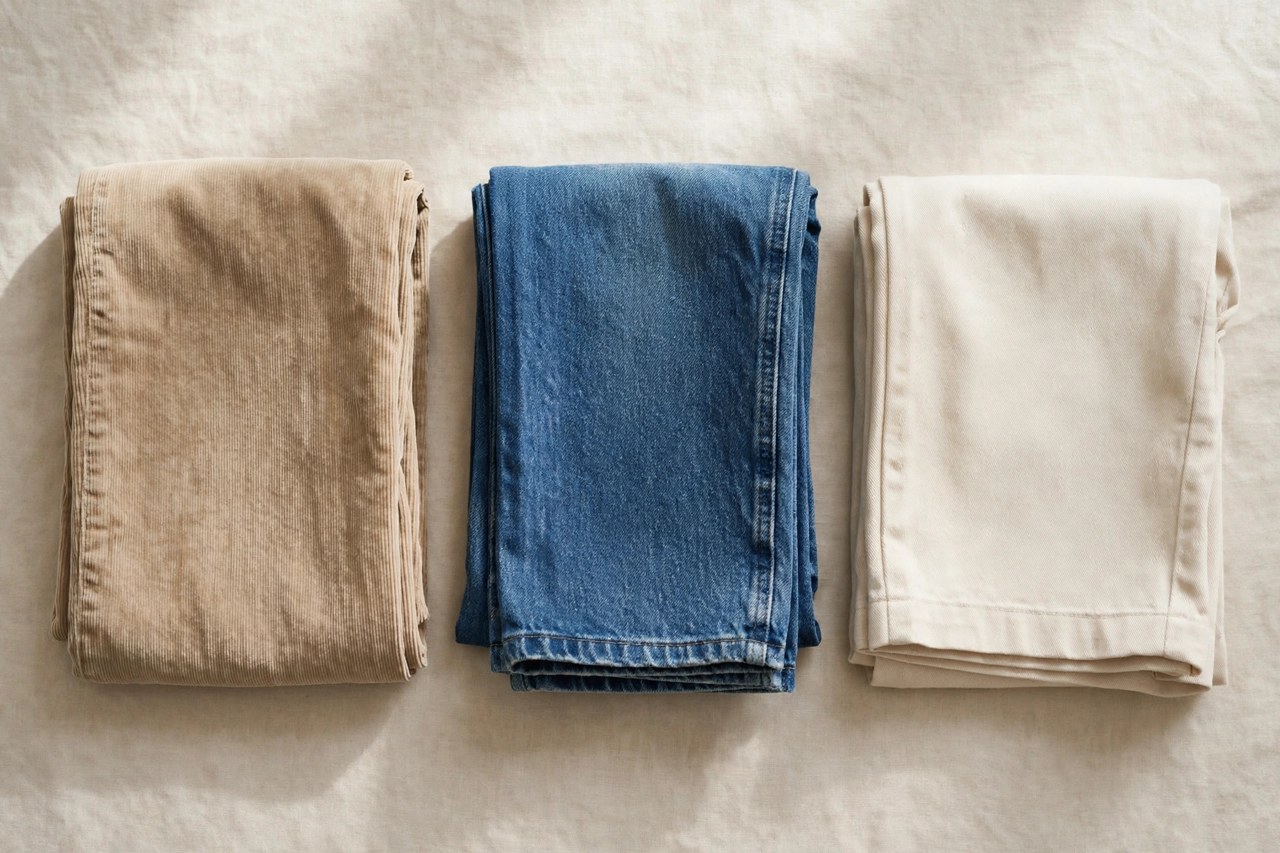
Bottoms ask more of fabric than any top does. Pants bend at the knee thousands of times a day, take friction at the seat and inner thigh, carry weight in pockets, and are expected to hold a crease, a hem, and a waistband position from morning to night. Cotton answers that brief with its woven workhorses. Twill, with its diagonal rib, is the default trouser weave because the structure resists abrasion, drapes without stiffness, and hides soil between washes — the chino is simply a cotton twill trouser by another name. Denim is a warp-faced twill dyed with indigo, engineered originally for work and now the most worn bottom in the world. Corduroy adds a cut pile in vertical ribs called wales, poplin brings the weight down for summer, and flannel brushes up for winter. The 23 guides on this page cover every one of those fabrics as pants, then widen to shorts, leggings, and the athletic end of the drawer.
Choosing a Pant Fabric: Twill, Corduroy, Poplin, Flannel
Start with season and job. Cotton twill pants in a midweight cloth, around 200 to 280 GSM, handle three seasons and most offices; they fade gracefully and soften without losing shape. Corduroy is rated by wale count — the number of ribs per inch. Needlecord or pinwale, at fourteen or more wales, looks refined and dresses up; standard wale around eleven is the classic trouser; wide wale is casual and boldly textured. Poplin pants take the smooth plain weave of shirting and extend it downward: light, crisp, ideal for hot weather, though they crease readily and read more casual for it. Flannel pants brush the same plain or twill base into softness for cold months, including wool-look cotton flannels that give the appearance of tailored wool trousers with cotton's easy washing.
Dress Pants, Slacks, and Trousers: Three Words, Three Levels
English gives women's tailored bottoms three overlapping names, and shoppers search all three, so each has its own guide here. Dress pants are the sharpest: tailored cotton in sateen or fine twill, with a smooth finish, a defined waistband, and a crease that survives the day, made for office and occasion wear. Slacks are the American middle term — semi-tailored, business-casual, comfortable without being formal. Trousers, the classic and British-leaning term, covers traditional cuts including pleated fronts, wider legs, and the most formal cotton tailoring. Whatever the label, judge a tailored bottom by its waistband construction, whether the crease is stitched or merely pressed, and how the fabric recovers after sitting — quality cotton twill springs back; poor cloth keeps the shape of the chair.
Jeans, Leggings, and the Knit Exceptions
Jeans are the bottom that built its own category, and their cotton story deserves honesty. Traditional jeans are one hundred percent cotton denim, which breaks in beautifully, fades individually, and shrinks noticeably — raw denim can lose several percent in length and waist at the first wash. Most women's jeans today blend one to two percent elastane into the cotton, which transforms fit and comfort but reduces that long break-in life and can ripple at the fly and knees as the elastic ages. Leggings make the opposite trade: a cotton jersey knit with a much higher elastane share, usually five to ten percent, for full stretch. Cotton leggings breathe better than synthetic ones and feel softer for everyday wear and layering, but pure cotton jersey without enough elastane bags at the knee, and thin cotton jersey can be less opaque than buyers expect — a squat test in bright light is worthwhile advice.
Shorts and the Athletic End of the Drawer
Cotton shorts compress the whole pants story into summer length: twill for the classic chino short, poplin for the lightest hot-weather option, denim for cutoffs and tailored jean shorts, and drawstring styles for beach and lounge ease. The athletic guides on this page are deliberately candid. Running pants and gym shorts in cotton absorb sweat readily, which makes them comfortable for warm-ups, short and easy sessions, stretching, and lifting, but saturated cotton grows heavy and can chafe on long runs — most serious runners eventually choose synthetics for distance and keep cotton for everything around the workout. Athletic and sweat pants in cotton fleece and French terry occupy the same honest middle: unmatched for comfort before and after exercise, team sidelines, and cool-downs. Egyptian and organic versions of pants and shorts close the page for shoppers upgrading the fiber itself, covered in depth on Page 6.
Page 3: Pants, Shorts & Bottoms
- Women's Corduroy Cotton Pants
- Women's Cotton Athletic Pants
- Women's Cotton Drawstring Pants
- Women's Cotton Drawstring Shorts
- Women's Cotton Dress Pants
- Women's Cotton Flannel Pants
- Women's Cotton Gym Shorts
- Women's Cotton Jeans
- Women's Cotton Leggings
- Women's Cotton Pants
- Women's Cotton Poplin Pants
- Women's Cotton Running Pants
- Women's Cotton Shorts
- Women's Cotton Slacks
- Women's Cotton Sweatpants
- Women's Cotton Trousers
- Women's Cotton Twill Pants
- Women's Egyptian Cotton Pants
- Women's Egyptian Cotton Shorts
- Women's Gingham Cotton Pants
- Women's Maternity Cotton Pants
- Women's Organic Cotton Pants
- Women's Organic Cotton Shorts
There's more! Page 4 is for the quiet hours — cotton pajamas and sleepwear, flannel and poplin sleep sets, nightdresses, robes, and the full range of cotton loungewear.
Continue to Page 4: Sleepwear & Loungewear »More to Explore on Apparel Search
- Benefits of Cotton
- Cotton
- Cotton Definition
- Cotton News
- What is mercerized cotton?
- What is organic cotton?
- Women's Cotton Clothing Guide Pg. 1
- Women's Cotton Clothing Guide Pg. 2
- Women's Cotton Clothing Pg. 5
- Women's Cotton Clothing Pg. 6
- Women's Cotton Heavyweight Sweatshirts
- Women's Cotton Heavyweight T-shirts
- Women's Cotton Hooded Shirts
- Women's Cotton Hooded Sweatshirts
- Women's Cotton Hooded T-shirts
- Women's Cotton Hosiery
- Women's Cotton Jersey T-shirts
- Women's Cotton Jerseys
- Women's Cotton Jog Bras
- Women's Cotton Lingerie
- Women's Cotton Long Sleeve T-shirt
- Women's Cotton Long Underwear
- Women's Cotton Lounge Pants
- Women's Cotton Lounge Shirts
- Women's Cotton Loungewear
- Women's Cotton Low Rise Boy Shorts
- Women's Cotton Low Rise Underwear
- Women's Cotton Madras Lounge Pants
- Women's Cotton Madras Loungewear
- Women's Cotton Madras Pajamas
- Women's Cotton Maternity Shirts
- Women's Cotton Maternity T-shirts
Looking for Women's Clothing Stores?
This guide helps you choose women's cotton pants, jeans and shorts by weave, fit and use. To browse where to buy, visit our women's clothing store directory, where you can find retailers that carry them.