Women's Hooded Cotton Shirts Guide
A hood on a real shirt — lightweight woven and light-knit hooded tops that shade, layer, and travel, with none of a sweatshirt's bulk.
Shop Women's Hooded Cotton Shirts Now
Shop Women's Hooded Cotton Shirts on Amazon Shop Women's Hooded Cotton Shirts on eBayThe Amazon and eBay links on this page are affiliate links. If you make a purchase through them, Apparel Search may earn a commission.
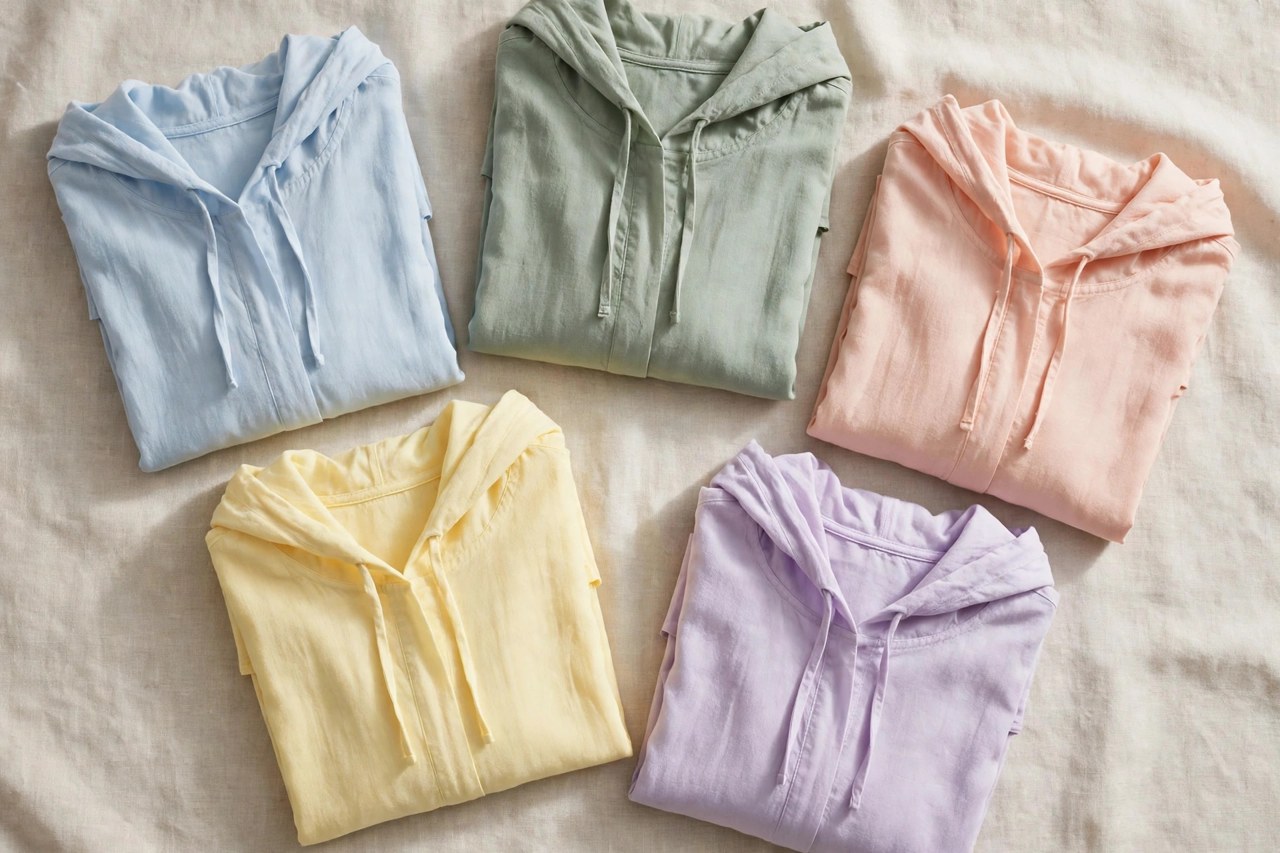
A hooded cotton shirt is a shirt first and a hood second, and keeping that order straight is the whole subject of this page. These are lightweight tops — woven button-ups in poplin, gauze, or seersucker, and light knits in single jersey — that happen to carry a soft, unstructured hood. They are emphatically not hooded sweatshirts: there is no fleece, no brushed interior, no kangaroo-pocket bulk, and no gym-bag weight. What the hood adds to a shirt is practical rather than athletic: shade for the neck and ears, a light barrier against drizzle and breeze, and a layer you can pull up or drop without carrying a hat or jacket. Women's hooded shirts have settled into travel, beach, gardening, and casual layering wardrobes for exactly those reasons. This guide separates them cleanly from hoodies and shows which fabrics and cuts make the idea work.
Not a Sweatshirt: The Real Distinction
Hold the two garments side by side and the difference is obvious in the hand. A hooded sweatshirt is cut from fleece or French terry, typically 300 grams per square meter and upward, with ribbed cuffs, a thick double-layer hood, and an insulating job to do. A hooded shirt is cut from shirting or tee-weight cloth, often under half that weight, with a single-layer hood that lies flat down the back and adds almost nothing to the garment's warmth. Its cuffs are shirt cuffs or simple hems, its body closes with buttons, a part placket, or not at all, and it is meant to be worn in weather where a sweatshirt would be far too hot. The confusion exists only in search results and catalog names, where hoodie is applied to anything with a hood. When shopping, read the fabric line: if it says fleece, terry, or brushed, it is a sweatshirt; if it says poplin, voile, gauze, seersucker, or jersey, it is the shirt this guide means.
Fabrics: Woven Hooded Shirts and Light Knits
Woven versions make the most of cotton shirting. Poplin hooded shirts are the crispest, holding a neat button-up shape with a hood that folds away politely — the closest thing to a conventional shirt in this category. Cotton gauze versions are the beach and resort staple: crinkled, feather-light, quick to dry, and meant to look relaxed. Seersucker's puckered stripes keep cloth off the skin and suit hooded popovers well, and lightweight chambray adds durability for gardening and travel days. Among knits, single jersey hooded shirts resemble long-sleeve tees with hoods and layer smoothly under jackets, while slub jersey adds texture. Check the hood's construction on any of them: it should be cut on a gentle curve so it sits on the head without pulling the front of the shirt upward, and its center seam should lie flat. A hood that distorts the neckline when down will annoy you every wear.
When a Hooded Shirt Is the Right Tool
The hooded shirt solves specific, recurring problems. For sun, a light hood shades the back of the neck and ears — areas sunscreen misses and hats expose — and many cotton versions in tight weaves offer meaningful shade, though a hood is a supplement to sunscreen, not a replacement. For travel, it replaces the just-in-case layer: it weighs little, packs flat, and handles air-conditioned planes, breezy ferries, and sudden drizzle better than a bare tee. As a beach and pool cover layer, a woven hooded shirt slips over swimwear, dries fast, and looks intentional in a way a borrowed sweatshirt never does. For outdoor work and walking, it keeps insects and light wind off the neck without overheating.
Styling Hooded Shirts Without Looking Sporty
Because the garment is a shirt, style it as one. A woven hooded button-up worn open over a plain tank and slim trousers reads as a considered light jacket alternative; buttoned and half-tucked into shorts or a skirt, it is simply a casual shirt with a useful extra. Jersey hooded shirts layer like long-sleeve tees — under a denim jacket or blazer with the hood resting outside the collar for a relaxed frame around the neckline. Colors follow shirt logic rather than team logic: whites, chambrays, soft stripes, and summer solids integrate into a wardrobe, while heavy logos and athletic graphics push the garment back toward sweatshirt territory.
Care: Hoods, Drawstrings, and Lightweight Cotton
Hooded shirts wash like the shirts they are, with two small additions. First, tie or remove drawstrings before washing, or knot the ends, so strings do not retreat into their channels or tangle around other laundry; a mesh bag protects them further. Second, reshape the hood while the shirt is damp, smoothing its center seam flat, because a lightweight hood dried in a twist will keep the twist. Wash cool with like colors — gauze and seersucker need only gentle handling and reward it by keeping their texture, while poplin versions tolerate a normal cycle and a medium iron. Cotton in these light weights shrinks modestly in length if dried hot, so line dry or tumble low. Store hooded shirts folded or on hangers with the hood smoothed down the back. None of this is demanding, which suits the garment: a hooded cotton shirt should be the easiest layer you own, ready to grab on the way out the door.
More to Explore on Apparel Search
Looking for Women's Clothing Stores?
This guide helps you choose women's hooded cotton shirts by fabric, weight and style. To browse where to buy, visit our women's clothing store directory, where you can find retailers that carry them.