Women's Egyptian Cotton Shorts Guide
Smoother hand-feel in a summer staple — plus a straight answer on when extra-long staple is worth it in shorts.
Shop Women's Egyptian Cotton Shorts Now
Shop Women's Egyptian Cotton Shorts on Amazon Shop Women's Egyptian Cotton Shorts on eBayThe Amazon and eBay links on this page are affiliate links. If you make a purchase through them, Apparel Search may earn a commission.
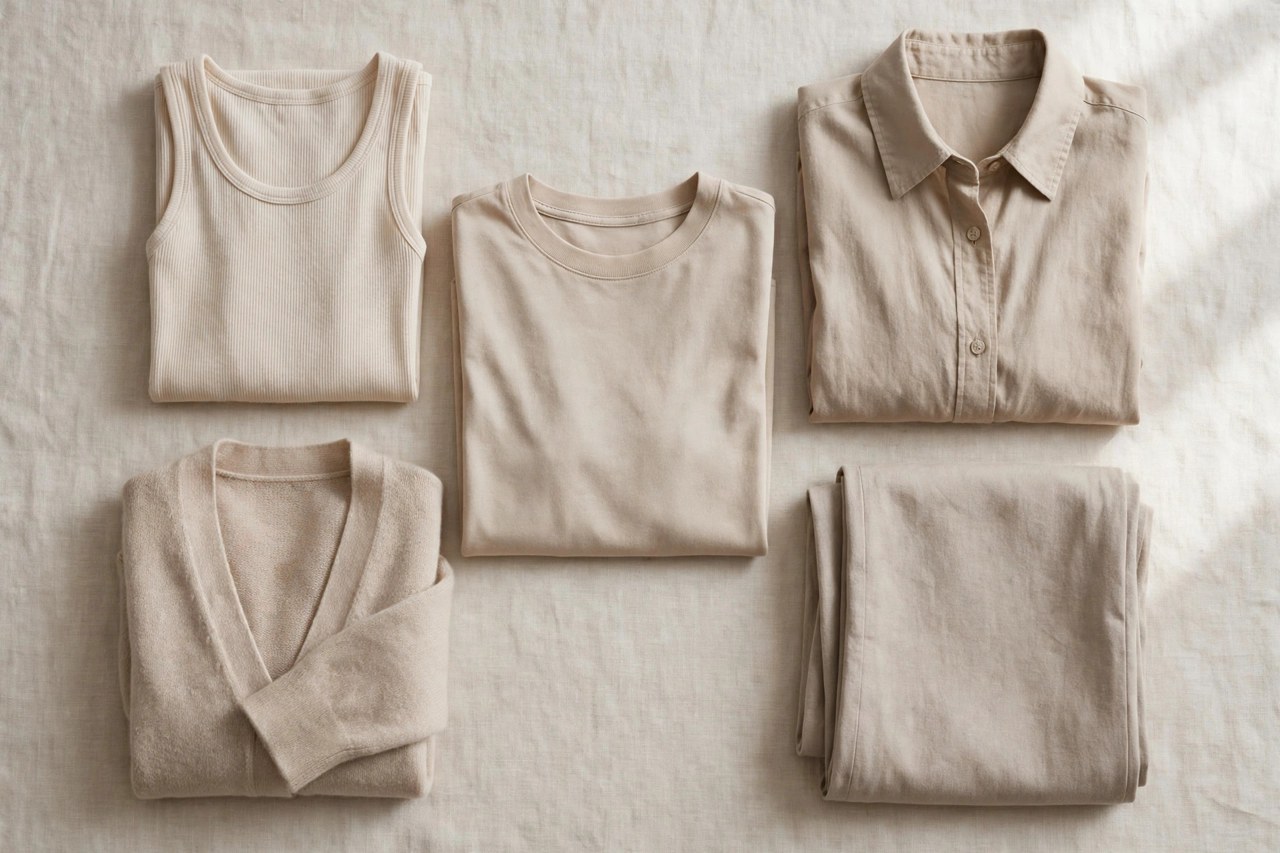
Egyptian cotton shorts raise the most honest question in this whole family of guides: does a casual, warm-weather garment really benefit from premium fiber? The answer is a genuine sometimes. Shorts live a hard, simple life — sat on, washed often, packed into beach bags, and worn in rotation all summer — and extra-long staple cotton does make them smoother against the skin, stronger at the seat and inner seams, and better-looking after repeated laundering than regular cotton shorts. But shorts are also inexpensive, trend-sensitive, and easy to replace, so the premium case depends entirely on how you wear them. This guide gives you both sides: what ELS actually improves in a pair of shorts, which styles justify it, and when a good regular cotton pair is the smarter buy.
What Feels Different: Hand-Feel and Surface
Pick up a pair of ELS twill or sateen shorts next to a regular pair and the difference is immediate in the hand. The longer fibers spin into a tighter, smoother yarn, so the cloth feels cool and clean rather than dry and slightly fuzzy, and it slides more comfortably against thighs during a full day of wear — a real consideration in a garment whose leg openings move constantly. Sateen-weave Egyptian shorts carry a soft sheen that dresses them up enough for smart-casual lunches and evening walks, while ELS twill keeps the classic chino-short look with a finer, less rugged surface. The smoother face also resists pilling between the thighs, the spot where regular cotton shorts first look tired, and it sheds the rumpled, washed-out appearance that ends many pairs' useful life while the cloth itself is still intact.
Durability Where Shorts Actually Wear Out
Shorts fail at the seat, the inner-thigh seams, and the pocket corners long before they fail anywhere else. Stronger ELS yarns slow all three: abrasion resistance is higher because each yarn is held together by longer overlapping fibers, seams strain against cloth that tears less easily, and the surface thins more gradually under the friction of sitting on benches, car seats, and picnic ground. Colorfastness improves for the same structural reason — an even, tight surface takes dye uniformly and loses it uniformly, so khaki, navy, and white shorts keep a clean, single tone instead of fading in patches. None of this makes a pair immortal, and a summer of daily wear will still show on any cotton. It does mean a well-made ELS pair typically looks presentable for several summers where a budget pair often looks spent after one.
Styles That Justify the Premium
Spend the premium where the shorts do the most work. Tailored chino-style shorts and polished sateen shorts that anchor your summer outfits — worn with shirts, blouses, and blazers several times a week — repay ELS fiber in appearance and lifespan. Longer Bermuda lengths in fine twill are another good candidate, since they function almost as warm-weather trousers and are judged by a tailored standard. Neutral colors multiply the value: white, khaki, navy, and stone get worn with everything, so their cost per wear drops quickly. By contrast, drawstring beach shorts, novelty prints, and ultra-short fashion styles gain little — their appeal is cut and color, not cloth quality, and their seasons are short. A single premium pair in a neutral tailored style, rotated with regular pairs, is the strategy this guide recommends for most wardrobes.
The Honest Case for Regular Cotton
Regular cotton shorts deserve their defense. They are cheap enough to buy in several colors, forgiving of sunscreen stains, sand, and chlorine-adjacent pool decks, and entirely adequate for gardening, errands, and workouts-adjacent wear where nobody is grading your hand-feel. If your summers involve small children, boats, or festivals — environments that destroy clothing regardless of fiber quality — premium shorts are money exposed to risks that fiber cannot mitigate. Likewise, if you are still experimenting with lengths and rises to find your style, experiment in regular cotton first. Egyptian cotton rewards a settled wardrobe: once you know the exact short you live in from June to September, upgrading that one proven style to ELS is a rational purchase rather than a gamble. Honesty about use, not fiber snobbery, is what makes the premium worth it when you do pay it.
Labels, Fit, and Summer Care
Keep the family discipline at the rack: check the sewn-in fiber content for 100 percent Egyptian cotton or a high stated percentage, and do not pay a premium for Egyptian-named shorts whose label quietly lists mostly ordinary cotton. A touch of elastane is fine and often helpful in tailored styles. Fit ELS shorts as you would tailored pants — smooth at the front, no pulling at the pockets, a leg opening that skims rather than grips — and allow for a small first-wash shrink before finalizing length, especially in longer styles. Care through summer is simple: wash cool, inside out, with like colors; line dry when you can to protect the smooth face and save energy; and press sateen styles lightly for that polished finish. Stored clean at season's end, a good pair returns next summer looking ready rather than remembered.
More to Explore on Apparel Search
Looking for Women's Clothing Stores?
This guide helps you choose women's Egyptian cotton shorts for polished summer wear. To browse where to buy, visit our women's clothing store directory, where you can find retailers that carry them.