Women's Egyptian Cotton Apparel Guide
Apparel cut from extra-long staple cotton — smoother, stronger, and more honest about its labels than most premium claims.
Shop Women's Egyptian Cotton Apparel Now
Shop Women's Egyptian Cotton Apparel on Amazon Shop Women's Egyptian Cotton Apparel on eBayThe Amazon and eBay links on this page are affiliate links. If you make a purchase through them, Apparel Search may earn a commission.
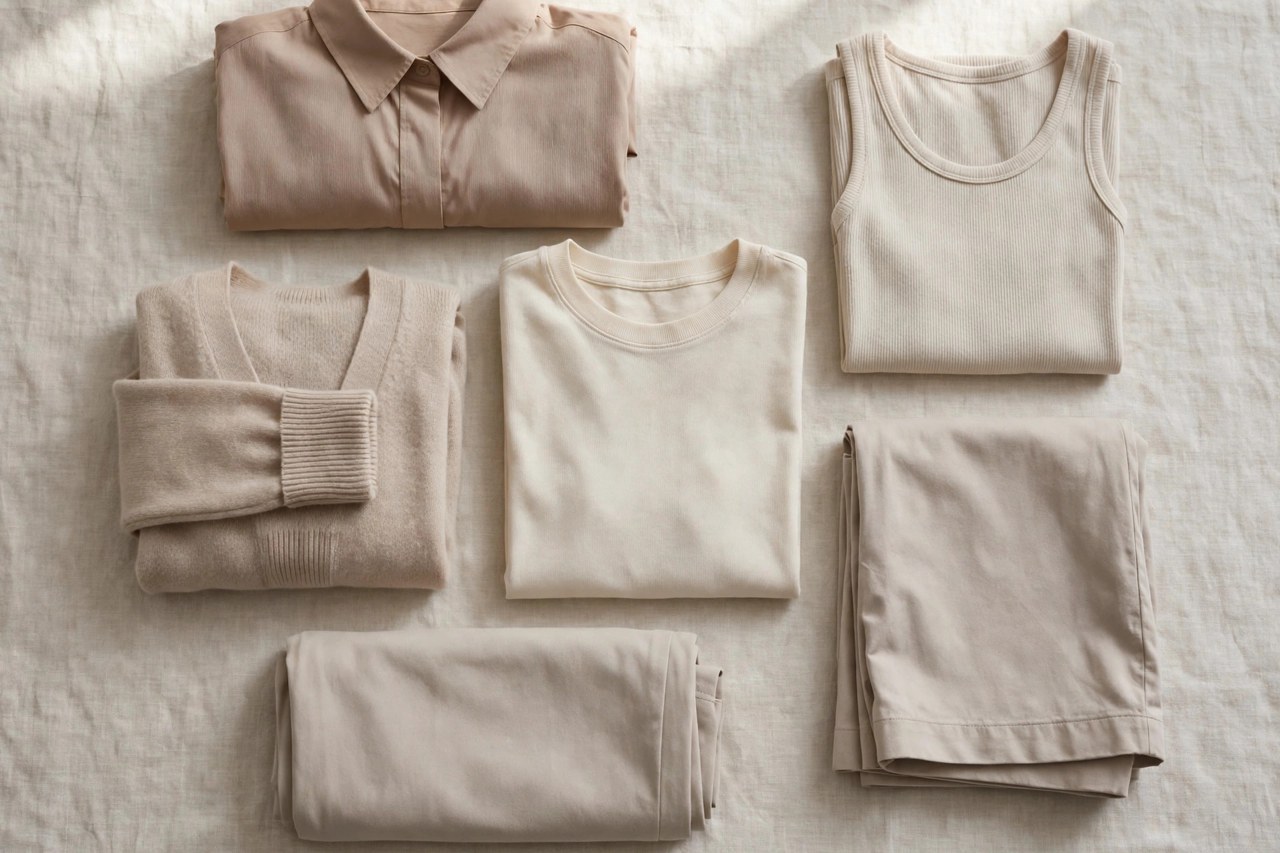
Egyptian cotton apparel is the umbrella term for women's clothing made from extra-long staple, or ELS, cotton grown in Egypt's Nile Delta. The fibers are noticeably longer than those in ordinary upland cotton — often an inch and a half or more — and that extra length is not trivia. Longer fibers spin into finer, smoother, and stronger yarns with fewer loose ends, so woven poplins feel silky rather than scratchy, jersey knits drape without fuzzing, and finished garments keep a cleaner surface wash after wash. If you have ever wondered why one cotton shirt feels luxurious and another feels merely adequate, staple length is a large part of the answer, and this guide explains how it shows up across the whole apparel category.
What Extra-Long Staple Actually Means
Cotton is graded partly by staple length, the average length of its individual fibers. Short-staple fibers break and poke out of yarns, creating roughness and pills. Extra-long staple fibers overlap far more within the same yarn, so spinners can use fewer, finer fibers and still produce a strong thread. The result is fabric with three practical advantages: a smoother hand because fewer fiber ends protrude, greater tensile strength because the yarn holds together under stress, and better dye uptake because the surface is more uniform, so colors look deeper and more even. Genuine ELS cotton is a small fraction of world production, which is why real Egyptian cotton apparel costs more. When a price looks too good for the claim, staple length is usually where the shortcut was taken.
Where ELS Shows Up in Apparel
In women's apparel, Egyptian cotton appears most often where smoothness and longevity matter most: dress shirts and blouses in fine poplin, premium t-shirts and tees in combed jersey, tailored pants in sateen and twill, and polished shorts for warm weather. It is also used for better dresses, skirts, and light knitwear, though those categories label the fiber less consistently. Because ELS yarns are stronger, mills can weave them finer without the cloth turning fragile, so a lightweight Egyptian cotton shirt can feel airy yet outlast a heavier shirt made from short-staple cotton. The fiber is less common in fleece, flannel, and heavy sweatshirts, where softness comes from brushing and loft rather than yarn smoothness, so paying an ELS premium there buys you less. Choose it where the fabric touches skin smoothly and visibly.
Pilling, Shine, and How It Ages
Pilling happens when short, weak fibers work loose, tangle on the surface, and form balls. Because ELS fibers are longer and the yarns are tighter, Egyptian cotton resists pilling far better than ordinary cotton — a well-made ELS tee or shirt stays smooth-looking through many more washes. The fabrics also develop a soft, natural luster, especially in sateen weaves where long floats of yarn catch the light, and in mercerized yarns that have been treated to increase shine and strength. Aging well does not mean aging invisibly: colors will soften gradually, and white ELS shirts still need sensible laundering to avoid greying. But the cloth itself thins more slowly at elbows, collars, and seat seams, which is why cost-per-wear often favors the premium piece over several cheap replacements.
Labeling Honesty: Blends Sold as Egyptian
This is the category's open secret. A garment labeled simply Egyptian cotton may legally contain only a small percentage of Egyptian fiber blended with ordinary cotton in some markets, and past industry scandals involved bedding and apparel sold as 100 percent Egyptian that tested otherwise. Protect yourself by reading the full fiber-content line, not just the headline: look for 100 percent Egyptian cotton, or a clearly stated high percentage, and treat vague phrases like Egyptian quality or Egyptian touch as marketing, not fiber facts. Reputable certification marks from the Cotton Egypt Association, with its gold logo licensing, add accountability. A blend is not automatically bad — a little elastane helps pants and tees fit — but you should pay Egyptian prices only for a genuinely Egyptian-rich cloth, and the label should let you verify that.
Is the Premium Worth Paying?
Honest answer: sometimes, and this guide will keep saying so page by page. Pay for ELS when the garment is a staple you will wear weekly, when smoothness is visible — a white shirt, a fitted tee, tailored pants — and when the maker discloses fiber content clearly. Save your money on heavily textured, brushed, or very loose garments where staple length barely shows, and on trend pieces you expect to wear for one season. Care extends the value: wash in cool water, skip harsh bleach on colors, and dry on low heat or a line, since ELS strength is not a license for rough treatment. Bought selectively and cared for sensibly, Egyptian cotton apparel earns its place as the premium tier of an everyday cotton wardrobe rather than a luxury splurge.
More to Explore on Apparel Search
Looking for Women's Clothing Stores?
This guide helps you choose women's Egyptian cotton apparel by garment and fiber quality. To browse where to buy, visit our women's clothing store directory, where you can find retailers that carry them.