Women's Egyptian Cotton Shirts Guide
Fine ELS poplin, crisper collars, and a quiet sheen — what separates a luxury shirt from a regular cotton shirt.
Shop Women's Egyptian Cotton Shirts Now
Shop Women's Egyptian Cotton Shirts on Amazon Shop Women's Egyptian Cotton Shirts on eBayThe Amazon and eBay links on this page are affiliate links. If you make a purchase through them, Apparel Search may earn a commission.
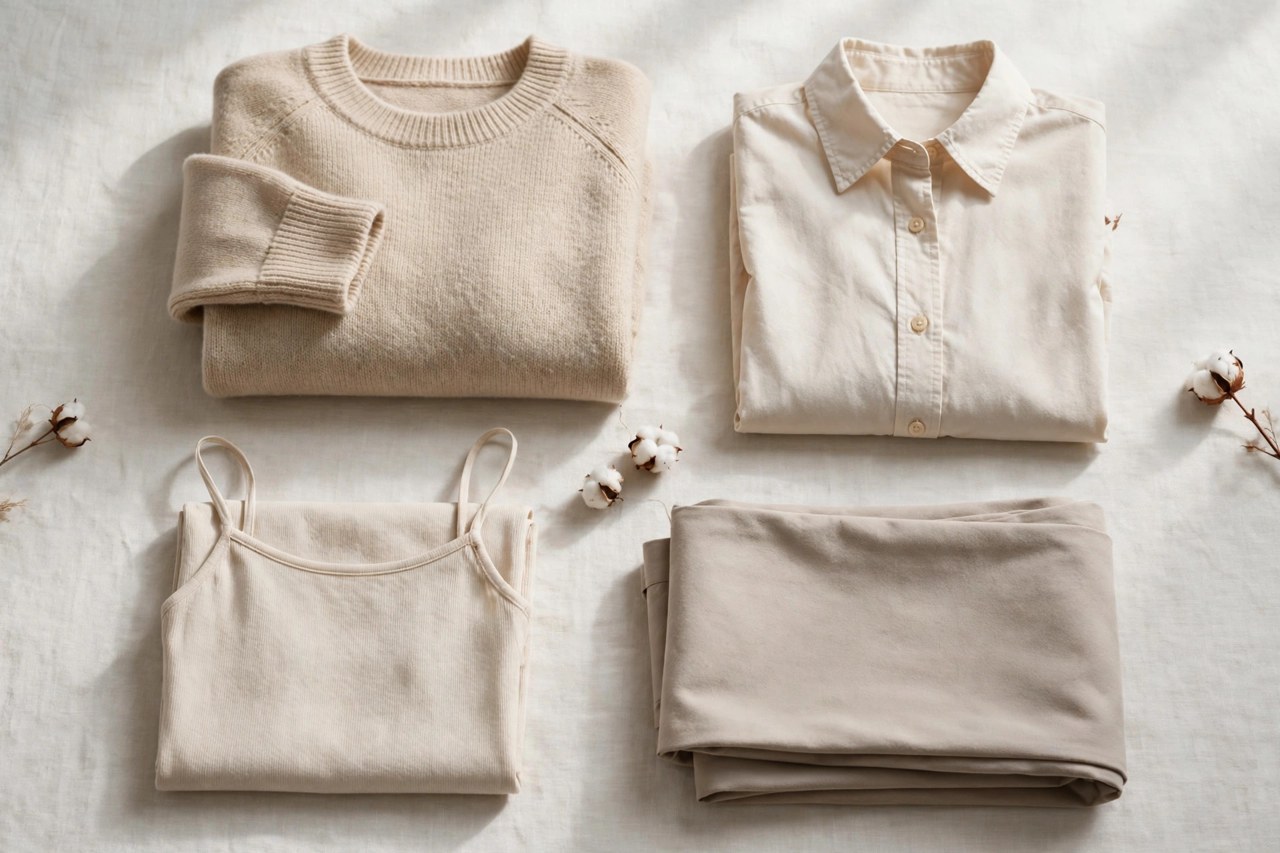
If Egyptian cotton proves itself anywhere, it is in a shirt. Shirting is a fine, flat, unforgiving cloth: every fuzz, thin patch, and uneven dye shows, and the collar and cuffs are handled and laundered harder than any other part of a wardrobe. Extra-long staple fiber answers all of it. Spun into fine poplin, ELS cotton produces a shirt that feels smooth against the skin, carries a soft natural sheen instead of a matte dryness, and keeps its collars and cuffs looking structured long after a regular cotton shirt has gone limp. This guide walks through the luxury markers that distinguish a genuine Egyptian cotton shirt from an ordinary one wearing premium language — yarn, weave, construction, and label — so you can buy the real thing with confidence and skip the imitations.
ELS Poplin and That Quiet Sheen
Poplin is a plain weave with a very fine crosswise rib, and it is the natural home of ELS cotton. Because long fibers spin into finer, more even yarns, the mill can weave a denser, lighter poplin that still feels substantial. The surface reflects light more uniformly than short-staple poplin, giving white and pale-blue shirts a clean, almost silky glow that reads as quality across a room without any synthetic shine. Mercerized ELS poplin deepens the effect further while adding strength. Two-ply yarns — two fine threads twisted together before weaving — are another luxury marker: they make the cloth more durable and give it a richer hand, and they appear in better shirts under descriptions like two-fold or double-twisted cotton. A shirt that names its weave, its ply, and its fiber percentage is telling you the truth in the order that matters.
Collars, Cuffs, and Crispness That Lasts
A shirt's reputation is made at the collar. In regular cotton, collar points soften, fray at the tips, and lose their roll within a season of weekly washing. The stronger, smoother yarns in ELS poplin resist that fraying, hold a pressed edge longer, and keep collar interlinings sitting flat instead of bubbling. Cuffs benefit the same way, surviving repeated folding and buttoning without thinning at the fold. Buttons and stitching complete the picture on genuinely premium shirts: dense, even stitching along the placket, securely cross-stitched buttons, and pattern matching at the yoke and pockets where stripes or checks are involved. None of these details requires Egyptian fiber, but they travel with it — makers who pay for ELS cloth rarely waste it on careless construction, and makers who cut construction corners rarely bought real ELS cloth in the first place.
Versus Regular Cotton Shirts
Compared honestly, a regular cotton shirt from a decent maker is a fine garment for its first months: crisp when new, comfortable, and presentable. The divergence is in the aging curve. Short-staple poplin gradually fuzzes, so the shirt's surface turns dry and slightly grey-looking even when clean; collars tire; and the cloth thins first at elbows and underarms. An Egyptian cotton shirt ages on a slower clock — the surface stays smooth, so whites stay brighter-looking, colors stay even, and the shirt continues to pair convincingly with tailored clothing long after its regular counterpart has been demoted to casual wear. Fit also holds better, since stronger yarns resist the gradual stretch that makes older shirts pull across the back. For a shirt worn weekly to work, the premium version is usually the cheaper shirt per wear by its second year.
Fit, Styles, and Wearing It Well
Premium shirting appears in the classic shapes: tailored button-fronts with a shaped waist, relaxed boyfriend cuts, tunic-length shirts worn over slim pants, and crisp shirt dresses in the same poplins. The smoothness of ELS cloth flatters tailored fits in particular, because it slides under blazers without bunching and tucks without bulk, while its slight sheen dresses up jeans and simple skirts. Choose your usual size — quality makers cut for the small first-wash shrinkage — and check that the collar sits clean when buttoned, since a premium shirt should look as good fully closed as it does open at the neck. White remains the highest-value purchase because it shows the fiber's advantages most and pairs with everything; pale blue and fine stripes follow. One excellent shirt worn on rotation teaches you more about ELS than a drawer of ordinary ones.
Label Honesty and Care
Apply the family rule: the fiber label outranks the marketing. Look for 100 percent Egyptian cotton — sometimes specified as Egyptian long-staple or by licensed association marks — and treat shirts described only as Egyptian-style or Egyptian-feel as regular cotton at a regular price, whatever the shelf tag claims. Blends with a small elastane share can be excellent for fitted styles, as long as the percentage is printed and Egyptian cotton dominates. Care is standard quality-cotton practice: wash cool to warm, inside out if the color is deep, skip chlorine bleach, and dry low or on a line. Iron while faintly damp for the crispest collar, and hang on proper hangers rather than hooks so the shoulders keep their shape. Stored and laundered this way, a genuine Egyptian cotton shirt holds its sheen and structure for years of regular wear.
More to Explore on Apparel Search
Photos


Looking for Women's Clothing Stores?
This guide helps you choose women's Egyptian cotton shirts and fine poplin shirting. To browse where to buy, visit our women's clothing store directory, where you can find retailers that carry them.