Women's Egyptian Cotton Clothing Guide
The fabric-to-garment angle — how extra-long staple cotton is spun, woven, finished, and labeled on its way to your closet.
Shop Women's Egyptian Cotton Clothing Now
Shop Women's Egyptian Cotton Clothing on Amazon Shop Women's Egyptian Cotton Clothing on eBayThe Amazon and eBay links on this page are affiliate links. If you make a purchase through them, Apparel Search may earn a commission.
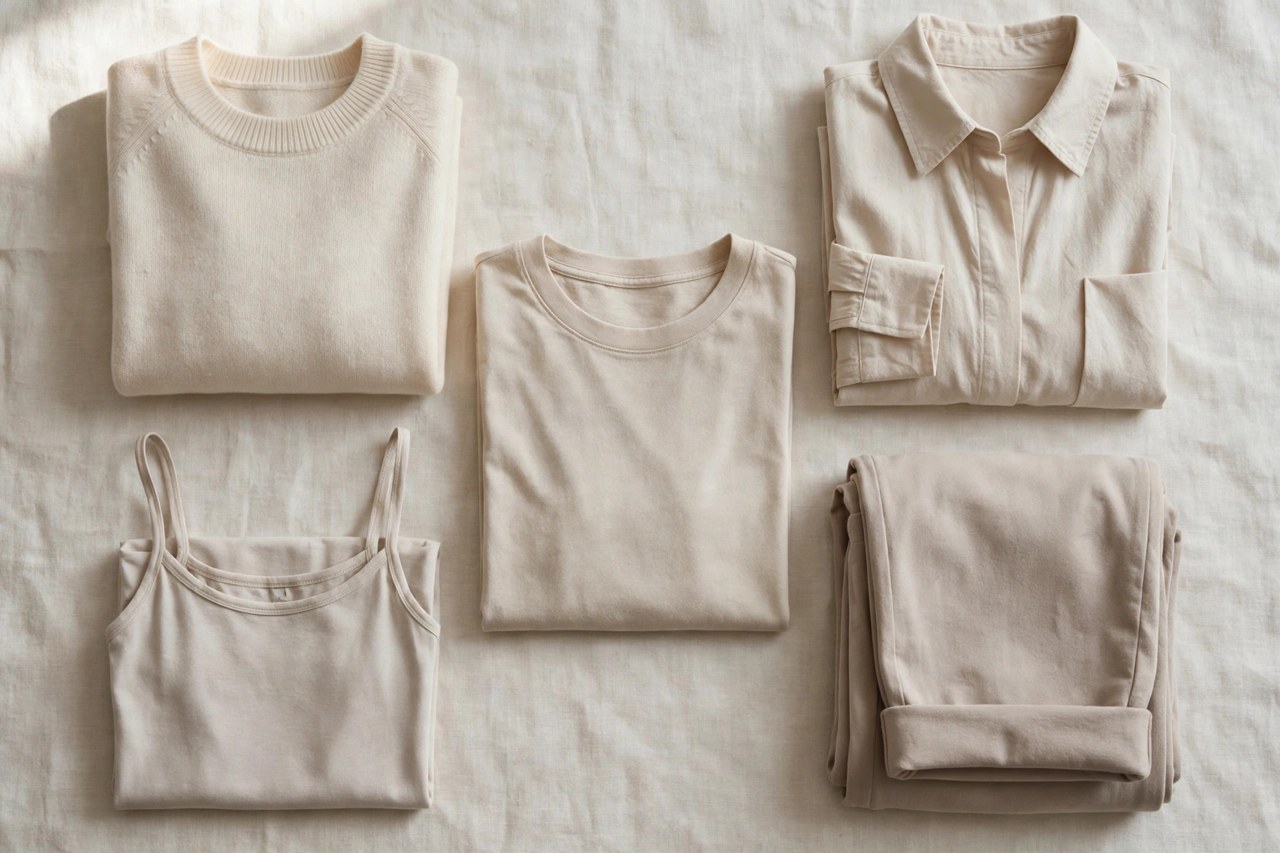
Where the companion page on Egyptian Cotton Clothes approaches the fiber from the wardrobe side, this page follows the fabric-to-garment path: how extra-long staple cotton becomes finished women's clothing, and where quality is won or lost along the way. The journey starts in the Nile Delta, where long, fine fibers are hand-picked to avoid the damage machine harvesting can cause. Staple length — commonly an inch and three-eighths or more for ELS grades — determines everything downstream. Longer fibers need fewer joins in a yarn, so spinners can produce finer counts that are simultaneously softer and stronger than yarns spun from ordinary cotton. Every later step, from weaving to dyeing to the label in the seam, either preserves that head start or quietly wastes it, and knowing the steps helps you judge clothing before you buy it.
Spinning and Combing: Where Smoothness Is Built
After ginning, ELS cotton is usually combed, a process that removes the shortest fibers and aligns the rest parallel. Combing is why better Egyptian cotton feels sleek rather than fluffy: the yarn surface has fewer protruding ends to catch, pill, or look dull. Spinners can then twist finer yarns — high yarn counts in shirting, fine-gauge jersey in tees — without sacrificing strength, because each fiber contributes more length to holding the yarn together. Two-ply yarns, in which two fine strands are twisted together, appear in premium shirts and add durability and a subtle richness. When clothing feels glassy-smooth yet substantial, this spinning stage is the reason. When an Egyptian-labeled garment feels coarse, the likely explanation is that short-staple fiber was blended in before spinning, and no later finish can fully disguise that.
Weaves and Knits: Poplin, Sateen, and Jersey
The same ELS yarn becomes very different clothing depending on construction. Poplin, a tight plain weave with a fine crosswise rib, is the classic Egyptian cotton shirting: crisp, smooth, and breathable, ideal for dress shirts and shirt dresses. Sateen weaves float yarns over the surface to create a soft sheen and silky hand, used in tailored pants, skirts, and dressier tops — beautiful, though the long floats snag slightly more easily than plain weaves. Twill, with its diagonal rib, gives pants and shorts structure and abrasion resistance. In knits, fine single jersey makes premium tees with a clean drape, while interlock knits both faces smooth for polished t-shirts. ELS fiber improves each construction the same way: a tighter, smoother surface that resists pilling and takes dye evenly, so navy stays navy instead of fading patchily.
Finishes: Mercerizing, Singeing, and Pre-Shrinking
Finishing decides how much of the fiber's potential survives to the rack. Mercerizing treats yarn or fabric under tension with caustic soda, swelling the fibers so they reflect light more evenly; the result is extra luster, strength, and dye depth, and it is a hallmark of quality Egyptian cotton shirting and tees. Singeing passes fabric quickly through flame or heated plates to burn off surface fuzz, leaving a cleaner face that pills less. Better makers also pre-shrink ELS cloth or garment-wash finished pieces, because even premium cotton shrinks a few percent in its first hot wash, and honest brands build that into the cut. Conversely, heavy resin wrinkle-free treatments can stiffen the hand and mask mediocre fiber. A garment that boasts its finishes while hiding its fiber percentage has the story backwards — fiber first, finishes second.
Labels and Percentages: The Honesty Check
No stage matters more to the buyer than labeling, because Egyptian cotton clothing has a documented history of overstated claims. The fiber-content label is the only reliable evidence: look for 100 percent Egyptian cotton, or a stated blend such as 96 percent Egyptian cotton with 4 percent elastane, where the small synthetic share serves fit rather than diluting cost. Vague front-of-garment claims — Egyptian quality, Egyptian rich, woven with Egyptian cotton — without a matching percentage should be treated as ordinary cotton pricing, whatever the tag says. Licensed Cotton Egypt Association branding adds traceability where present. Also note that country of manufacture and fiber origin are different things: clothing sewn anywhere can use Egyptian fiber, and clothing sewn in Egypt can use imported fiber. Judge the fiber line, not the map, and pay the premium only when the percentage earns it.
Judging the Finished Garment in Hand
Production knowledge becomes practical the moment you hold a garment. Run a palm across the cloth: genuine fine ELS fabric feels smooth and cool with minimal fuzz, and holding it to the light shows an even surface without thin patches. Check seams for dense, even stitching, because strong cloth deserves strong construction; check collars, cuffs, and waistbands for clean finishing that will survive pressing and wear. Expect modest, predictable shrinkage from quality pieces — a brand promising zero shrinkage from 100 percent cotton is usually describing a synthetic blend or a heavy chemical finish. Finally, weigh price against disclosure: transparent fiber content, named weaves, and plausible pricing are the three signs that the clothing in your hand is what this page describes, from Delta fiber to finished garment.
More to Explore on Apparel Search
Looking for Women's Clothing Stores?
This guide helps you choose women's Egyptian cotton clothing from fiber to garment. To browse where to buy, visit our women's clothing store directory, where you can find retailers that carry them.