Women's Egyptian Cotton Clothes Guide
The wardrobe angle — which everyday clothes actually deserve the extra-long staple upgrade, and which do not.
Shop Women's Egyptian Cotton Clothes Now
Shop Women's Egyptian Cotton Clothes on Amazon Shop Women's Egyptian Cotton Clothes on eBayThe Amazon and eBay links on this page are affiliate links. If you make a purchase through them, Apparel Search may earn a commission.
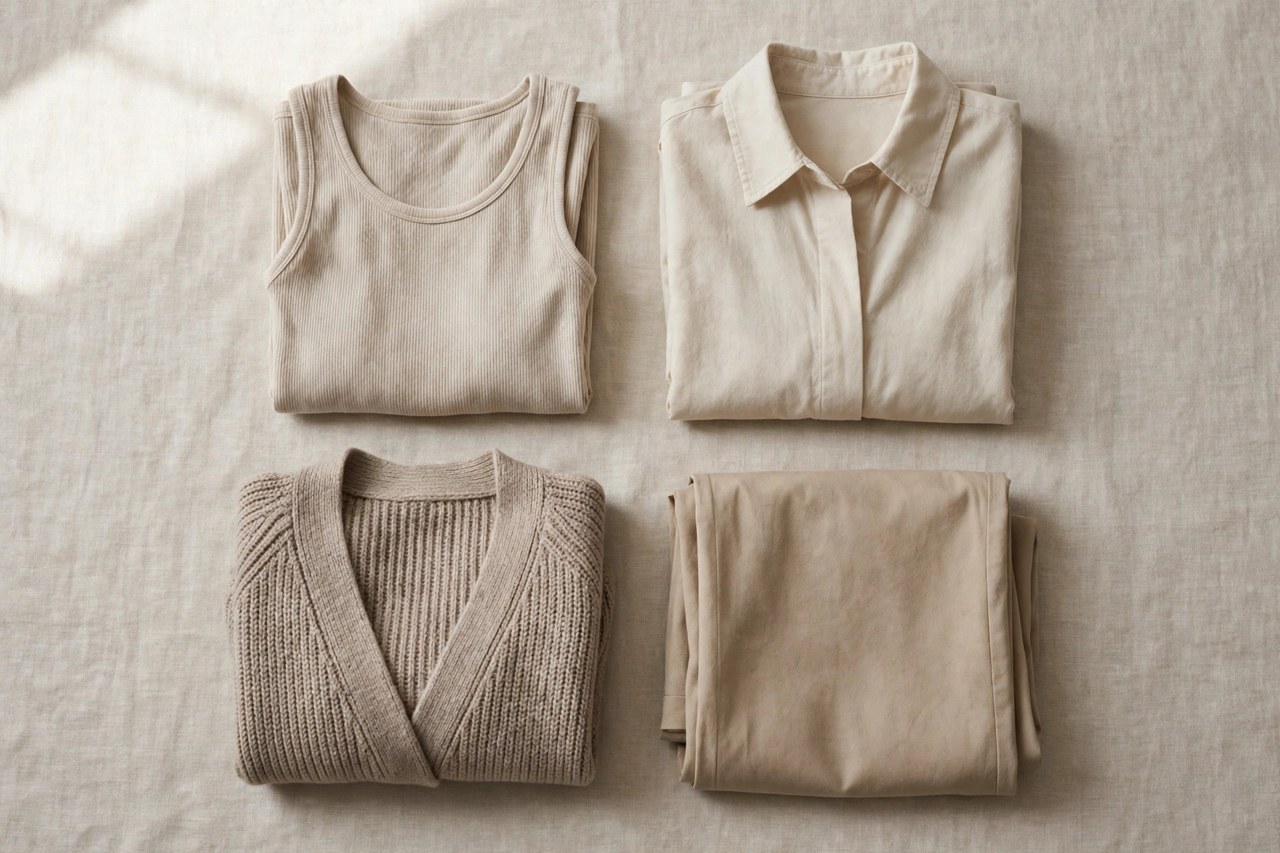
This page takes the wardrobe angle on Egyptian cotton clothes: not how the cloth is made, but which clothes in your closet are worth buying in extra-long staple cotton and how to build around them. The distinction matters. Its companion page, Egyptian Cotton Clothing, looks at fabric-to-garment production; here the question is practical dressing. Most women do not need an all-Egyptian wardrobe, and sellers who suggest otherwise are upselling. What works is a small core of premium staples — the white shirt worn twice a week, the tee layered under everything, the tailored pants that anchor work outfits — upgraded to ELS cotton, surrounded by good ordinary cotton everywhere else. Chosen that way, the premium is concentrated exactly where your skin and everyone else's eyes notice it most.
The Staples That Earn the Upgrade
Start with the pieces you reach for most. A fine Egyptian cotton shirt in white or pale blue is the clearest win: the poplin looks smoother under a blazer, the collar stays crisp longer, and the cloth resists the thinning at cuffs and elbows that retires cheaper shirts. Next, premium tees and t-shirts in ELS jersey, which layer cleanly without fuzzing against knitwear. Tailored pants come third — long-staple twill and sateen hold a crease and resist seat shine better than regular cotton. After those three, add selectively: a polished pair of shorts if you live in them all summer, or a simple ELS knit dress if dresses are your uniform. Resist upgrading occasional, heavily textured, or purely decorative pieces first; wardrobe money spent on daily drivers always outperforms money spread thinly across everything.
How ELS Clothes Feel Day to Day
The everyday difference is tactile before it is visual. Longer, smoother fibers mean seams and surfaces feel less scratchy, especially in warm weather when cotton sits directly on skin for hours. ELS jersey tees feel cool and silky rather than dry and fuzzy, and ELS poplin shirts slide more comfortably under jackets without bunching. Because the yarns are stronger, the clothes also hold their shape through a long day: knees bag less in pants, tee necklines recover better, and shirt fronts stay smooth instead of rumpling into a tired texture by afternoon. None of this is dramatic in a fitting room — it accumulates over months of wearing and washing, which is precisely why cost-per-wear, not the first try-on, is the right way to judge these clothes. Buy one piece, live in it for a season, and let experience set your next purchase.
Mixing Premium and Regular Cotton
A mixed wardrobe is a feature, not a compromise. Pair an Egyptian cotton shirt with regular cotton chinos, or an ELS tee with ordinary denim, and the outfit reads as premium overall because the eye and the skin both weight the top layer most. Keep colors disciplined — white, navy, black, grey, and soft neutrals — in your ELS core, because staples in staple colors get worn most and replaced least. Use regular cotton for color experiments, prints, and seasonal novelties where fiber quality is less visible and trends turn over faster. This split also simplifies shopping: when a regular-cotton staple wears out and you know you loved it, its replacement is your cue to upgrade that one slot to Egyptian. Over a few years, your most-worn clothes quietly become your best clothes, without a single expensive overhaul.
Reading Labels Before You Commit
Wardrobe upgrading fails when the label lies. As covered across this Egyptian cotton family, blends are frequently sold under an Egyptian headline while containing modest amounts of the named fiber. Before adding any piece to your core wardrobe, check the sewn-in fiber content for 100 percent Egyptian cotton or a clearly high percentage, and be skeptical of Egyptian-style wording that avoids a number entirely. Price is a secondary clue: genuine ELS cloth costs mills more, so a suspiciously cheap Egyptian staple is usually a blend wearing a premium name. That does not make every blend a bad buy — a tee with a touch of elastane fits better — but a wardrobe staple should be bought on verified fiber, not on a hangtag adjective. Keep receipts until after the first few washes; honest ELS reveals itself by staying smooth.
Care That Protects Your Investment
Premium staples earn their cost only if they last, and care is uncomplicated. Wash ELS clothes in cool to warm water with like colors, turn shirts and tees inside out to protect their smooth faces, and avoid overloading the machine, which abrades even strong yarns. Tumble dry low or line dry; high heat is cotton's main enemy regardless of staple length, driving shrinkage and dulling that natural luster. Iron shirts on a medium setting while slightly damp for the crispest collar, and store tees folded rather than hung so necklines and shoulders keep their shape. Treat stains promptly instead of baking them in with hot washes. Followed consistently, this routine lets a small set of Egyptian cotton clothes outlast two or three rotations of cheaper equivalents — which is the entire wardrobe argument for buying them.
Related Women's Cotton Guides
Looking for Women's Clothing Stores?
This guide helps you choose women's Egyptian cotton clothes as wardrobe staples. To browse where to buy, visit our women's clothing store directory, where you can find retailers that carry them.