Women's Cotton Jog Bras Guide
The sports-bra construction story — encapsulation, compression, and what cotton can and cannot do when you move.
Shop Women's Cotton Jog Bras Now
Shop Women's Cotton Jog Bras on Amazon Shop Women's Cotton Jog Bras on eBayThe Amazon and eBay links on this page are affiliate links. If you make a purchase through them, Apparel Search may earn a commission.
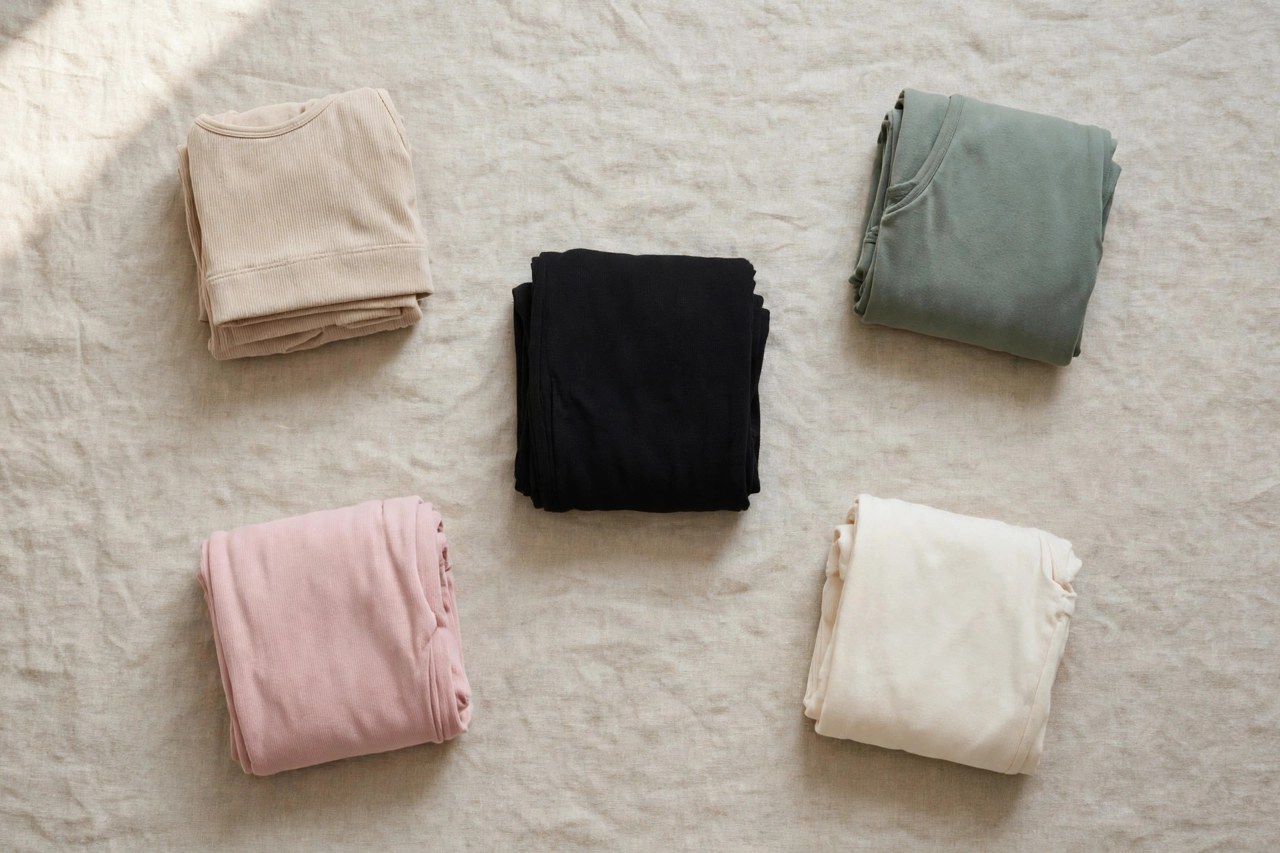
Jog bras, the everyday name for sports bras, are built on a different construction logic from daily bras: instead of lifting and separating with cups and wires, they control movement, either by compression, pressing the fabric evenly across, or by encapsulation, holding each side in its own structured cup, or by a hybrid of both. Cotton-rich jog bras use a cotton and spandex knit, usually a heavy jersey or interlock, for the body of the bra, trading the slick feel of full synthetics for a softer, more familiar hand. That trade comes with honest limits, and this guide states them plainly: cotton absorbs sweat and holds it, so a cotton-rich jog bra is a comfort choice for low-impact movement, warm-ups, walking, yoga, and casual training, not the best tool for long, hard, sweaty runs. Understood that way, it is a genuinely useful garment.
Compression, Encapsulation, and Cotton-Rich Knits
A classic pullover jog bra is a compression design: a wide band, a racerback or scoop back, and a double layer of stretch knit that holds everything firmly in one unit. It is simple, durable, and works best for smaller cup sizes and lower impact. Encapsulation jog bras add shaped, seamed cups inside a sport frame, often with an underwire or firm underband made for sport; they control movement better for larger sizes but rarely come in high-cotton fabrics, since the structure needs firmer synthetics. Most cotton jog bras are therefore compression or soft hybrid styles in a heavy cotton interlock, around 90 percent cotton with spandex, weighing noticeably more than a daily bralette. That heavy knit is the support mechanism, so judge it by recovery: a good sport knit stretched firmly should return flat and silent, without rippling at the band edge.
The Moisture Trade-Off, Stated Honestly
Cotton feels dry and soft at the start of a workout, does not develop the sharp odor synthetics can hold, and is kind to skin that reacts to performance finishes. The cost appears as exercise continues. A saturated cotton knit gets heavy, loses some of its snug fit, dries slowly, and can chill you when you stop moving in cool air. Chafing risk also rises where a wet band rubs. None of this disqualifies cotton for walking, gentle cycling, stretching, easy weight training, or warm-up layers, where sweat volume stays modest. It does mean that for running distance, hot-weather training, or high-intensity classes, a synthetic moisture-wicking bra is the more functional choice. Many wearers keep both and choose by session.
Support Levels and Matching the Activity
Manufacturers grade sports bras as low, medium, or high impact, and cotton-rich styles cluster honestly at the low end, with the firmest heavy-interlock compression styles reaching medium for smaller sizes. Walking, yoga, Pilates, golf, and easy studio work sit comfortably in that range. Jogging itself, despite the category name inherited from the original 1970s jog bra, is a high-impact activity for most wearers, so a cotton jog bra suits the shortest, easiest sessions at most, and many runners will prefer a technical bra and keep the cotton one for everything around the run: the warm-up walk, the stretch, the rest of the day. Cup size matters as much as activity; a style that feels secure in a smaller size may not in a larger one. Use the maker's impact chart, but verify it yourself with the fit tests on this page rather than trusting the label alone.
Fit Tests That Actually Predict Performance
A jog bra should feel firmer than a daily bra, snug enough that the band does not ride up when you raise your arms overhead, the standard first test. Jump lightly in place and jog on the spot: movement should feel controlled and even, with no painful bounce and no slipping at the straps or band. The fabric should not cut in so hard that breathing feels restricted or flesh spills sharply over every edge; that usually means the size, not the support level, is wrong. Check the back style for your activity: racerbacks keep straps secure and suit most movement, while scoop backs and hook closures are easier to remove when the knit is sweaty and clinging, a real practical point with pullover cotton styles. Two-finger strap tension, a level band, and a firm but breathable hold are the markers of a fit that will survive the whole session.
Care: Sweat, Elastic, and Drying Time
Wash a cotton jog bra promptly after exercise; dried sweat and body oils degrade spandex faster than almost anything else, and cotton holds moisture against the elastic longer than a synthetic would. Cool water, a gentle detergent, and air drying preserve the recovery that provides the support. Avoid fabric softener, which coats cotton fibers, reduces absorbency unevenly, and can make the knit feel clammy in the next workout. Because a heavy cotton interlock dries slowly, owning two jog bras to rotate is almost a necessity for anyone training several days a week; wearing a still-damp bra undermines both comfort and fit. Store them flat or hanging rather than balled up with the band twisted. Expect a cotton jog bra in regular training use to lose firmness sooner than a technical synthetic equivalent, and replace it when the band stretches visibly or support drops, whatever the calendar says.
Related Women's Cotton Guides
More to Explore on Apparel Search
Photos


Looking for Women's Clothing Stores?
This guide helps you choose women's cotton jog bras by support level and activity. To browse where to buy, visit our women's clothing store directory, where you can find retailers that carry them.