Women's Cotton Leggings Guide
Cotton and spandex jersey that feels like a second skin — and the opacity question every buyer should test first.
Shop Women's Cotton Leggings Now
Shop Women's Cotton Leggings on Amazon Shop Women's Cotton Leggings on eBayThe Amazon and eBay links on this page are affiliate links. If you make a purchase through them, Apparel Search may earn a commission.
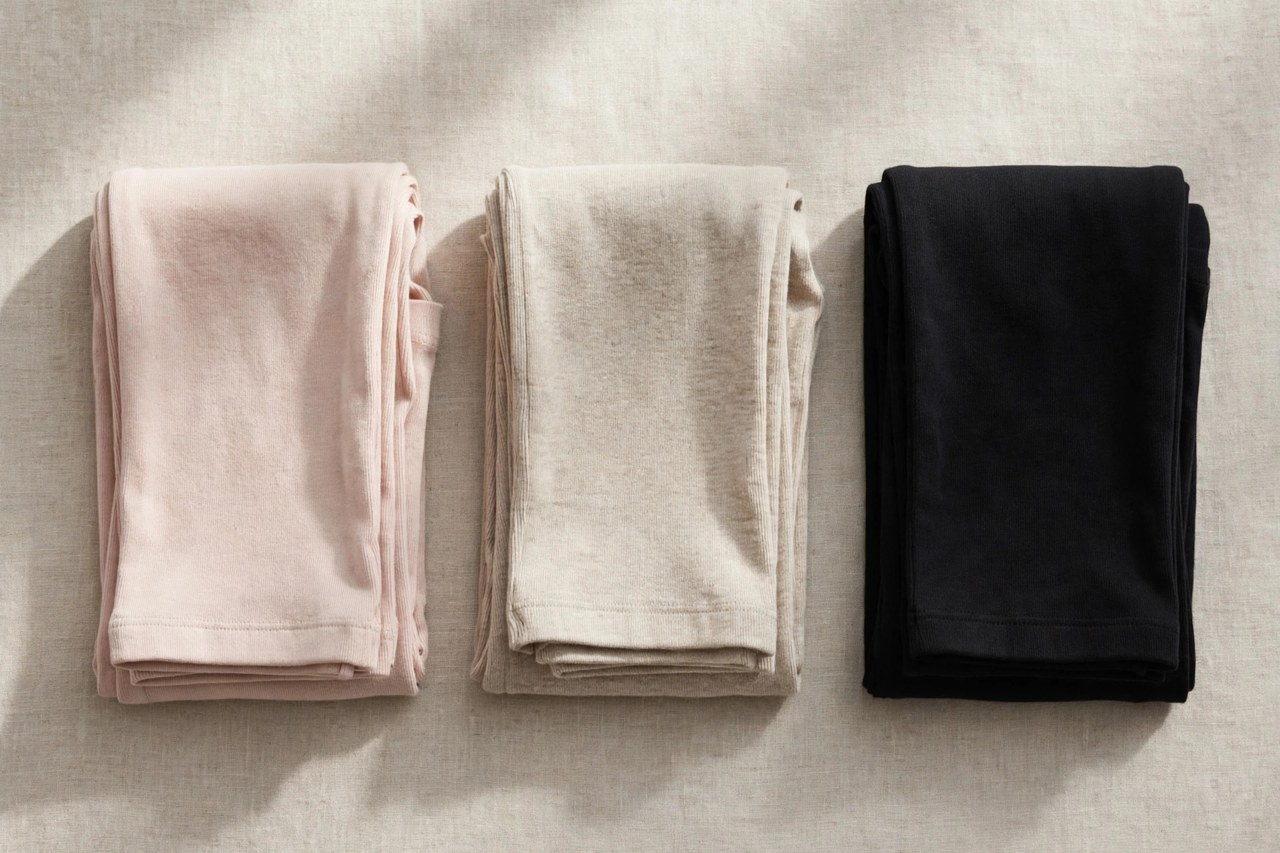
A cotton legging is a simple garment with one make-or-break quality. It is a close-fitting leg in cotton jersey — almost always blended with spandex, typically 90 to 95 percent cotton with 5 to 10 percent elastane — worn as a layer under dresses and tunics, as casual trousers in its thicker forms, and as comfortable home and light-exercise wear. The make-or-break quality is opacity: a cotton jersey that looks perfectly solid standing in a shop can turn sheer the moment it stretches over a bent knee or a squat, because cotton knit loops open as they extend and the fibre itself is matte and light-scattering only when the fabric stays dense. Everything in this guide — weights, blends, fit, and care — ultimately serves that test, along with the comfort that makes cotton leggings worth choosing over synthetic ones in the first place.
The Opacity Test and Fabric Weight
Do the test before the first wear, in daylight if you can: put the leggings on, bend deeply, and check the seat and knees in a mirror, or stretch the fabric over your hand and see how clearly fingers show through. Quality cotton leggings are knitted from heavier jersey, roughly 200 to 260 GSM, often as interlock — a double-faced knit that is denser, smoother, and far more opaque than single jersey at the same weight. Single-jersey cotton leggings at lightweight gauges are honestly layering pieces, made to sit under a tunic or dress, and should be sold and bought as such. Dark colours hide stretch-sheer far better than heather greys and pastels, where the white elastane and opened loops show readily.
Cotton Comfort Versus Synthetic Performance
Cotton leggings win on feel and everyday comfort. The fibre is soft, breathable in ordinary conditions, kind to sensitive skin, and free of the slick, plasticky sensation and static cling of polyester knits; a cotton legging under a winter dress is warm without the clamminess synthetics can produce indoors. The trade-offs are the familiar cotton ones. Cotton absorbs sweat and stays damp, so cotton leggings are poor choices for hot yoga, running, or intense workouts, where they grow heavy, lose their snug fit as the wet knit relaxes, and can chafe. They also bag at the knee and seat faster than good synthetic knits, because cotton has little natural recovery and leans entirely on its spandex content to snap back. Frame the choice by activity: for layering, errands, gentle stretching, travel, and home wear, cotton is often the pleasanter legging; for genuine training, a synthetic athletic legging — or the cotton athletic pants in this guide — serves better.
Fit, Rises, and Lengths
Leggings should fit smoothly without compression you can feel at rest: deep horizontal creasing at the hip means too small, while fabric that pools or twists at the ankle means too long or too large. Waistbands decide long-term comfort — a wide elastic or, better, a fabric yoke waistband spreads pressure and prevents the rolling and digging that thin elastic causes under dresses, and a high rise keeps the back covered when you bend, which is also an opacity issue. Lengths run from capri, ending mid-calf and popular under summer dresses, through three-quarter and seven-eighths crops to full length at the ankle bone. Because cotton jersey can shrink 3 to 5 percent in length, especially in hot drying, a full-length pair that barely reaches the ankle when new may become a crop by winter; buy with that margin in mind and wash cold.
Layering and Wearing Them Well
The classic cotton legging outfit pairs opacity with proportion: because the leg is close, the top half can be longer and looser — tunics, shirt dresses, oversized cotton sweaters, and long cardigans all balance the silhouette and provide the coverage that makes a lightweight legging appropriate anywhere. Worn as trousers, only the heaviest interlock pairs with a genuinely opaque knit should carry a shorter top, and even then a structured fabric and a longer blazer or coat keep the look deliberate. Under dresses and skirts, cotton leggings replace tights on cold days with far more warmth and no laddering. Colour strategy is simple: black and charcoal anchor most wardrobes, navy softens them, and printed cotton leggings — best in the heavier knits, where print also disguises stretch — should be treated as the statement piece with everything else plain.
Care, Pilling, and When to Replace Them
Wash cotton leggings inside out in cold water, ideally in a mesh bag, because the seat and inner thigh are high-friction zones and cotton jersey pills where it rubs — a pill shaver restores the surface a few times before the knit itself thins. Avoid high dryer heat, which cooks the spandex that gives the legging its recovery; air drying keeps the fit snug for far longer and prevents the length shrinkage cotton is prone to. Fold rather than hang, since hanging lets the knit creep under its own weight. Replace a pair when the waistband no longer recovers, the knees stay bagged after washing, or the seat fails the bend test you ran when they were new — opacity, not appearance on the hanger, is the honest retirement standard for a cotton legging.
More to Explore on Apparel Search
Photos

Looking for Women's Clothing Stores?
This guide helps you choose women's cotton leggings by weight and opacity. To browse where to buy, visit our women's clothing store directory, where you can find retailers that carry them.