Women's Cotton Clothing Guide — Page 5: Underwear, Bras, Socks & Hosiery
The foundation layer in breathable cotton — underwear cuts, bras, thermal layers, socks, and hosiery, covered as a plain product guide.
Shop Women's Cotton Underwear & Socks Now
Shop Women's Cotton Underwear & Socks on Amazon Shop Women's Cotton Underwear & Socks on eBayThe Amazon and eBay links on this page are affiliate links. If you make a purchase through them, Apparel Search may earn a commission.
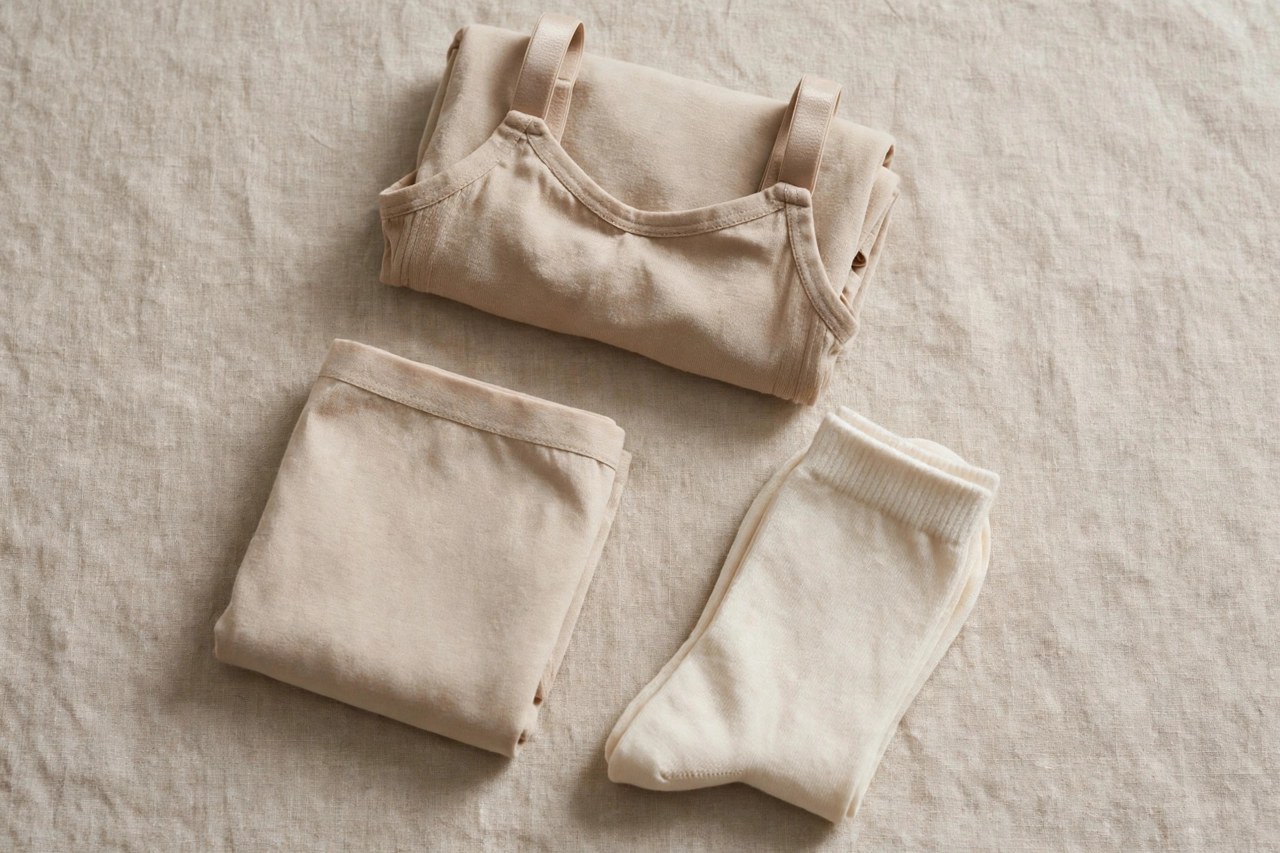
The foundation layer is where fabric choice is least visible and most felt. Underwear, bras, and socks sit against skin all day, in warm and often humid conditions, and cotton's case here is practical rather than fashionable: it breathes, it absorbs moisture, it is soft without coatings, it rarely provokes the itching some wearers get from synthetics, and it launders without special handling. Modern cotton undergarments are rarely one hundred percent cotton, and that is a feature. A small share of elastane, typically three to ten percent in underwear and more in socks and bras, keeps waistbands, leg openings, and cups recovering their shape through the day and through the wash. The cotton-rich gusset in underwear is the detail dermatologists most often point to, since a breathable cotton layer at the center is the comfort standard other fabrics are measured against. The 25 guides on this page treat every item as a product — cuts, constructions, blends, and buying notes — with no fuss and no filler.
Underwear Cuts, From Briefs to Boy Shorts
Cut names describe rise and leg line, and cotton jersey serves them all. Bikini briefs sit low with high-cut legs; boy shorts extend the leg line for fuller coverage and a smooth line under fitted pants; low-rise versions of both were designed to sit beneath low waistbands and remain useful under today's mid-rise cuts when the waistband would otherwise show. Cotton boxer shorts in woven cloth cross over between underwear, sleep, and lounge. Minimal cuts — thong and g-string styles — exist for a practical purpose, eliminating visible lines under close-fitting clothing, and cotton versions keep a cotton gusset even when the body of the garment blends fibers. Ribbed-knit bikini styles use the rib's natural stretch to fit without binding. Multipacks are the normal way to buy cotton underwear, and they reward a quick quality check: even stitching, a waistband that recovers after stretching, leg elastic that lies flat, and fabric that is opaque and evenly knitted.
Cotton Bras and the Everyday Lingerie Shelf
Cotton bras occupy the comfort end of the bra market: soft-cup and cotton-rich styles chosen for breathability, sensitive skin, long days, and sleeping or lounging for those who prefer light support. The guides here cover the main constructions as products. Demi bras use a lower-cut cup; seamless underwire styles line molded cups with cotton-rich fabric so the garment stays smooth under t-shirts while the skin side remains cotton; posture bras add a crisscross back design intended to support the shoulders; jog bras bring cotton-rich blends to low-impact movement, with an honest note that cotton holds moisture and suits gentle activity better than hard training. Cotton content varies widely in bras because cups, straps, and closures need synthetic components, so labels reading cotton-rich or cotton-lined describe most of the category accurately. The cotton lingerie guide covers the comfortable everyday end of that shelf — cotton slips, camisoles, and soft sets — as straightforward garments chosen for the same skin-comfort reasons as everything else on this page.
Long and Thermal Underwear: Cotton's Cold-Weather Layer
Long underwear and thermal underwear are near-synonyms, and both have a cotton chapter. Thermal knits are recognized by their waffle or honeycomb texture: the raised grid traps pockets of air against the skin, which is where the warmth comes from, while the channels let moisture escape better than a flat knit. Cotton thermals are comfortable, affordable, and excellent for everyday cold — commuting, outdoor work in dry cold, sleeping in chilly houses. Cotton-rich thermal sets also serve as pajamas in cold houses, which is how many wearers use them. Fit should be close but not tight; air gaps do the insulating, and seams should be flat so the layer disappears under clothing.
Socks and Hosiery: Where Cotton Content Is a Trade-Off
Socks look simple and are not. A cotton sock's comfort depends on the yarn (combed and ringspun cottons pill less and feel smoother), the knit (cushioned soles loop extra yarn where feet strike), and the blend: most quality cotton socks are sixty to eighty percent cotton with nylon for abrasion strength and elastane for stay-up fit, because a pure cotton sock stretches out, sags, and holds sweat against the foot. The guides here separate crew socks, the everyday ribbed staple; tennis socks, with sport cushioning in crew and quarter lengths; and argyle socks, whose diamond pattern is knitted in by intarsia, a heritage technique worth understanding before paying a premium for printed imitations. Cotton hosiery covers the cotton-rich end of tights and sock-weight knits for winter warmth. Organic cotton underwear and socks close the page for shoppers who want certified fiber in the layer worn closest to the skin — with the useful note that certification covers the cotton, while the elastane share follows its own rules, explained on Page 6.
Page 5: Underwear, Bras, Socks & Hosiery
- Women's Cotton Argyle Socks
- Women's Cotton Bikini Briefs
- Women's Cotton Boxer Shorts
- Women's Cotton Boy Shorts
- Women's Cotton Bras
- Women's Cotton Crew Socks
- Women's Cotton Demi Bra
- Women's Cotton G-String Underwear
- Women's Cotton Hosiery
- Women's Cotton Jog Bras
- Women's Cotton Lingerie
- Women's Cotton Long Underwear
- Women's Cotton Panties
- Women's Cotton Posture Bra
- Women's Cotton Socks
- Women's Cotton Tennis Socks
- Women's Cotton Thermal Underwear
- Women's Cotton Thong Underwear
- Women's Cotton Underwear
- Women's Low Rise Cotton Boy Shorts
- Women's Low Rise Cotton Underwear
- Women's Organic Cotton Socks
- Women's Organic Cotton Underwear
- Women's Seamless Cotton Underwire Bras
- Women's Solid Rib Cotton Bikini Underwear
There's more! Page 6 finishes the guide with movement and premium fiber — cotton activewear and sweatshirts, Egyptian long-staple cotton, and certified organic cotton across the whole wardrobe.
Continue to Page 6: Active, Sport & Premium Cotton »More to Explore on Apparel Search
- Benefits of Cotton
- Cotton
- Cotton Definition
- Cotton News
- Organic Cotton
- Women's Cotton Clothing Guide
- Women's Cotton Clothing Guide Pg. 2
- Women's Cotton Clothing Pg. 3
- Women's Cotton Clothing Pg. 4
- Women's Cotton Shirts
- Women's Cotton Shorts
- Women's Cotton Skirts
- Women's Cotton Slacks
- Women's Cotton Sleep Pants
- Women's Cotton Sleep Shirts
- Women's Cotton Sleepwear
- Women's Cotton Sportswear
- Women's Cotton Sweat Pants
- Women's Cotton Sweat Shirts
- Women's Cotton Sweat Suits
- Women's Cotton Sweaters
- Women's Cotton T-shirts
- Women's Cotton Tank Tops
- Women's Cotton Tees
- Women's Cotton Tennis Shirts
- Women's Cotton Tennis Skirts
- Women's Cotton Terry Robes
- Women's Cotton Tops
- Women's Cotton Trousers
- Women's Cotton Turtleneck
- Women's Cotton Twill Pants
Looking for Women's Clothing Stores?
This guide helps you choose women's cotton underwear, bras and socks by cut, fabric and use. To browse where to buy, visit our women's clothing store directory, where you can find retailers that carry them.