Women's Cotton G-String Underwear Guide
The minimal-fabric cut defined in product terms — string sides, a small front panel, a cotton gusset, and a no-show purpose under fitted clothing.
Shop Women's Cotton G-String Underwear Now
Shop Women's Cotton G-String Underwear on Amazon Shop Women's Cotton G-String Underwear on eBayThe Amazon and eBay links on this page are affiliate links. If you make a purchase through them, Apparel Search may earn a commission.
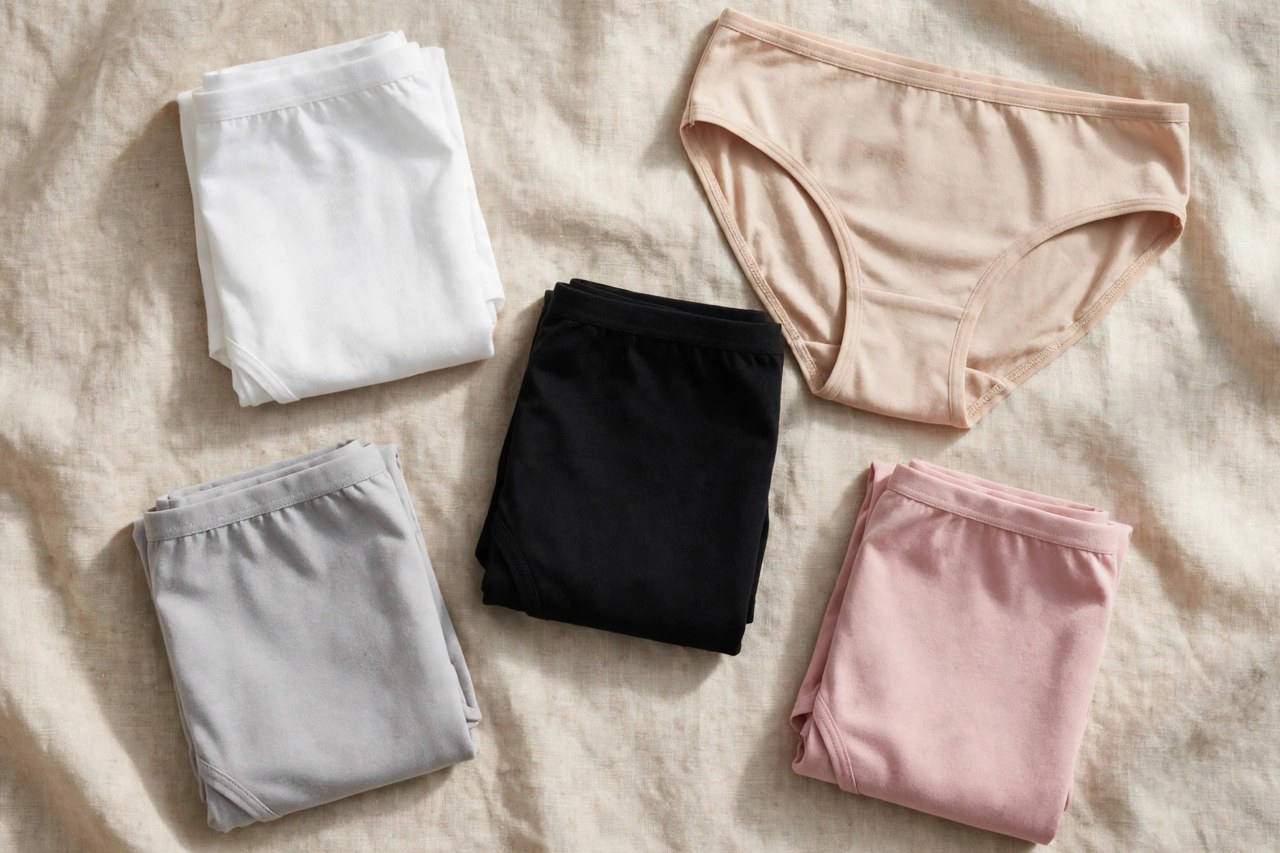
A G-string is the minimal-fabric variant within the thong family of underwear. Its construction is defined by three elements: a small triangular front panel, sides reduced to narrow elastic strings rather than fabric bands, and a back consisting of a thin string or narrow strip that connects the front panel to the rear waistband, with no seat coverage. The product purpose is straightforward and functional: with almost no fabric at the hip, side, or seat, the garment leaves no outline under close-fitting clothing such as fitted trousers, leggings, and smooth dresses. Cotton versions use a cotton jersey front panel and, importantly, a cotton gusset. This guide describes the construction, sizing behavior, and care of the style in the same plain product terms used for any other underwear cut.
Construction: Panel, Strings, and Rear Strap
The front panel is a small triangle of cotton jersey, usually with a modest elastane content for shape, finished at its edges with folded binding or narrow elastic. The side strings are elastic cord or narrow woven elastic, joined to the panel and to the rear waistband with stitched or bonded junctions; those junctions carry the garment's entire load, so stitch density there is the main construction check. The rear element is either a single string of elastic or a narrow fabric strip, meeting the waistband in a T junction, sometimes with a small triangular fabric insert at the join on slightly fuller variants. The waistband is typically the same narrow elastic as the sides. Because the garment has so few components, differences between products reduce to elastic quality, junction stitching, panel dimensions, and gusset construction — all of which can be assessed from a product listing or a close look in store.
The Cotton Gusset and Fabric Specifications
As with other minimal cuts, the gusset is the functional center of the garment: a short lined section at the base of the front panel, made of cotton in products across the price range, including styles whose straps and band are synthetic elastic. Cotton is specified for this panel because it is absorbent, breathable, and washes well at the temperatures underwear requires. The front panel itself is commonly cotton jersey with five to ten percent elastane, or in some ranges a cotton-rich blend with modal. Pure cotton panels exist but depend entirely on the elastic components for fit. When comparing products, confirm the gusset fiber content on the label rather than assuming it from the product title; a cotton-titled style can still use a synthetic gusset lining in budget ranges, and the gusset is precisely the component where the fiber choice has practical consequences for comfort and hygiene in everyday wear.
Sizing and Fit in a Minimal Garment
G-string sizing follows standard underwear size charts by hip measurement, but the margin for error is smaller than in fuller cuts because there is little fabric to distribute a poor fit. The front panel should lie flat and centered, the side strings should rest on the hip without cutting in, and the waistband should hold position without firm pressure. Elastic that digs at the hip indicates a size too small; strings that slide indicate a size too large or elastic that has lost recovery. Panel width varies between brands more than panel length, and it is the dimension that most often decides whether a given product suits a given wearer, so a single-pair or small-pack trial is the sensible first purchase. Because the garment is minimal, it is also commonly sold in one-size formats in some ranges; sized products generally give a more reliable fit than one-size versions.
Intended Use and Wardrobe Role
The style has one primary use case: eliminating visible underwear outlines under fitted or lightweight clothing where a brief, bikini, or even a standard thong band would show. It is a task-specific garment in most wardrobes, kept in small numbers alongside fuller everyday cuts rather than as a full rotation. Buyers who wear fitted clothing daily may hold more; occasional wearers typically need only a few pairs in neutral shades matched to the clothing concerned. The style is not designed for sport, sleep, or high-activity days, and product listings that present it as an everyday default should be read with that scope in mind. Within its intended role it is effective and inexpensive, and cotton construction keeps it consistent with the rest of a cotton underwear drawer in washing and care.
Multipacks, Washing, and Replacement
Cotton G-strings are sold in multipacks of three to twelve at low per-pair prices, in solid color assortments. Given the sizing sensitivity described above, confirm fit with the smallest pack first. Washing requires one adjustment compared with fuller cotton styles: the narrow elastics and small junctions tangle and snag in a mixed load, so a mesh laundry bag is strongly recommended, with a warm or cool gentle cycle and like colors. Line drying extends elastic life, which is the lifespan-limiting component of this garment; high dryer heat shortens it noticeably. Inspect junction stitching when folding, since a failed junction is the usual end-of-life event, ahead of fabric wear. Retire pairs when the strings no longer recover their length after washing or when any junction stitch begins to open. A pair in occasional rotation lasts a long time; in daily rotation, expect elastic fatigue within about a year.
More to Explore on Apparel Search
Looking for Women's Clothing Stores?
This guide helps you choose women's cotton G-string underwear by size, panel and pack. To browse where to buy, visit our women's clothing store directory, where you can find retailers that carry them.