Women's Cotton Thermal Underwear Guide
The waffle-knit base layer explained — how the recessed grid traps air, how cotton compares with wool and synthetics, and how to buy the right weight.
Shop Women's Cotton Thermal Underwear Now
Shop Women's Cotton Thermal Underwear on Amazon Shop Women's Cotton Thermal Underwear on eBayThe Amazon and eBay links on this page are affiliate links. If you make a purchase through them, Apparel Search may earn a commission.
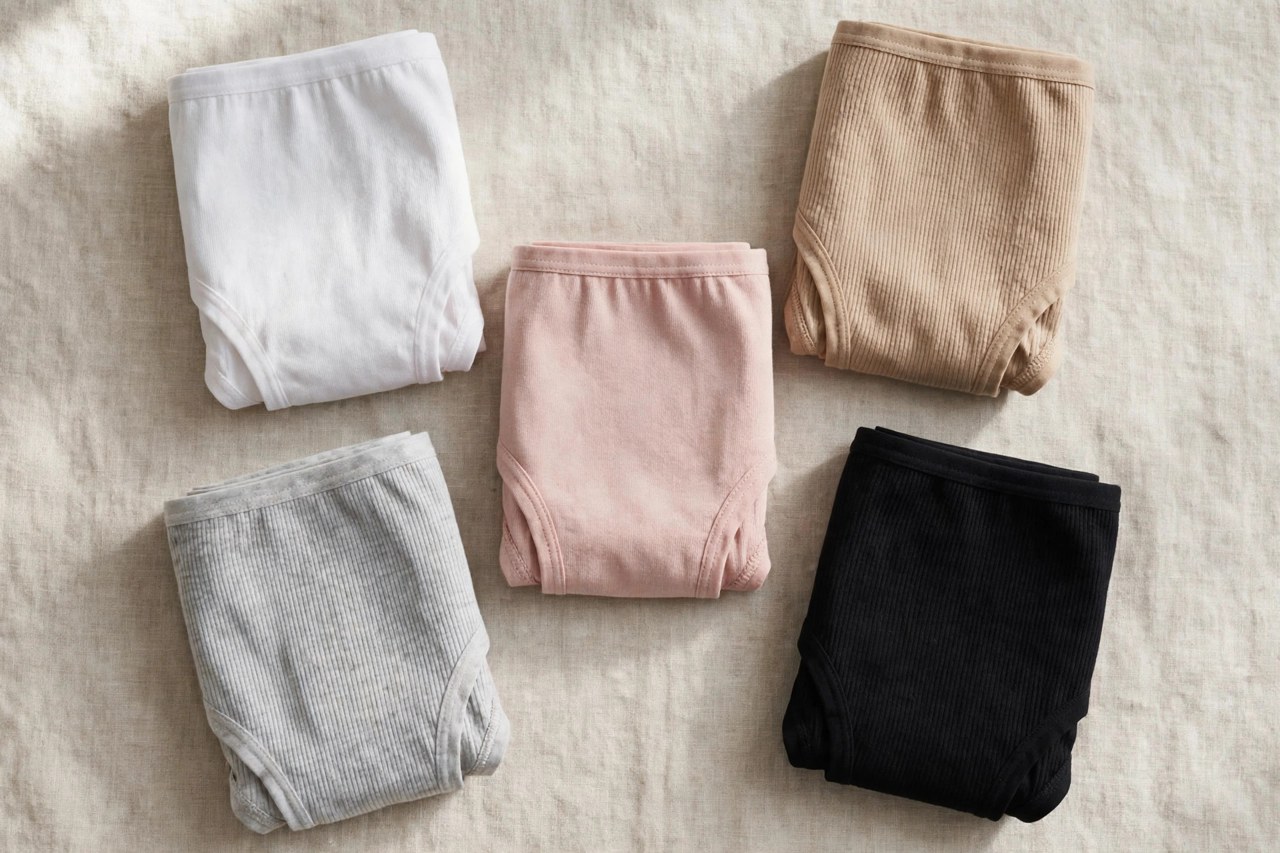
Thermal underwear is base-layer underwear engineered for insulation, and in cotton the engineering is mostly one knit: the waffle, or thermal, knit, whose recessed square grid gives the fabric its familiar textured surface. Women's cotton thermals are sold as long-sleeve tops, full-length bottoms, and matched sets, and they serve as the warm underlayer for cold-weather clothing at home, at work, and outdoors in dry conditions. This guide focuses on the thermal construction itself — how the waffle grid insulates, how fabric weights map to temperatures, and how cotton performs against the wool and synthetic fibers used in technical base layers — so that the product can be chosen on facts rather than on the word thermal alone, which by itself specifies a texture, not a guaranteed warmth rating.
Waffle Knit: How the Grid Traps Warm Air
Waffle knit is a knitted structure in which recessed pockets are formed in a regular grid, leaving raised ridges between them. Still air is an effective insulator, and the pockets hold a layer of it against the skin while the ridges make contact; the garment therefore insulates more than a flat jersey of the same fiber weight, without the bulk of a fleece. The knit also has useful mechanical stretch across its width, helping a base layer fit closely, and its textured surface keeps the next clothing layer from clinging flat across the whole garment. Waffle depth varies: shallow, fine waffles suit mild cold and slim outer clothing, while deep, coarse waffles in heavier yarns form the warmest cotton thermals. Two-layer constructions exist, knitting a waffle outer to a smooth inner face for skin comfort, and brushed interiors appear in some heavyweight ranges.
Weights and Choosing by Temperature
Cotton thermals are grouped loosely as lightweight, midweight, and heavyweight, and matching weight to conditions matters more than buying the warmest available set. Lightweight waffle and waffle-jersey hybrids are the shoulder-season and indoor option, worn under regular clothing in cool rooms and mild winter weather. Midweight waffle is the general winter standard for daily wear, commuting, and outdoor work in dry cold. Heavyweight, high-loft waffle is for sustained time in cold air and for sleepwear in unheated rooms, and it is usually too warm and too bulky under slim clothing or in heated interiors. As with all layering, the thermal is one component: its job is the layer next to the skin, and overall warmth depends on the insulating and outer layers above it. Buyers in heated homes who want thermals mainly for brief outdoor intervals are usually best served by the midweight tier.
Cotton Versus Wool and Synthetic Base Layers
The comparison is a set of trade-offs, not a ranking. Cotton is soft, inexpensive, widely available, easy to wash, and comfortable for all-day wear in dry conditions, which is why it dominates the everyday market. Its weakness is water: cotton absorbs moisture readily, insulates poorly when wet, and dries slowly, making it a poor choice for high-exertion or wet-weather outdoor activity, where chilling is a safety issue. Merino wool insulates when damp, resists odor over multi-day wear, and costs considerably more, with more careful washing. Synthetic polyester and polypropylene base layers absorb almost no water, dry fastest, and are the standard for sport, but can retain odor and feel less soft to some wearers. Cotton-polyester blended thermals split the difference, drying somewhat faster and holding shape better than pure cotton at a modest price. The correct choice follows the use case stated honestly at purchase.
Fit, Cuffs, and Layering Compatibility
Thermal fit follows base-layer logic: close to the body so the waffle pockets hold their air layer and the garment adds no bulk, but not tight enough to compress the knit flat, which would squeeze out the trapped air that does the insulating. Sleeves should end at the wrist with a ribbed cuff that seals against drafts and stays inside gloves or outer cuffs; bottoms should end at the ankle in a similar cuff. Neck styles include crew and scoop for general wear and zip or Henley-style plackets in some ranges for ventilation. Check that the top is long enough to stay tucked during bending, and that bottom seams are flat enough to sit under trousers without ridging. Under slim outer layers, a shallow waffle in a midweight yarn is the practical ceiling; deeper knits belong under regular and relaxed clothing, workwear, and winter outerwear.
Care, Shrinkage, and Service Life
Cotton thermals wash like other cotton knitwear: machine wash warm with like colors and tumble dry on medium, or line dry to limit shrinkage and preserve fit. Expect non-preshrunk waffle knits to contract noticeably in length on the first hot wash, since the lofty knit relaxes as it settles; garment-washed and pre-shrunk products avoid most of this and are worth the small premium when the layer must fit under tailored clothing. The knit softens with use and its pockets gradually flatten at pressure points such as the seat and under waistbands, slowly reducing insulation; waistband and cuff elastics also age. A set in seasonal rotation typically gives several winters of service. Retire thermals when the waffle has flattened across the main panels or the cuffs no longer seal, because at that point the garment has reverted to a plain extra layer and a replacement restores the function the name promises.
More to Explore on Apparel Search
- Apparel
- benefits of cotton
- Clothes
- Clothing Retail Stores
- Cotton
- Cotton Definition
- Cotton News
- Fashion
- Fashion Designers
- how fabric wicks moister
- Organic Cotton
- Popular Brands
- Women's Clothing Stores
- Women's Clothing Wholesalers
- Women's Cotton Clothing
- Women's Fashion
- Women's Long Underwear
- Women's Thermal Underwear
- Women's Underwear Guide
Photos


Looking for Women's Clothing Stores?
This guide helps you choose women's cotton thermal underwear by waffle weight, piece and temperature range. To browse where to buy, visit our women's clothing store directory, where you can find retailers that carry them.