Women's Cotton Demi Bra Guide
A distinct construction story — the wide-set, half-cup demi built in cotton-rich jersey for a smooth, open neckline.
Shop Women's Cotton Demi Bras Now
Shop Women's Cotton Demi Bras on Amazon Shop Women's Cotton Demi Bras on eBayThe Amazon and eBay links on this page are affiliate links. If you make a purchase through them, Apparel Search may earn a commission.
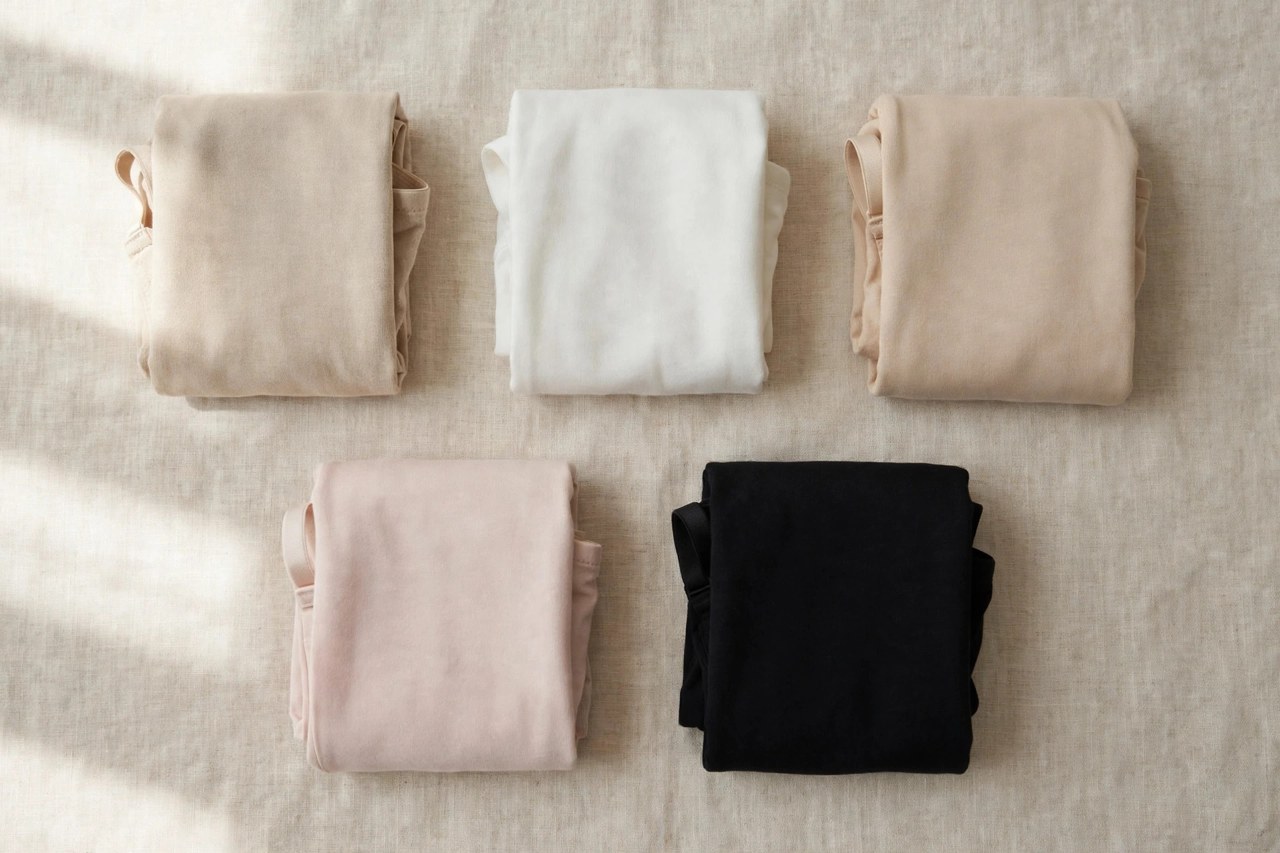
A demi bra, short for demi-cup, is defined by construction rather than by decoration: the cup covers roughly the lower half to two-thirds, the top edge runs fairly straight or gently curved across, and the straps set wide, close to the outer edges of the cup. That geometry is the whole point. A lower, open cup works under wide, square, and scoop necklines without showing, and the wide strap placement keeps straps clear of broader neck openings. In cotton-rich versions, the cups are usually cut from cotton jersey or interlock blended with spandex, sometimes lightly lined, so the bra feels soft and breathable while keeping the precise demi shape. This page treats the demi strictly as a garment design: how the cup is built, what it does well, where its limits are, and how to judge fit and quality in a cotton version.
Cup Construction: Seams, Lining, and the Straight Top Edge
Most cotton demi cups are seamed, typically with a vertical or two-part cup seam that shapes the fabric upward from a deliberately low top edge. That seam does the engineering: without it, a half cup in a soft knit would collapse rather than hold its line. Some styles mold the cup instead, pressing cotton-rich fabric over a thin foam shape, but true all-cotton molded cups are uncommon because cotton knit alone does not hold a mold. Better bras line the cup fully in cotton so only cotton touches the skin. The underwire, when present, is shorter at the center than in a full-coverage bra, matching the lower gore. Check that the wire channel stitching is flat and fully enclosed.
Why the Strap Placement Matters
Wide-set straps are not a styling flourish; they are part of the demi pattern. Moving the strap attachment toward the armhole opens the center front, which is why demi bras pair with boat necks, wide scoops, and off-shoulder tops that expose a full-coverage bra's straps. The trade-off is support: a wide strap angle lifts less vertically than a center-placed strap, and the low cup edge offers less security during bending and reaching. Fully adjustable straps matter more here than in other styles, because a small length change noticeably affects how the low cup sits. Convertible versions let you cross the straps at the back for racerback tops, which also improves security. If straps slip on you in other bras, test a demi carefully, since its geometry makes slipping more likely, not less.
Cotton Blends in a Demi: Holding a Precise Shape
A demi asks more of its fabric than a soft bralette does, because the low, straight top edge must stay in place against the body without a tall cup to anchor it. Cotton-rich interlock, the double knit with a smooth face on both sides, is the most reliable choice: it is thicker than single jersey, resists curling at the cut edge, and recovers well with five to ten percent spandex. Single jersey demi cups exist in casual styles but tend to roll or gap at the top edge after washing unless the edge is finished with a firm elastic binding. Look for that binding, a silicone-free gripper, or a folded self-fabric edge with elastic enclosed. The band should be firmer than the cup, often a cotton blend with a higher elastane share or a mesh wing backed by cotton, because a demi depends heavily on band stability to keep its low cups positioned correctly.
When a Demi Suits, and When It Does Not
Choose a cotton demi for outfits with wide, low, or square necklines, for warm days when a breathable cup lining matters, and for a natural, lightly shaped outline rather than a heavily lifted one. It is a practical everyday bra for small to medium cup sizes and for anyone who finds full-coverage cups visible under most of their tops. Be realistic about limits: larger cup sizes, high support needs, and very active days are usually better served by a full-coverage or structured style, since the demi's low edge simply holds less. A demi is also a poor choice under high, close necklines where its shaping offers no advantage and a simpler soft bra would be more comfortable. Treat it as a neckline tool in the drawer, alongside the soft cotton bras covered on the umbrella page, rather than as a universal replacement for them.
Fit Checks and Care for Cotton Demi Bras
Fit a demi by the top edge: it should lie flat and follow the body without cutting in or standing away. Cutting in usually means the cup volume is too small for the style, and sizing up only in the cup, not the band, is the fix. Gaping at the low edge often means the band is too loose, letting the whole frame shift downward. The center gore is short by design and may not sit as firmly as a full-coverage gore; that is normal for the pattern, provided the band stays level and the cups stay placed when you raise your arms. For care, the shaped cup needs the same gentle routine as other cotton bras: fasten the hooks, wash cool in a mesh bag, reshape the cups by hand, and air dry. Avoid folding one molded or lined cup inside the other for storage, which creases cotton interlock; nest the bras front to back instead.
Related Women's Cotton Guides
More to Explore on Apparel Search
Looking for Women's Clothing Stores?
This guide helps you choose women's cotton demi bras by cup construction and neckline. To browse where to buy, visit our women's clothing store directory, where you can find retailers that carry them.