Women's Demi Bras
A lower-cut cup and wide-set straps make the demi a neckline specialist — a practical guide to its construction, sizing and care.
Shop Women's Demi Bras Now
Shop Women's Demi Bras on Amazon Shop Women's Demi Bras on eBayThe Amazon and eBay links on this page are affiliate links. If you make a purchase through them, Apparel Search may earn a commission.
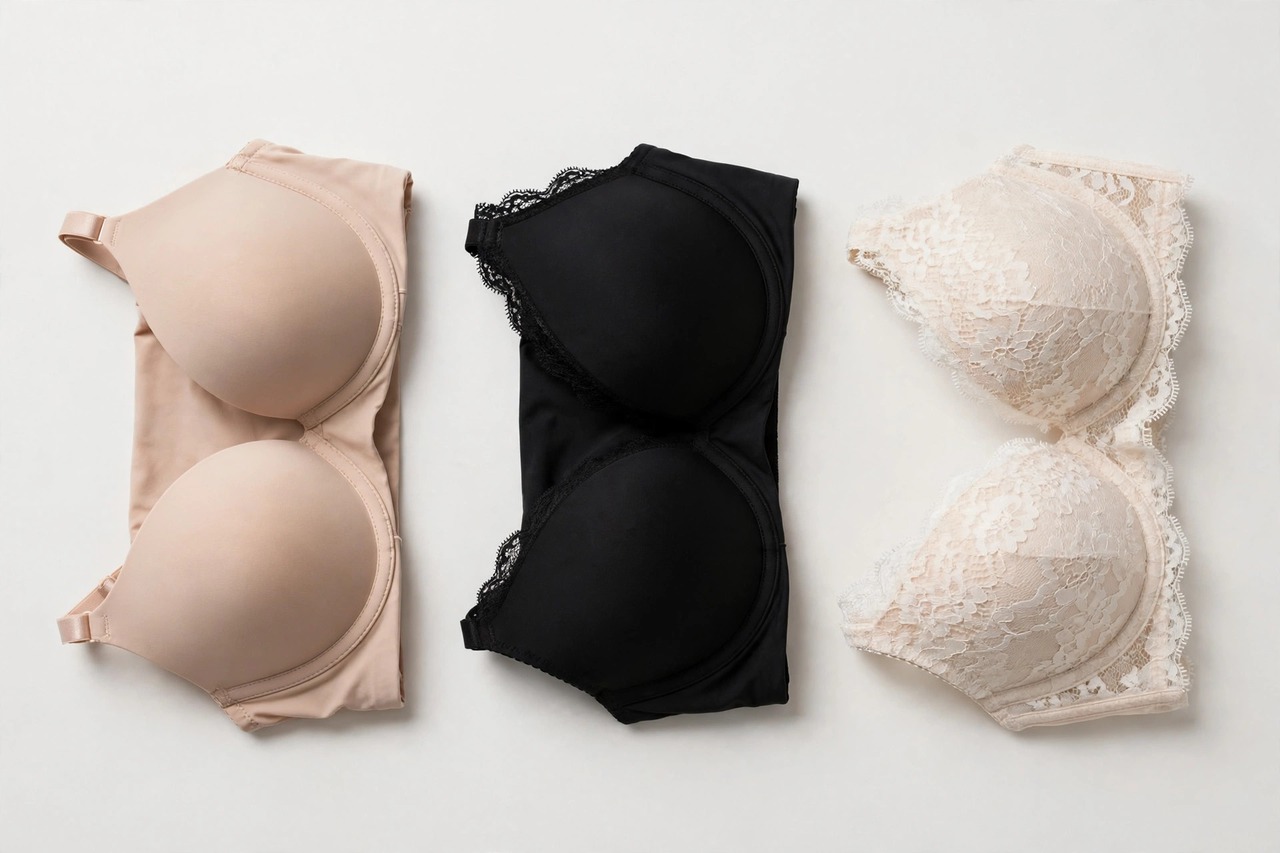
A demi bra is defined by its cup: cut lower than a full-coverage cup, with the top edge typically covering about half to three-quarters of the cup area, and straps set wider apart than on a standard style. That geometry is the whole point. The lower cup line stays hidden under open necklines, and the wide strap placement keeps straps out of view at the edges of scoop and square necklines. It is a garment engineered around clothing, and choosing one well is mostly a matter of matching cup construction to the tops and dresses you actually wear.
This guide covers how demi bras are built, how to size and check the fit, and which fabrics and care routines keep the style working as designed.
What Makes a Demi Cup
The demi cup, sometimes labeled a half cup or demi-cup balconette depending on the brand, has a relatively straight or gently curved top edge that sits lower than a full cup. Cups are usually seamed or molded with light padding or lining rather than push-up padding; the goal is a smooth profile under clothing, not added volume. Underwires are standard in most demi styles and follow the lower cup shape, and the center gore is generally shorter and narrower than on a full-coverage bra, which also makes the style work under lower front necklines.
Strap placement is the second defining feature. Straps attach at the outer edges of the cups rather than the center top, creating the wide-set spacing the style is known for. Straps are usually fully adjustable, and better-made styles include a lightly cushioned or wider strap in larger cup sizes for comfort. Side wings and band construction vary: a firmer, wider band provides most of the support in any bra, and demi styles are no exception.
Matching a Demi Bra to Your Clothing
The demi is the standard recommendation under scoop necklines, square necklines and wide, open necklines, where a full cup's edge and centrally placed straps would show. It also sits well under tops with wide-set straps of their own, since the bra straps align with the garment's straps instead of peeking inside them. For very low or straight-across necklines, compare the cup's top edge against the garment in the fitting room: the cup edge should sit below the neckline with a small margin so movement does not reveal it.
There are tops the demi does not suit. High necklines and close-fitting crew necks are better served by full-coverage or molded T-shirt styles, and very soft, unstructured garments may show the demi's seam lines if the cups are seamed rather than molded. Treat the demi as one tool in a small rotation: the right style is the one whose edges, straps and gore all disappear under the specific garment you are wearing.
Sizing and Fit Checks
Start from measurements rather than habit: band size from a firm underbust measurement, cup size from the difference between underbust and full-bust measurements, following the size chart of the brand you are buying, since demi cup proportions vary between makers. Sister sizes — trading a band size for a cup letter while keeping cup volume similar — are useful when a style runs firm or loose in the band.
Run the standard fit checks in the fitting room. The band should sit level and firm on the loosest hook when new, leaving room to tighten as the elastic relaxes with wear. The gore should rest against the chest on most underwire styles. Cup edges should lie smoothly without cutting in at the top edge or gaping away when you lean forward and move; with a lower-cut demi cup, correct cup size matters even more, because there is less cup height to contain a mismatch. Straps should be adjusted to support without lifting the band at the back, and they should stay in place when you raise your arms — wide-set straps on the wrong size will slip, which is a sizing signal, not a style flaw.
Fabrics, Construction Details and Care
Demi bras come in molded foam cups for a seamless look under thin fabrics, seamed cups in lace or mesh for a lighter feel, and lined satin or microfiber versions that balance smoothness with structure. Lace styles often add a smooth lining inside the cup so texture does not show through clothing. Look for clean finishing at the cup edge — a folded or bonded edge lies flatter than a thick elastic binding — and for hook-and-eye closures with at least two or three positions for adjustment over the life of the garment.
Care preserves the fit you paid for. Hand washing in cool water with a gentle detergent is best; if machine washing, use a mesh lingerie bag, cold water and the delicate cycle, with hooks fastened so they cannot snag the fabric. Always air dry flat or hanging by the center gore — tumble dryer heat breaks down elastane and warps molded cups. Rotate between at least two or three bras so elastic can rest a day between wears, store molded cups unstacked or nested without folding one cup into the other, and replace a bra when the band stays loose on the tightest hook or the cup edges no longer lie flat.
Related Women's Guides
More to Explore on Apparel Search
Looking for Women's Clothing Stores?
This guide helps you choose women's demi bras by style, fabric and fit. To browse where to buy, visit our women's clothing store directory, where you can find retailers that carry them.